





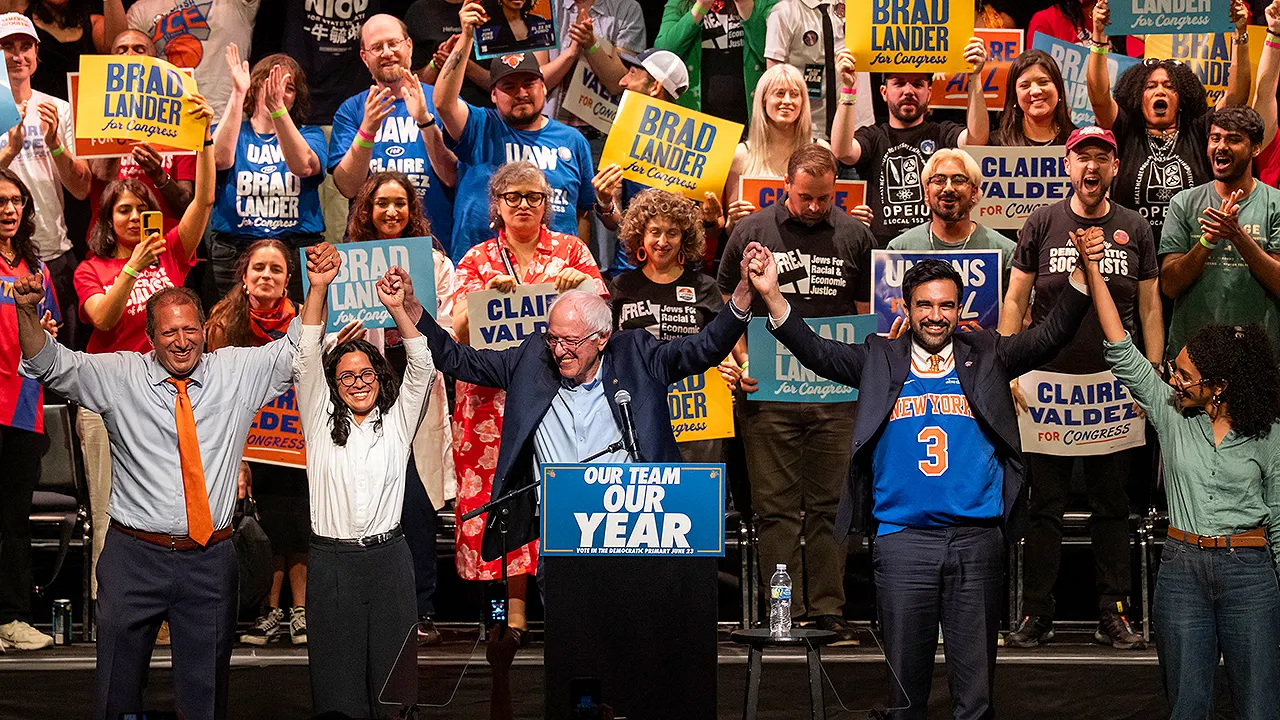
Good morning and welcome to a comprehensive look at the stories shaping our world today. As we step into the rush of a new week, a transformative shift is occurring within the corridors of American political power, marked by a determined push from progressive and democratic socialist factions looking to expand their influence far beyond their traditional coastal strongholds. In New York City, a political playbook crafted by socialist organizers—most notably backed by Assemblyman Zohran Mamdani—is being primed for a nationwide roll-out, with proponents arguing that their hyper-local, community-first message can find fertile ground in any corner of the United States. This aggressive ideological expansion has sent shockwaves through the institutional Democratic Party, sparking fierce internal debates about the party’s future direction, electoral viability, and core identity. The ripples of this political realignment have caught the attention of former President Donald Trump, who recently suggested that the federal government should intervene and seize control of Washington, D.C., should a socialist candidate clinch the capital’s mayoral seat. Meanwhile, high-ranking progressives like Representative Alexandria Ocasio-Cortez are shifting their focus toward the tech sector, launching a campaign to break up major technology conglomerates over the skyrocketing costs of processors and the accelerating strain that artificial intelligence is placing on global infrastructure. At the same time, the national spotlight remains firmly fixed on the party’s leadership, as a video of President Biden making an awkward and seemingly disoriented exit from the stage at a Democratic gala went viral, reigniting persistent conversations about the physical demands and intense public scrutiny faced by the nation’s aging leaders.
As these political storms brew in our nation’s legislative halls, the American justice system is grappling with heavily watched trials, tragic acts of violence, and fundamental questions regarding constitutional liberties. In South Carolina, the infamous legal saga of Alex Murdaugh has returned to the courtroom under a cloud of controversy, as defense attorneys aggressively argue for a retrial on the grounds that a court clerk allegedly compromised the integrity of the jury pool. This dramatic turn of events underscores the fragile nature of judicial fairness in the digital age, where high-profile cases are constantly vulnerable to outside interference. Far from the luxury of South Carolina courtrooms, a heartbreaking tragedy unfolded in Texas, where a devoted mother of five was fatally stabbed in broad daylight, leading to the arrest of three suspects and leaving a local community shattered by senseless violence. Public anger has similarly flared in Washington, D.C., where law enforcement authorities arrested seven individuals following a wave of destructive vandalism at the historic National Mall, a place meant to unite rather than divide. Even the sanctity of the home has become a legal battleground, as demonstrated by a controversial case in which an Orthodox Jewish homeowner was hit with thousands of dollars in city penalties simply for hosting religious study groups and prayer meetings in his private residence. This dispute has reignited a fierce national debate over the boundaries of religious freedom, municipal zoning codes, and the basic right of Americans to gather peacefully within their own walls.
Turning our attention to the global stage, we are reminded of the profound fragility of human life and the complex nature of international diplomacy. Aviation investigators are currently searching for answers after a catastrophic flight disaster in which an aircraft fell almost vertically out of the sky, claiming the lives of eleven passengers and crew members while narrowly avoiding a densely populated residential area. In the wake of natural disasters, the pain of loss is often compounded by systemic failures and administrative apathy; in one devastated community, grieving survivors publicly blasted local officials for their stunning insensitivity after photographs emerged of leaders casually eating arepas and posing for promotional pictures while the bodies of victims remained buried under the mud. On the geopolitical front, however, there is a rare glimmer of diplomatic progress, as negotiators from the United States and Iran have mutually agreed to a temporary stand-down in hostilities while opting to keep open channels for ongoing security discussions. This delicate detente comes at a time when national security experts are urging the federal government not to lose sight of long-term economic threats. In a prominent opinion piece, former Acting Secretary of Homeland Security Chad Wolf argued passionately that the United States cannot afford to ignore China’s quiet but highly coordinated economic assault on American industries, warning that failing to protect domestic manufacturers today will have devastating consequences for national sovereignty tomorrow.
In the realm of media, sports, and cultural discourse, American society is wrestling with questions of representation, institutional fairness, and historical narratives. The sports world has been set ablaze by the ongoing, escalating controversy surrounding WNBA phenomenon Caitlin Clark, whose transition to the professional league has been marred by what many observers describe as a brutal, unforgiving schedule and a pattern of physical and psychological mistreatment that highlights the deep-seated tensions within women’s professional basketball. This debate has spilled over into mainstream media representation, where public figures are increasingly held to account for their public statements and past behavior. Department of Homeland Security Secretary Alejandro Mayorkas recently clashed in a tense on-air interview with CNN’s Jake Tapper regarding the administration’s policy on Haiti deportations in the wake of a pivotal Supreme Court ruling. Meanwhile, the power of digital footprints has come back to haunt a prominent Democratic candidate, who is facing severe blowback after deleted social media posts resurfaced showing previous remarks that disparaged Vice President Kamala Harris, mocked interracial couples, and dismissed the symbolic importance of the American flag. These controversies collectively demonstrate how quickly the digital past can collide with the political present, forcing voters to weigh the authenticity of candidates in a hyper-connected world.
As families across the country work to navigate these cultural shifts, they are also dealing with the stark economic realities of modern life and the challenges of personal financial security. Rachel Cruze, a personal finance author and daughter of financial guru Dave Ramsey, has issued a stark warning to younger Americans about a pervasive, overlooked money habit that she believes is quietly dismantling the financial stability of an entire generation. Cruze warns that the modern reliance on lifestyle inflation, digital micro-transactions, and “buy now, pay later” services is trapping young adults in a cycle of perpetual debt, preventing them from building real, multigenerational wealth. This warning about the dangers of unchecked consumption and personal debt echoes broader macroeconomic concerns raised by conservative scholars; in a reflective piece, writer Joe Abraham recalled the warnings of classical economists regarding the quiet creep of big government power, pointing to the tragic story of a local business owner named Katie who paid the ultimate price under the weight of stifling bureaucratic regulations. Even within the creative industries, economic tension and administrative slip-ups are causing friction, as seen in the bizarre story of an independent singer-songwriter who was left utterly baffled after realizing that surplus copies of her album artwork had been shredded and repurposed as cheap packing stuffing for global superstar Taylor Swift’s online merchandise shipments, highlighting the chaotic nature of corporate music logistics.
Yet, amid the stress of modern politics, economic anxiety, and social unrest, there remain fascinating discoveries and creative endeavors that highlight human resilience, curiosity, and our enduring connection to the past. Archaeologists working in South America recently made headlines after uncovering a cache of freeze-dried potatoes that are remarkably older than the United States itself, preserved in near-perfect condition thanks to ancient preservation techniques that showcase the advanced agricultural ingenuity of early civilizations. Meanwhile, everyday Americans are finding moments of levity and self-reflection by engaging with cultural quizzes that test their knowledge of everything from recent cruise line controversies to the unspoken etiquette of modern weddings. Above all, the human spirit’s ability to transform practical struggles into beautiful art remains undefeated. In a heartwarming highlight, one talented American country songwriter has managed to turn her own experiences of writing chart-topping hits into a vibrant, off-Broadway musical that celebrates the relentless, grittier aspects of chasing the American dream. It is a powerful reminder that while the news of the day is often dominated by conflict and division, the underlying fabric of our society is still woven together by individuals who choose to build, create, and dream despite the odds.