


Paragraph One
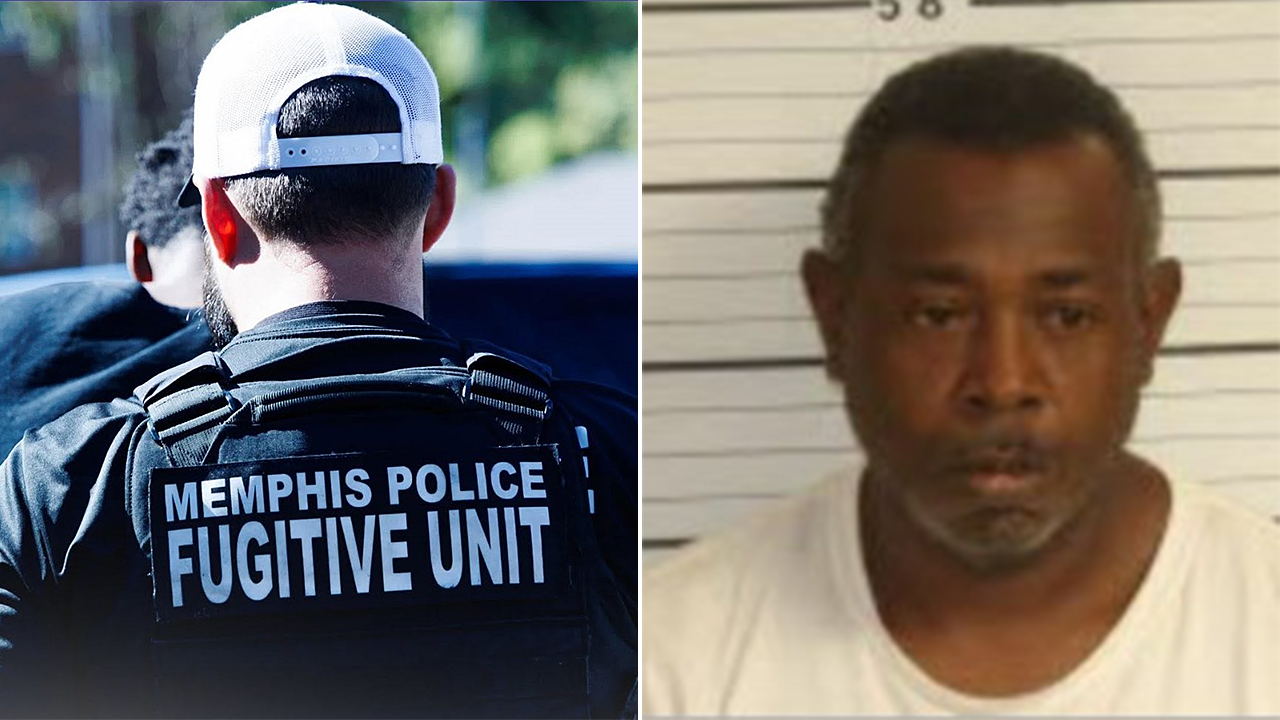
On an ordinary Thursday in Memphis, Tennessee, a routine traffic stop turned into a scene of unfathomable horror, one that would send shockwaves across state lines and leave a community wrestling with grief and disbelief. Police officers pulled over a 50-year-old man for a traffic violation, a mundane encounter that happens countless times every day. But when they approached the vehicle, they discovered something far more disturbing than a simple infraction: seated in the passenger seat was the lifeless body of a woman, later identified as 50-year-old Lanessa Bradford, the wife of the driver, Tyronne Brazille. According to authorities, Bradford had been shot, and her body had been propped up beside her husband as if she were merely a passenger on a long journey. The image is almost too painful to process—the grotesque normalcy of a body placed in a seat, perhaps belted in, perhaps angled just so, while her accused killer drove through state after state. Investigators say Brazille had been traveling with his wife’s remains before being stopped in Memphis, a fugitive from a crime that allegedly began in Louisiana. The arrest did not just close a manhunt; it opened a wound of questions, grief, and the terrifying reality of what happens when domestic violence reaches its deadliest conclusion. The traffic stop in Memphis was likely unremarkable at first—a routine pullover, a driver’s license check, a momentary suspicion. Yet within minutes, the officers found themselves facing the aftermath of a tragedy that defies comprehension. The name Lanessa Bradford, a woman who had presumably spent her life as a wife, a worker, a friend, and a light in her community, became another statistic in the grim ledger of intimate partner violence. But to those who knew her, she was never a statistic. She was a person with dreams, plans, and, according to her closest friend, a desperate hope of escaping a relationship that had become a threat to her very existence. This is the story of that escape that never happened, of a journey that turned into a macabre road trip, and of the urgent, heartbreaking reality that leaving an abuser is often the most dangerous moment of all.
Paragraph Two
Lanessa Bradford was not a woman who lived quietly in fear, at least not in the eyes of those who loved her. To her longtime friend Shelicka Decker, Bradford was a person of warmth, strength, and quiet determination, someone who uplifted everyone around her. She worked at an elementary school in Baton Rouge, Louisiana, where she was beloved by students, parents, and colleagues alike. She was the kind of person who made others feel seen, who offered encouragement, who seemed to carry light into every room. But behind that public brightness, Bradford was carrying a heavy and private burden. She was married to Brazille, a man she had known for years, and their relationship had apparently become something dark and dangerous. In recent months, Decker revealed, Bradford had confided that she was planning to leave. It was not an idle wish or a vague dream; it was a detailed, carefully constructed plan. She had saved money, quietly and deliberately, building a financial cushion that would allow her to disappear. She had arranged to leave behind her car, her belongings, everything she owned, if that was what it took to start fresh somewhere far away. She had been in contact with family members who lived out of town, people who were ready to receive her, shelter her, and help her build a new life. The plan was to vanish, simply vanish, because Bradford believed—correctly, tragically, as it turned out—that there was no other way to get away from her husband. As Decker put it, “She had the money saved up. She had come up with a plan, and she was going to just vanish. That was the only way she would be able to get away from him.” Those words carry a devastating weight because they reveal how deeply Bradford understood the danger she was in. She knew that a direct confrontation could be lethal. She knew that simply saying “I’m leaving” might not be an option. So she planned to slip away like a ghost, leaving behind the life she had known in hopes of preserving her life itself. The fact that she never got the chance is not just a tragedy; it is a pointed reminder of how often victims of domestic abuse are acutely aware of their own peril. They know the statistics. They know the stories. They know that the most dangerous time in an abusive relationship is often the moment of departure. Bradford had every reason to be afraid, and her plan reflected that awareness. Yet even the most careful plan could not protect her from the violence that was already set in motion.
Paragraph Three
According to investigators, the final, fatal confrontation unfolded at Independence Community Park in Baton Rouge. The exact details of what happened there remain under investigation, but authorities allege that Brazille shot and killed his wife during an argument. It is impossible to know exactly what was said in those final moments, what desperation or rage drove the accusation, or whether Bradford’s planned escape was discovered or simply triggered by the tensions of a relationship that had been fraying for years. What is known is that after the shooting, Brazille allegedly did not call for help, did not surrender, and did not show any immediate sign of remorse. Instead, he placed his wife’s body in the passenger seat of his car and drove away. He crossed state lines, passing through Louisiana and into other states before finally being stopped in Memphis, Tennessee. The thought of that drive is almost unbearable to contemplate. For hours, perhaps an entire day, he sat behind the wheel while the body of his wife—the woman he had married, the woman he had presumably once loved—remained beside him, silent and still. Was he numb? Was he in shock? Was he trying to figure out where to go, what to do, how to escape the consequences of his actions? Or was he simply driving without a destination, trapped in a nightmare of his own making? Decker, the friend who had known both Bradford and Brazille, voiced the incomprehensibility of it all. “I have so many questions, like, what were you doing in the car with her that amount of time while she was deceased,” she said. “Where was his mind at during that ride? It’s so crazy and heartbreaking.” Those questions hang in the air, unanswered and perhaps unanswerable. There is something uniquely disturbing about the image of a body being propped up in a passenger seat, positioned as if the person were merely on a long trip. It is a violation of the deceased, a refusal to acknowledge the finality of death, and a chilling glimpse into a mind that had already crossed an unthinkable line. The journey from Baton Rouge to Memphis is not short; it winds through highways and towns, past signs and exits, under the sun and the stars. Every mile must have felt like an eternity, yet he kept driving, carrying his dead wife through the landscape as if she were cargo rather than a person he had once vowed to cherish.
Paragraph Four
The tragedy is made even more devastating by the fact that Bradford had seen the danger coming, and she had told her friend about it. Decker recalled that Bradford had confided in her about Brazille’s threats, both against Bradford herself and against his own life. When she discussed leaving him, Brazille reportedly threatened to kill her or to kill himself, a classic pattern of control and coercion that abusers often employ to keep their partners trapped. Decker knew about these threats, but she never believed that he would actually follow through. “He never put his hands on her up until recently, like maybe like two or three months ago,” Decker said. This revelation adds another layer of sorrow to the story. The physical violence was recent—a new escalation in a longer pattern of emotional and psychological abuse. For years, perhaps, Bradford had endured threats, manipulation, and the suffocating sense of being trapped, but she had held on to hope, or at least to a plan. Then, in the last two or three months, the relationship took a darker turn. The abuse became physical. The danger became undeniable. Decker admitted that she half-expected to receive a call one day saying that Brazille had taken his own life, because he had so often spoken about suicide. “It wouldn’t have surprised me if someone had called and said that he killed himself because he always says this,” Decker said. “It surprised me that he killed her.” That surprise, shared by many who knew the couple, reveals a common misapprehension about domestic violence: the threats that abusers make are not always idle, and the violence they direct at themselves can easily turn outward. The line between self-destruction and homicide is terrifyingly thin. When a partner threatens to kill both themselves and their spouse, they are not just expressing despair; they are issuing a warning. Bradford heard the warning. She made a plan. But the plan was not enough. In the end, the violence that had been simmering beneath the surface of their marriage erupted in a public park, and a woman who had spent her life trying to escape ended up as another victim of the very system of control she was trying to flee. The fact that the physical abuse was recent does not diminish the decades of emotional damage; it simply means that the danger finally became visible to those who had known the couple. And by then, it was too late.
Paragraph Five
Despite the horror of the crime, those who knew Bradford are left to mourn the woman they loved, not just the manner of her death. Decker described her as a person who uplifted everyone around her, who was beloved by parents and children at the Baton Rouge elementary school where she worked. When Bradford failed to show up for work for a few days, her colleagues grew so concerned that the school asked police to conduct a welfare check at her home. That welfare check was a delayed alarm, a sign that people had noticed her absence. But by then, Bradford was already dead, her body traveling through another state with her accused killer. The school community that loved her was left to process a grief that was both personal and public. “It’s such an unfortunate situation, like everybody, she was such a good person. Everybody, she uplifted a lot of people, a lot of parents,” Decker said. These words are a reminder that behind every headline about domestic violence, there is a human being whose life mattered, who had relationships, who made a difference in the world. Bradford was not just a victim; she was a woman who had built a life of service and kindness, a woman whose death leaves a hole in the hearts of all who knew her. And Decker, in her grief, even extended compassion to Brazille’s family, saying, “My prayers are with her family and friends as well as his, because we were all friends. We all, you know, hung around each other, and this is just not the same person that we grew up with.” That last phrase is so poignant because it speaks to the bewilderment of losing not just one person to death, but two people to tragedy—Bradford to violence, and Brazille to the monstrous act he is accused of committing. The people who loved them both are left to reconcile the person they once knew with the man accused of such a terrible crime. They are left to ask how a familiar face became a source of terror, how a marriage became a death sentence, how a friend could end up as a fugitive with his wife’s body in the car. There are no easy answers to those questions. But the grief is real, and the community is left to carry it. Bradford’s work at the elementary school makes the tragedy even more acute; children who knew her as a warm and encouraging presence will now have to learn that she is gone, taken from them by violence. Parents who trusted her with their kids are left to explain the inexplicable. And her family, who had been waiting for her to arrive, ready to welcome her to safety, will instead welcome her memory to a final resting place.
Paragraph Six
As for Brazille, he is currently in custody in Memphis, where he was arrested as a fugitive. He is scheduled to appear in court on Monday as he awaits extradition to Louisiana. Authorities say he is expected to face a murder charge in connection with Bradford’s death, and if convicted, he could spend the rest of his life in prison. But no conviction can undo what has been done. No sentence can bring Lanessa Bradford back to the elementary school where she was loved, to the friends who cherished her, to the family who had hoped to protect her. The story of her death is a story of missed opportunities, of warning signs that were recognized but not heeded in time, of a system that so often fails to shield victims from their abusers. It is also a story that highlights the desperate need for better support for people in abusive relationships—for safe and accessible escape routes, for shelters and resources, for legal protections that actually work, and for a society that takes threats of domestic violence more seriously. Bradford had a plan. She had saved money. She had reached out to family. She was doing everything right. And still, the violence caught up with her. That is the horrifying truth at the heart of this case: sometimes, no matter how carefully a victim plans, the abuser finds a way to steal their future. As we process the details of this brutal crime, we must also honor the memory of Lanessa Bradford by telling her story, by remembering that she was a woman of light and warmth, and by recognizing that her death was not inevitable. It was the result of choices made by a man who allegedly chose to use a gun to end an argument that should never have reached such a devastating climax. Her friend Decker’s voice, still raw with disbelief, echoes through the headlines: “What were you doing in the car with her that amount of time while she was deceased?” It is a question for Brazille, for the courts, and perhaps for all of us. We may never fully understand the darkness that led to this crime, but we can honor Lanessa Bradford by refusing to look away, by insisting that domestic violence is not a private matter, and by working toward a world where no one has to vanish in order to survive. In the end, Bradford’s escape plan was thwarted, but her story can still be a catalyst for change. She was a good person, a beloved presence, a woman who deserved so much more than a body propped up in a passenger seat on a lonely highway. Her life was cut short, but her memory will endure, carried by those who loved her and by all of us who are moved by her tragic fate.