





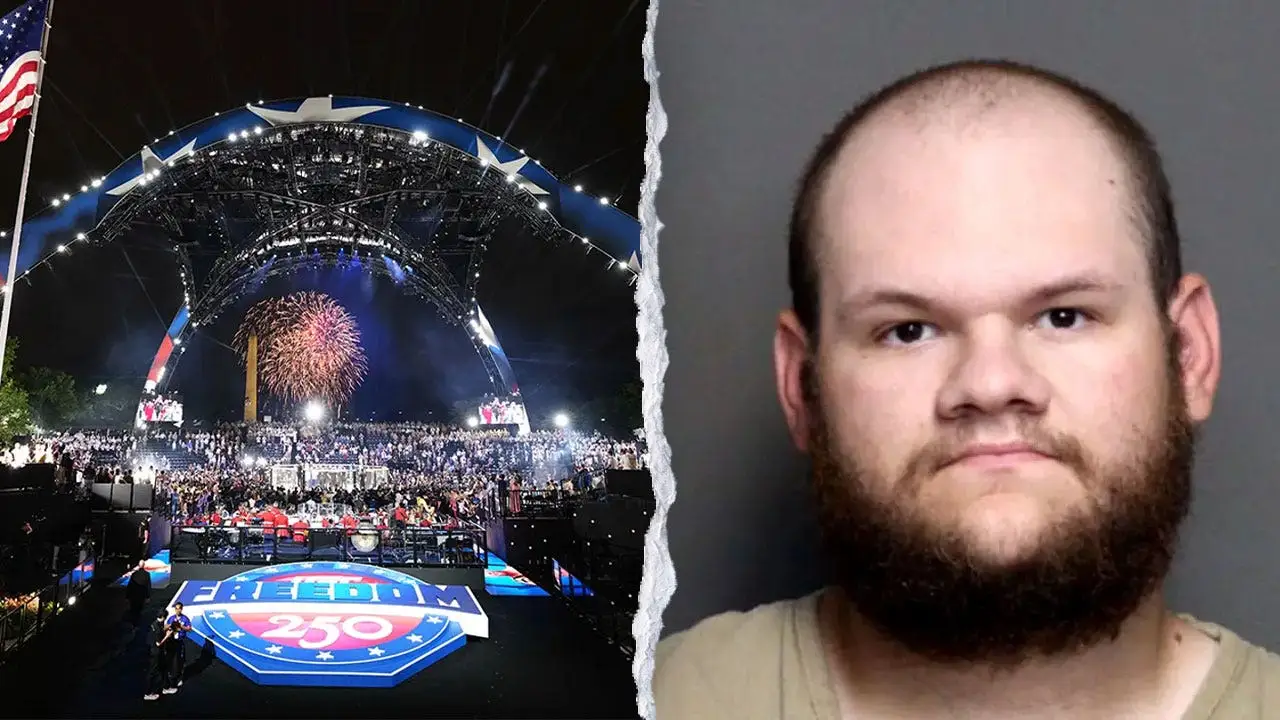
The devastating realization that your child might be harboring plans for mass murder is a nightmare no parent is ever prepared to face, yet it was the exact reality that forced an Ohio mother to make the most agonizing phone call of her life. Newly released 911 recordings paint a vivid, heartbreaking picture of the frantic moments preceding the arrest of nineteen-year-old Tycen Proper, who stood on the precipice of executing a catastrophic domestic terror plot targeting a high-profile White House sporting event. Long before federal agents swarm a property with tactical gear and sirens, there is often a quiet, suffocating domestic dread that builds within a suburban household—a mother noticing subtle shifts in her son’s temperament, an unusual collection of packages arriving at the door, and a chilling silence behind a locked bedroom door. For Proper’s mother, the turning point arrived when her anxiety shifted from maternal worry to absolute certitude that something horrific was about to unfold, prompting her to enlist the help of a relative who first contacted local emergency dispatchers. This initial call, marked by the strained, trembling voice of a cousin trying to articulate the unthinkable without sounding hysterical, revealed a family caught in a desperate race against time to disarm their own blood before his radicalization could turn lethal. The coordinator on the other end of the line listened as the caller tried to navigate the delicate line between protecting a nineteen-year-old young man and protecting the public, stating that while there was no immediate, second-by-second threat of violence in the household, the sheer volume of military-grade weapons, ammunition, and extremist ideology festering in the boy’s bedroom had reached a boiling point that could no longer be ignored or managed within the privacy of their home. This first desperate plea for intervention set into motion a rapid sequence of events that would ultimately dismantle a multi-state terror cell, proving that the front line of defense against modern domestic violence is often found not in intelligence agencies, but in the tragic, courageous choices of terrified mothers.
Minutes after her cousin hung up, Proper’s mother gathered the strength to call dispatchers directly, her voice carrying the heavy, breathless weight of a woman who had just crossed an irreversible professional and emotional rubicon by turning her own child over to the state. By the time she spoke to the operator, she and her husband had already taken drastic, physical measures to neutralize the threat in their household, desperately smuggling crates of handguns, rifles, and boxes of heavy ammunition out of their son’s bedroom and off their property entirely while he was momentarily away from the house. There is a profound, terrifying intimacy in this act of familial betrayal—parents silently dismantling their child’s armory, knowing that when he returned and discovered the empty spaces in his room, the fragile illusion of their peaceful family life would be shattered forever. During the call, the mother’s panic was palpable as she anticipated her son’s imminent return, describing the stomach-churning realization that he was likely walking through the door at that very moment, only to discover that the tools of his planned revolution had vanished. When asked by the dispatcher if her son was suffering from a drug addiction or experiencing a suicidal crisis—issues that law enforcement is accustomed to handling—she responded with a chilling clarity: this was not a cry for help or a self-destructive spiral, but rather a calculated transition into political militancy, explaining that he had expressed a fervent, unyielding desire to leave that very weekend to join an armed faction determined to “fight the corrupt government.” The FBI’s subsequent investigation would reveal that the teenager had spent approximately three thousand dollars of his high school graduation money—funds meant to launch his adult life, purchase college textbooks, or secure his first apartment—on an assortment of firearms, state-of-the-art body armor, tactical gear, and thousands of rounds of ammunition, effectively trading his future for the violent promises of online extremist networks.
The investigation soon exposed that Proper’s descent into radicalization was not an isolated tragedy, but part of a highly coordinated, digital recruitment web that trapped several other lost young men across the country, including twenty-four-year-old Bryan Omar Roa of California, whose family endured a similarly excruciating descent into suspicion and alarm. Much like the Propers, Roa’s relatives watched in silent horror as the young man they thought they knew slowly withered away, retreating further into the dark, isolated corners of his bedroom, spending endless hours illuminated by the cold glow of screens where anonymous voices fed his growing paranoia and resentment. Family members later recounted to investigators how Roa became increasingly estranged from reality, severing ties with childhood friends and speaking in cryptic, ominous riddles about an impending journey to Washington, D.C., where he claimed “something big” was destined to occur—a vague threat that instantly triggered their primal instincts to protect both him and the innocent strangers he might target. This parallel narrative of family intervention highlights the insidious nature of modern internet radicalization, which weaponizes loneliness and feeds on the impressionable minds of young men by offering them a distorted sense of purpose, brotherhood, and historical significance through violence. Through encrypted channels, message boards, and gaming platforms like Discord, these isolated individuals, scattered across thousands of miles from the suburban neighborhoods of Ohio to the coastal towns of California and the rural landscapes of Missouri, built a digital sanctuary of shared grievances, gradually desensitizing one another to the horrific reality of the mass casualty event they were actively orchestrating. The shared trauma of these families underscores a silent epidemic of modern parenting: the terrifying reality that a child can be physically present at the dinner table while their mind, morality, and loyalty are being systematically hijacked by extremist networks operating entirely within the digital ether.
The horrific reality of what these young men planned to execute was far from a mere online fantasy; rather, it was a highly organized, lethal conspiracy targeting the high-profile UFC Freedom 250 event, scheduled to take place on the highly secure South Lawn of the White House. According to federal prosecutors, the group—which grew to include seven co-conspirators, including Michael Alan Thomas, Daniel K. Eskridge, Abraham Hermosillo Alvarez, William Lee Spartacus Falkner, and Jordan W. Rincker—devised a dual-layered, maximum-casualty assault designed to exploit human panic and maximize the loss of innocent life. The mechanics of the planned attack were chillingly sophisticated: the men intended to weaponize commercial drones, converting them into airborne improvised explosive devices by packing them with high explosives engineered to detonate directly over one side of the crowded outdoor arena. The primary objective of these aerial bombings was not only to inflict immediate, devastating casualties, but to deliberately trigger a chaotic, blind stampede of terrified attendees fleeing for their lives toward what they believed would be safety. Unbeknownst to the frantic crowds, the conspiracy called for armed shooters to be strategically positioned along these designated exit pathways, waiting with high-powered sniper rifles to systematically pick off fleeing spectators, federal officials, and high-value political targets in what one member described in text messages as “hit and run missions.” The ultimate, sweeping ambition behind this brutal blueprint of blood and fire was not merely to grab headlines or settle a personal grievance, but to orchestrate a spectacle of such unchecked violence and institutional vulnerability that it would serve as the catalyst to dismantle the entire framework of the United States government, plunging the nation into an era of revolutionary chaos and civil warfare.
The rapid mobilization of the federal government to dismantle this complex network revealed a sprawling, meticulously organized logistics system that spanned multiple states, showcasing how deeply entrenched the conspirators had become in their preparation for the bloody assault. In the wake of the initial family disclosures and subsequent FBI intervention, search warrants executed at various properties across the nation uncovered a terrifying array of military-grade hardware and advanced manufacturing technology, proving the group had progressed far past the planning phases. At the home and storage lockers of Missouri suspect Jordan W. Rincker, federal agents found not just weapons, but a sophisticated workshop of modern insurgency, recovering night-vision devices, heavy ballistic plating, thermal imaging optics, and a functional 3D printer actively used to manufacture illegal, untraceable firearm components. Court documents allege that Rincker acted as a vital financial artery for the operation, accepting and distributing thousands of dollars in digital payments to purchase drones, ammunition, and explosives while providing lethal hardware to his fellow conspirators during clandestine, in-person meetings. Parallel investigations into Washington state resident William Lee Spartacus Falkner uncovered a trove of encrypted communications detailing his technical expertise, where he discussed modifying heavy-lift commercial drones to carry payload structures specifically designed to optimize shrapnel dispersion and maximize the lethal blast radius upon detonation. The sheer volume of tactical gear, automated weaponry, and detailed mapping coordinates seized during these synchronized raids painted a sobering picture of a highly functional, decentralized terror cell that was fully funded, armed, and psychologically prepared to execute one of the most daring and devastating assaults on American soil in modern history.
In the aftermath of the arrests, as the nation grappled with the terrifying closeness of the averted catastrophe, FBI Director Kash Patel announced with solemn relief that federal law enforcement had successfully stopped the plot cold before a single drop of blood could be spilled on the White House lawns. While tactical units and sophisticated cyber surveillance played an indispensable role in tracking down and apprehending the co-conspirators across the country, law enforcement experts and behavioral specialists have roundly agreed that the true heroes of this story are the families who possessed the extraordinary, agonizing moral courage to act. It is easy to champion the concept of public safety in the abstract, but the sheer emotional wreckage of a parent having to voluntarily hand their own teenage son over to the federal prison system—knowing it will likely result in the permanent destruction of his future—is a level of self-sacrifice that borders on the unfathomable. Retired foreign and domestic counterterrorism agents have publicly lauded Tycen Proper’s mother for her immense bravery, emphasizing that her frantic, decisive action to strip her son of his weapons and call the authorities stands as a profound testament to parental love in its purest, most painful form. Her willingness to endure the public shame, the personal grief, and the devastating loss of her son’s presence in her life ultimately spared dozens, if not hundreds, of families from enduring the permanent, empty grief of losing their own loved ones to a senseless act of political violence. Ultimately, this narrow escape serves as a sobering, powerful reminder that in an era where digital ecosystems can quietly radicalize a child in the safety of their own bedroom, the most powerful weapon against hatred and terror remains the vigilant, heartbreaking courage of families who choose truth and human life over silence and denial.