




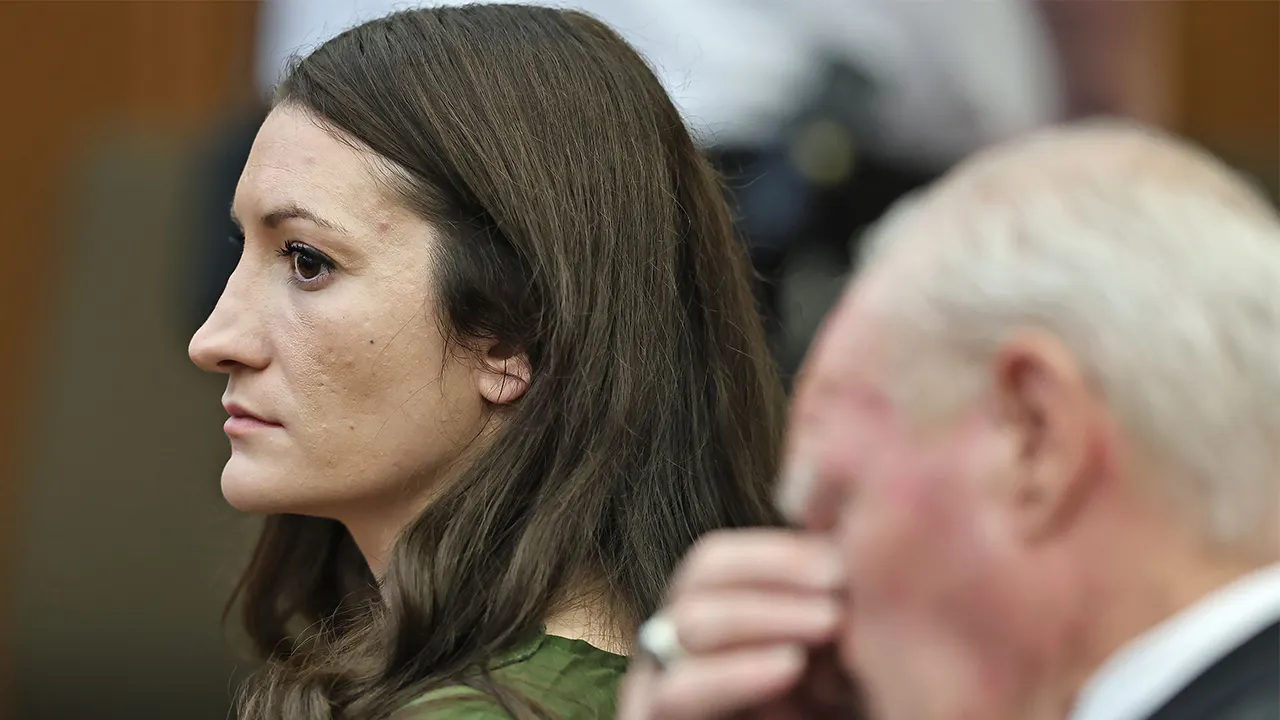
The 2023 case of Lindsay Clancy, the Massachusetts mother accused of murdering her three young children, has gripped the nation, raising profound and unsettling questions about mental health, criminal responsibility, and the boundaries of justice. As the jury continues to deliberate, a significant portion of the public conversation has centered on the possibility of a verdict of not guilty by reason of insanity. This outcome, often sensationalized in the media, is frequently misunderstood as a legal loophole or a lenient path back to freedom. However, as legal experts are quick to point out, such a verdict is anything but simple. In this humanized summary, we delve deep into the realities of the insanity defense in Massachusetts, exploring the intense legal battle ahead, the stark consequences for Clancy, and the emotional and procedural complexities that define a tragedy of this magnitude. The case is not merely a legal proceeding; it is a mirror reflecting our deepest societal anxieties about motherhood, mental illness, and the capacity for human beings to commit unthinkable acts. This exploration seeks to demystify the legal jargon and connect with the human story at the heart of the headlines.
Retired Massachusetts Superior Court Judge Jack Lu has emerged as a voice of clarity in deciphering the legal chess match that is unfolding. In a candid interview, Judge Lu dismantled the myth that an insanity acquittal would be an easy out for Clancy, who faces three counts of first-degree murder. He explained that a verdict of not guilty by reason of insanity is not an acquittal in the traditional sense, but rather a verdict of “guilty by reason of insanity,” which triggers a different, and often lifelong, form of incarceration. Clancy would not be walking free; she would be committed to a state-run mental health facility, likely for a very long time. The judge’s words carry the weight of someone who has seen the system operate from the bench, and they serve as a stark reminder that the public’s perception of the insanity defense is often far removed from reality. The decision would place Clancy’s fate not in the hands of a jury again, but into the hands of mental health professionals and, potentially, the courts themselves for the rest of her life. The initial horror of the crime gives way to a chilling and bureaucratic process that will determine her future.
Judge Lu painted a grim picture of the commitment process, suggesting that if Clancy were found not guilty by reason of insanity, she would likely face a “significant period of time” in a psychiatric institution. The release process would be incredibly arduous. He explained that a group of mental health officials, often with a “prosecutorial mindset,” would be responsible for reviewing her commitment periodically. “They’re viewed as an arm of the prosecution,” Lu said, meaning that these doctors are typically called upon by the state to testify, and they are often more conservative and risk-averse in their decisions, tending to side with keeping people locked up rather than taking a chance on releasing someone who could re-offend. The judge elaborated that these officials are generally inclined to think, “if in doubt, lock them up.” This means that even if she showed marked improvement and posed no underlying threat, the burden of proving she is no longer a danger to herself or others would be immense, and the medical establishment’s fear of public and professional backlash would likely stack the odds heavily against her release.
The legal pathway to release is not just a medical decision; it is a legal one, but it does not get easier. Lu explained that if the hospital’s medical leadership continues to keep her committed, the only other escape valve is through the court system. “The other way she could get out is if the government kept moving to commit her and the doctors did not really decide that she should be released, and then it goes to court and then a judge would decide whether she is a danger to herself or others,” Lu stated. This creates a two-step process: first, you have to be deemed healthy enough by the doctors, and if they won’t do it, you have to fight the system in a contested court hearing. This second path is lengthy, expensive, and emotionally draining, turning her case into a perpetual legal battle. The emotional toll on Clancy, who is already dealing with the gravity of her actions, would be catastrophic. The constant relitigating of her sanity, the repeated psychiatric evaluations, and the fight for a sliver of autonomy in a system designed for control would be a form of punishment that extends far beyond the walls of any prison.
To underscore the stakes and the potential trajectory of her case, the media has drawn a shocking historical parallel: the case of Constance Fisher. In 1954, Fisher, a 24-year-old Maine woman, drowned her three children in a bathtub. She was committed to a mental hospital and, after several years of treatment, was deemed well enough to be released back into the community. Tragically, the story did not end there. Fisher went on to have three more children, and in a chilling repetition of the past, she was accused of drowning these three as well in 1967. She was sent back to the mental hospital before she escaped and was found dead in the Kennebec River. While this historical case is an extreme and tragic outlier, it poignantly illustrates the immense difficulty of predicting future dangerousness and the deeply flawed, often reactive nature of the mental health and criminal justice systems. It highlights why the “lock them up” mindset among mental health professionals persists, as the fear of being the one to release a future perpetrator is a powerful deterrent, even if it means keeping someone who is genuinely rehabilitated in a facility.
As the legal and mental health worlds debate these deep issues, the human tragedy of the Clancy case remains at the center of the spotlight. The jury—composed of nine women and three men, led by a female foreperson—concluded a third day of deliberations without reaching a verdict. The choice of a female-majority jury is itself a subject of intense speculation, with experts opining on how their shared experiences as women and mothers might influence their perspective on the case, particularly concerning postpartum depression and postpartum psychosis. They are tasked with untangling a web of legal definitions, medical diagnoses, and overwhelming emotional evidence. For the families involved, the wait is excruciating. For Clancy, the wait is a prelude to a fate that, regardless of the verdict, will be defined by a lifetime of institutionalization, legal battles, and the haunting legacy of a crime that has devastated two families and a community. The verdict, when it comes, will not bring closure, but will simply mark the beginning of a new, equally complex chapter in a story defined by grief and the search for understanding.