






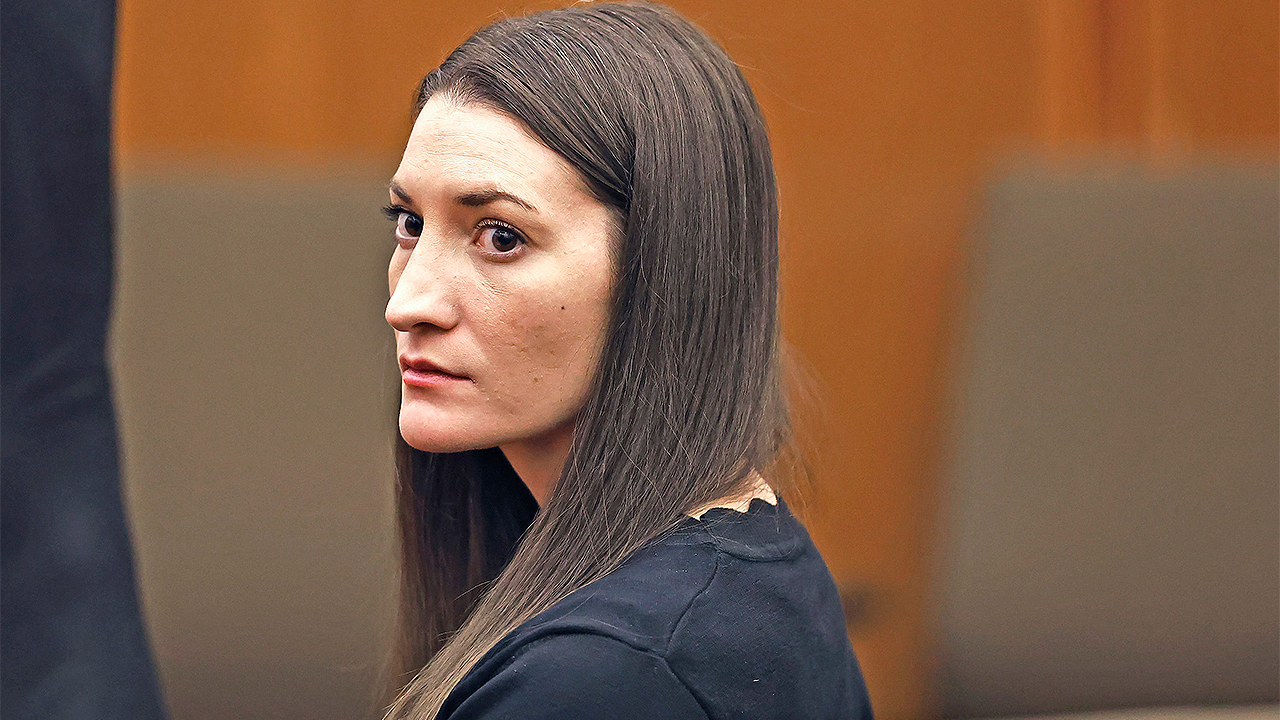
At the center of the Lindsay Clancy case lies a question that has no easy answer: if a mother, consumed by psychosis, strangles her three children and then tries to end her own life, what should society do with her? Jurors began deliberating Thursday, weighing charges of first-degree murder, second-degree murder, manslaughter, or a verdict of not criminally responsible by reason of insanity. But behind the scenes, a quieter and less understood process would unfold if the jury chooses that final option. Retired Massachusetts judge Carol Erskine, who has spent decades watching the intersection of mental health and criminal justice, said the public should not expect a simple outcome. If Clancy is found not criminally responsible, she would not receive what Erskine called “a life sentence in a public mental hospital.” Instead, her future would be governed by civil commitment laws, tested again and again by evaluations, hearings, and the fragile, shifting course of mental illness. Erskine wrote on X that Clancy could remain hospitalized for many years, even indefinitely, but only as long as the legal criteria for civil commitment continue to be met. It is a system designed not for punishment, but for protection—yet it leaves the human story trapped between two worlds: the courtroom where guilt is measured, and the hospital ward where the mind is still being treated.
The first step, Erskine explained, lies with the trial judge. If the judge orders civil commitment, Clancy would be placed in a locked unit for a 40-day evaluation. This is not a moment of rest or quiet reflection; it is a period of intense observation, where psychiatrists and clinicians attempt to assess whether a woman who killed her children still poses a likelihood of serious harm. The legal phrase sounds cold, but in practice it becomes a daily, lived question. How does she speak about the voices she heard? Does she express remorse, or still believe the children were rescued? Is she a danger to herself, years later, in a body that is already paralyzed? After the 40 days, the hospital would hold an evaluation and a hearing. If the recommendation is continued civil commitment, because the statutory criteria are still met, Clancy would then face a commitment period of six months. Again, this would be in a locked unit—not because she is a criminal, but because the law views her as someone whose illness could still lead to devastating harm. It is a strange, suspended existence: a mother who will never raise her children again, confined not by bars in the traditional sense, but by the architecture of a mental health system that must balance her rights with public safety. Erskine’s explanation makes clear that the courtroom verdict is merely the beginning of a much longer legal and clinical journey, one that ordinary citizens rarely see when they hear the phrase “insanity defense.”
What follows is perhaps the most difficult part to predict. After the initial six-month commitment, Clancy’s case would come up for review every year. At each review, clinicians and judges would evaluate whether there is still a likelihood of serious harm, and whether she should remain committed. This means the question of how long she stays in a mental hospital has no fixed answer. Erskine said it is really impossible to say how long she would be committed—it all depends on the initial commitment and these yearly evaluations. A person can be committed for another six months, or for years, or forever, as long as the legal standard is met. The process is not automatic; it is adversarial in a quieter way. The facility’s superintendent could recommend discharge, and if a petition to discharge is filed, the district attorney’s office and Clancy’s defense attorney would both be heard in court. In other words, even after a verdict of not criminally responsible, prosecutors remain involved, questioning whether the woman’s illness still makes her dangerous. The annual calendar becomes a strange, recurring ritual: psychiatrists write reports, lawyers argue, judges decide whether a woman’s mind has healed enough to release her into the world. For Clancy, who will never walk again and who carries the weight of her children’s deaths, the process may feel less like a path to freedom and more like an endless test of whether she has somehow become safe enough to exist outside locked doors.
To understand what this means, one must remember the unbearable facts that brought the case here. Clancy is charged with three counts of murder in the deaths of her children—Cora, who was five, Dawson, who was three, and Callan, who was only eight months old. Investigators say she used exercise bands to strangle them in the family’s Duxbury home, then attempted to kill herself by cutting herself and jumping from a second-floor window. The fall left her paralyzed, a permanent physical reminder of the violence that shattered her family. At trial, her defense has painted a picture of a woman descending into severe postpartum psychosis, tormented by hallucinations and what she described as a male voice ordering her to “kill her children and kill herself.” Testimony revealed that her family had been very concerned about her mental health in the months before the killings. Friends and relatives described a woman who once delighted in her children, who loved baking with Cora and reading to Dawson, but who spiraled into a darkness that no one fully grasped until it was too late. The defense has argued that Clancy was insane, unable to distinguish between reality and delusion. The prosecution, meanwhile, has tried to show that her behavior showed signs of planning and awareness, not a break with reality. One prosecutor in another infamous killer-mom case even suggested that the women on the jury might bring a strange twist to the verdict—perhaps because their empathy for Clancy as a mother cuts both ways. The jury now sits with those contradictions, forced to decide whether the woman who killed her children was evil, mentally ill, or somehow both.
Erskine’s remarks also address a detail that might otherwise seem irrelevant to the legal question: Clancy’s paralysis. In a conventional sense, a person in a wheelchair might seem less capable of committing a violent act against others. But Erskine said her limited mobility should not be expected to play a major role in evaluating future dangerousness. The legal standard for civil commitment is not only about harming others; it is about serious harm to herself as well. A woman who once threw herself out a window after killing her children may still be at risk of self-harm, even if she cannot move her legs. The voices, the guilt, the unbearable grief—none of that disappears because a person is permanently disabled. In fact, for someone with severe mental illness, paralysis might deepen the darkness. A life without mobility, without the children she once held, without any prospect of ordinary motherhood, could be a life consumed by despair. Erskine’s point is a sobering one: the law must look past the wheelchair and into the mind, assessing whether the same internal forces that led to that terrible night remain alive. This is not a matter of cruelty; it is a matter of public safety and medical reality. A locked psychiatric unit can hold a person in a wheelchair just as securely as it can hold a person who can walk. What matters is whether the illness still controls her—and whether the treatment she receives can ever quiet the storm inside her head.
In the end, the Lindsay Clancy case is a tragedy that defies easy endings. If the jury convicts her of murder, she will go to prison, where her physical limitations would require constant care but where the focus would be punishment. If the jury finds her not guilty by reason of insanity, she will go to a mental hospital, where the focus would be treatment and containment until she no longer poses a danger. But Erskine’s explanation reminds us that the latter path is not a quiet disappearance from public life. It is a long, uncertain, and deeply human process, full of evaluations, hearings, and legal battles over a woman’s mind and future. The word “indefinitely” hovers over the case like a shadow. Clancy could be released in a few years if clinicians conclude that the psychosis has resolved and she is no longer a danger to herself or others. Or she could remain institutionalized for decades, never regaining the life she once had, never escaping the consequences of one horrific night. The system does not promise healing; it promises only that a person will be held as long as necessary, and no longer. For a mother who killed her children while in the grip of delusion, that is perhaps the only justice we can offer: a framework that acknowledges her illness, restrains her capacity for harm, and leaves room for the possibility of recovery—even if that possibility may never fully arrive. In the quiet of the courtroom, after the verdict is read, that is the question the law will have to face: not just what Lindsay Clancy did, but who she has become, and who she might still be, inside the walls of a hospital and the deeper walls of her own fractured mind.