






Paragraph 1
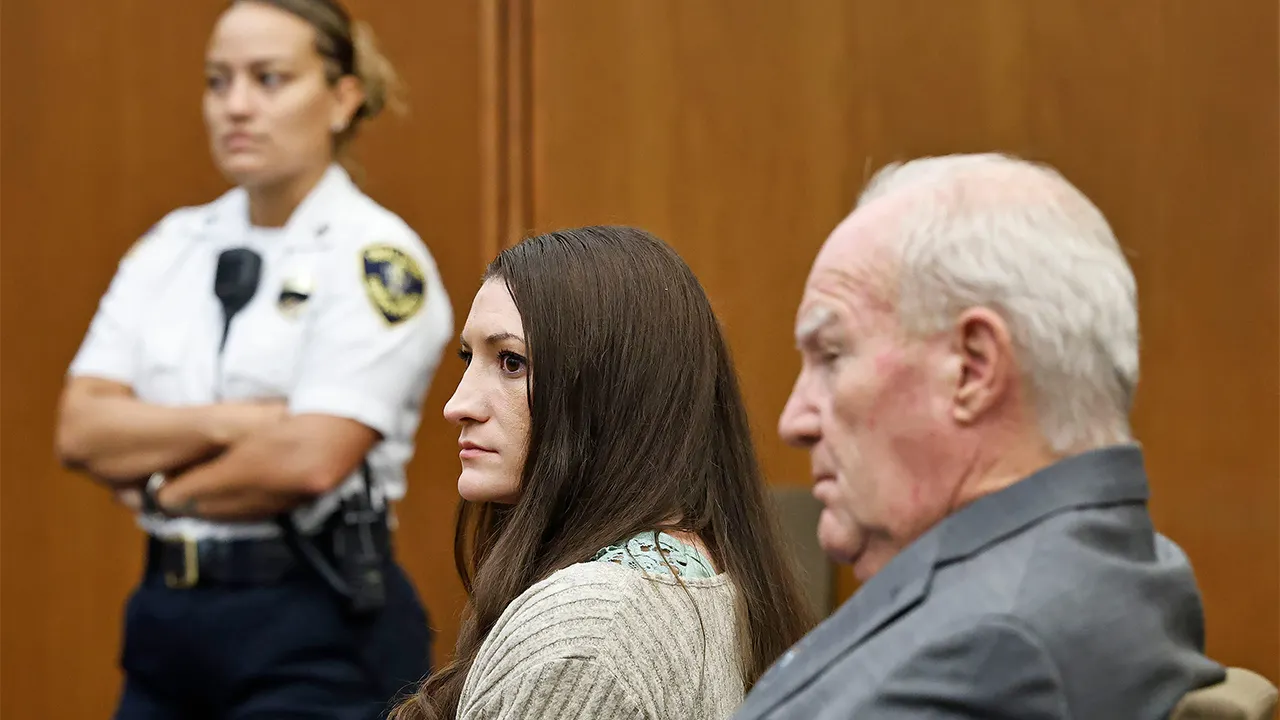
In a hushed courtroom in Plymouth, Massachusetts, the weight of an unthinkable tragedy pressed down on everyone present. Lindsay Clancy, a young mother whose name had become synonymous with one of the most heart-wrenching cases in recent memory, sat quietly as her attorney, Kevin Reddington, prepared to speak. Outside, cameras jostled for position; inside, the air was thick with tension. This was not a typical hearing. It was a moment that would upend expectations and leave legal observers scrambling to understand what was happening. Clancy stood accused of the most unimaginable crime imaginable: strangling her three young children—five-year-old Cora, three-year-old Dawson, and eight-month-old Callan—with exercise bands in the family’s Duxbury home before attempting to take her own life. The case had gripped the nation, not simply because of the horror of the act, but because of the circumstances surrounding it. Clancy was a mother who, by all accounts, had loved her children fiercely, only to be overtaken by something her family said was beyond her control: severe postpartum psychosis. Her suicide attempt had left her paralyzed, a permanent physical reminder of the night that changed everything. Now, with the first trial having ended in a mistrial just weeks earlier, Reddington was back before Judge William Sullivan, but something felt different. The strategy that had defined the first trial—an insanity defense built on the foundation of mental illness—was giving way to something no one saw coming.
Paragraph 2
“Where’s the evidence that she did this?” Reddington’s voice cut through the courtroom silence. “Where is the evidence she did this?” It was a stunning question, not because it was unreasonable, but because of who was asking it. For months, the defense had been built on a single, unwavering premise: that Lindsay Clancy, suffering from postpartum psychosis, had killed her children but was not criminally responsible. Reddington had even offered to stipulate—to formally agree—at the start of the first trial that Clancy was the one who had committed the acts. The only question, he had argued, was her mental state. But now, in a dramatic about-face, he was suggesting something entirely different: that perhaps the evidence didn’t actually prove she had done it at all. He pointed to what he described as gaps in the physical evidence, including questions about blood, DNA, the timing of events, and the peculiar circumstances surrounding Clancy’s own suicide attempt. “This may just be a defense lawyer denying everything, using the kitchen sink approach, hoping one of these arguments would resonate with Judge Sullivan,” explained Neama Rahmani, a former federal prosecutor closely following the case. “Or it could be a shift in defense strategy, where maybe instead of arguing insanity or lack of criminal responsibility at the retrial, they put on a third-party culpability defense as well, arguing that maybe someone else is the real killer.”
Paragraph 3
To truly understand the weight of this moment, one had to grasp the legal machinery at play. Reddington was invoking Rule 25(b)(2), a provision of Massachusetts law that permits a judge to override a deadlocked jury and enter a not-guilty finding if the prosecution’s evidence was legally insufficient to support a conviction. It was a motion that was “routine but seldom successful,” according to Carol Erskine, a retired Massachusetts judge who had been following the case closely. “He is arguing that [they] did not prove each and every element as required by law,” Erskine explained. “He told the judge he asked for a Bowden instruction and was denied, which meant he was challenging the poor investigation and search at the home by police. It’s a very nuanced argument.” The prosecution, for its part, was having none of it. They dismissed Reddington’s assertion as “a laughable argument,” insisting that the evidence against Clancy was overwhelming. But the fact that Reddington was even making the argument represented a significant departure from his previous legal strategy. “For the first time we saw Kevin Reddington say that there’s reasonable doubt as to whether Lindsay Clancy actually killed her children,” Rahmani noted. “He’s never said that in the courtroom, outside the courtroom—and in fact at the beginning of the first trial, he offered to stipulate to Lindsay killing her three children.”
Paragraph 4
The first trial had been a gut-wrenching affair, a legal and emotional battle that laid bare the darkest corners of a family tragedy. The prosecution painted a portrait of a mother who methodically and deliberately ended the lives of her three children, using exercise bands in a calculated act of violence. The defense countered with a devastatingly sad alternative narrative: a woman in the grips of severe postpartum psychosis, her mind warped by a condition that left her unable to distinguish right from wrong, convinced she was somehow saving her children from a fate worse than death. After roughly a week of deliberation, the jury emerged deadlocked—11-1 in favor of finding Clancy not guilty by reason of insanity. Only one man, a juror who has since become something of a polarizing figure, voted to convict. He has since spoken publicly, defending his decision and claiming that while he believed there was reasonable doubt, he could not endorse a verdict of not guilty by reason of insanity. The mistrial left the case in legal limbo, and Reddington, visibly frustrated, has taken to calling the holdout an “obstructionist”—first in comments to Fox News Digital and again outside the courthouse on Tuesday. The 11 jurors who sided with the defense were convinced that mental illness had robbed Clancy of her ability to control her actions; the lone holdout saw things differently.
Paragraph 5
Beneath the legal arguments and procedural maneuvers lies a human tragedy of almost incomprehensible proportions. Lindsay Clancy was a mother who, according to her family and friends, adored her children. She was a woman who had struggled with mental health issues following the birth of her youngest child, who was just eight months old at the time of the killings. Her descent into psychosis was so severe that her family believes she was not acting of her own free will but was instead a prisoner of a diseased mind. In the aftermath of the killings, she attempted to take her own life, jumping from a window and sustaining catastrophic injuries that left her paralyzed from the waist down. She now spends her days in a wheelchair, her body broken, her mind—depending on whose expert you believe—either still gripped by illness or finally clear enough to comprehend the horror of what happened. Her husband, Patrick, who was away at a pharmacy picking up medication for his wife on the night of the killings, has been left to navigate an unfathomable reality: the loss of three children, a wife in prison, and a life forever altered. The case has sparked a broader conversation about the failures of the mental health system, the pressures of new motherhood, and whether society should hold legally accountable those who commit acts of violence while in the grips of severe psychiatric illness. It is a conversation that offers no easy answers, only painful questions.
Paragraph 6
For now, the case continues to wind its way through the legal system, a slow and deliberate process that offers little comfort to anyone touched by the tragedy. Clancy is due back in court on November 2 for another motion hearing, where her attorneys are expected to argue for dismissal on double jeopardy grounds and to open an inquiry into the holdout juror. No new trial date has been set, and Reddington has indicated he would not be available to begin one until June 2027—a timeline that underscores the immense complexity of the case and the logistical challenges of mounting a second trial. Legal experts are divided on what the future holds. Some believe the prosecution, facing the reality of an 11-1 jury deadlock, may be open to a plea deal that spares everyone the pain of another trial. Others believe Reddington’s new strategy suggests he believes he can win outright at a retrial, either by convincing a jury that someone else was responsible or by convincing a judge that the state’s case is simply too weak to proceed. Whatever happens, the tragedy of the Clancy family—three young children lost, a mother shattered, a father left to grieve—will linger long after the legal battle is over. In the end, there is no verdict that can bring Cora, Dawson, and Callan back. There is no sentence that can undo the damage done on that cold January night. There is only the slow, painful process of seeking justice, and perhaps, for everyone touched by this case, the hope that something good can come from so much sorrow.