






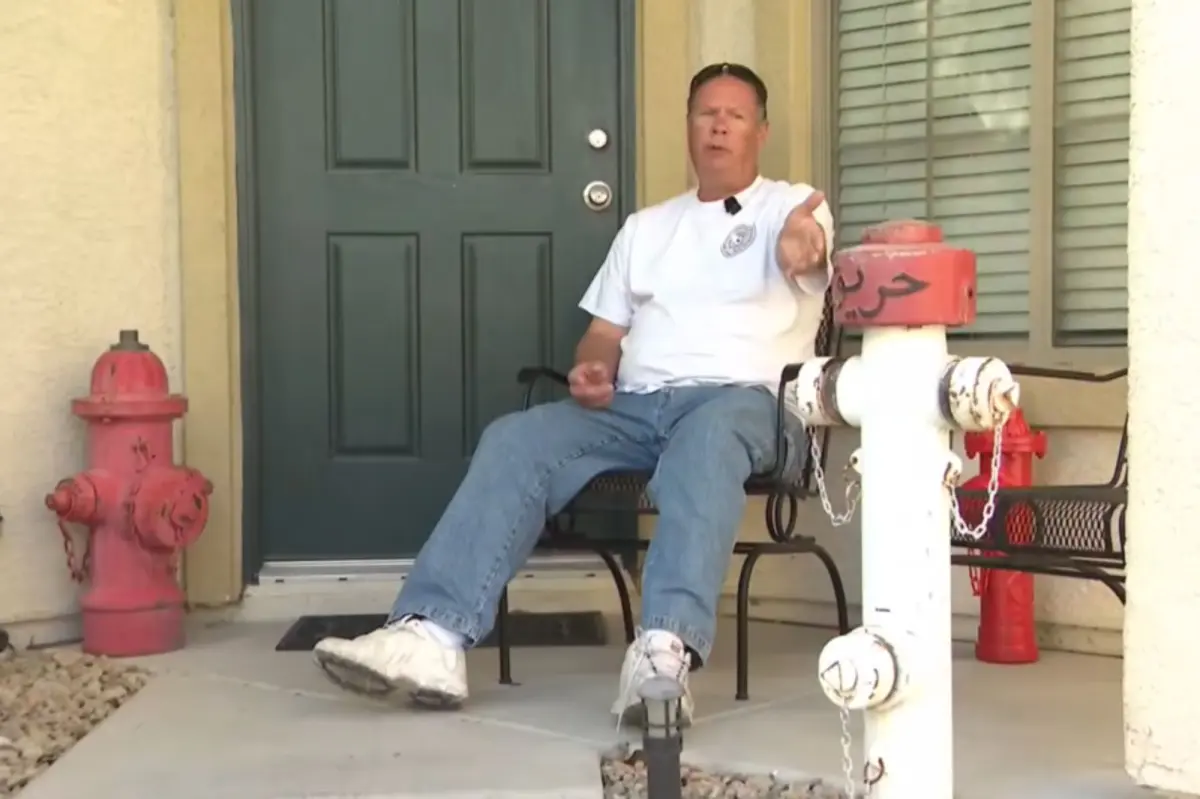
Brent Saba, a devoted military veteran from Las Vegas, has been locked in a frustrating battle with his homeowners’ association (HOA) over something deeply personal: three vintage fire hydrants he proudly displays outside his home. As a firefighter with over 30 years in the service, including a stint as a fire inspector, Saba sees these pieces not just as decor, but as tangible links to his life’s calling and sacrifices. Imagine serving your country in the heat of Iraq, dodging dangers to protect communities, only to come home and face a bureaucratic skirmish over symbols of bravery and duty. For Saba, these hydrants aren’t junk—they’re relics of resilience. One, which he lugged back from his deployment in Iraq, sits as a silent sentinel, a reminder of the time he spent far from home, battling not just fires but the profound loneliness of war zones. The other two echo his decades-long firefighting career, where he rushed into infernos, pulling people to safety and ensuring homes like his own were safeguarded. Saba moved into the neighborhood over a year ago, and these hydrants became part of the front yard landscape without a peep from anyone, almost like they belonged there from the start. Neighbors, he shares, have always admired them, seeing them as charming touches that added character to the block rather than eyesores. But one day, out of the blue, the HOA dropped a citation, claiming these non-operational treasures violated rules on front and side yard landscaping. It felt like a slap in the face, a pointless nitpick in a life built on heroism. Saba was stunned—how could an association that prides itself on community harmony target a man hailed for protecting the very fabric of society? He pushed back, his voice steady but edged with exasperation, pointing out that these objects tied to his military service and firefighting legacy weren’t clutter; they were stories etched in metal, proclaiming the honor he lived by. As he recounts the tale, you can picture the scene: Saba standing in his yard, gesturing to the hydrants like proud parents to their kids, defending their right to exist in a world that sometimes forgets the value of quiet tributes. This isn’t just about hydration standpipes; it’s about respecting a veteran’s pride and the unspoken codes that bind communities together. Saba’s neighbors rallied around him, offering written support that underscored how many felt the display elevated the neighborhood, turning ordinary curbsides into spots of quiet reflection. Walking through the streets, one could feel the community’s pulse—that this wasn’t division, but a shared appreciation for service. Yet the HOA stood firm, painting them as “storage items” under some arcane rule, ignoring the emotional weight they carried. Saba, ever the level-headed inspector, couldn’t help but draw parallels to his own professional creed: issuing violations for infractions that don’t even apply would make him look foolish and unjust. In his mind, the HOA’s stance felt arbitrary, a rigid enforcement that disregarded the human element. This episode tugged at his roots, making him question if this neighborhood, meant to be a sanctuary, had lost its way. He spoke passionately to local media, his words dripping with a mix of disbelief and determination, hoping to shed light on how such overreach chips away at the very spirit of communal living. As word spread, more folks chimed in, sharing their own tales of HOA hassles, turning Saba’s plight into a mirror for broader frustrations. People empathized, seeing in his story echoes of their own fights against impersonal regulations that stifle personal expression. Saba wasn’t just fighting for his hydrants; he was defending the right to honor one’s journey without bureaucratic hurdles, reminding everyone that homes should celebrate heroes, not hinder them. In the end, amidst the tension, Saba’s resolve shone, proving that sometimes, speaking up can shift even the most stubborn tides.
In response to the citation, Saba wasn’t one to back down quietly. Stepping into the fray, he submitted an application to the HOA, hoping to formalize what seemed like an obvious approval. Alongside his paperwork, he gathered heartfelt written endorsements from neighbors, a chorus of voices affirming that the hydrants weren’t nuisances but neighborhood enhancers. These supporters, ordinary folks with their own stories of community pride, penned letters that painted vivid pictures of how the display added a touch of authenticity and warmth to the area. Imagine the effort: Saba compiling these notes, each one a testament to goodwill, only to face a denial that felt cold and unjust. It wasn’t just a bureaucratic “no”; the HOA tacked on more hoops, suggesting he needed even broader homeowner approval, as if a veteran’s legacy required a popular vote. Saba shook his head in bemusement—this from the same fire inspector who, in his duties, ensures codes are followed fairly, not twisted into weapons. He likened it to writing up a building for a fire hazard that didn’t exist, a professional absurdity that would embarrass him in front of his peers. The denial stung, amplifying his sense of isolation; here was a man who risked his life for others, now embroiled in a petty dispute over inert objects symbolizing his bravery. As days turned to weeks, Saba channeled his firefighting grit, researching HOA laws and consulting quietly withznych those in the know, refusing to let resentment simmer without action. He reflected on the irony: in Iraq, he navigated deadly terrains with precision, yet back home, defending his front yard felt like gearing up for another unseen battle. The process dragged on, testing his patience, but he remained composed, sharing his frustrations with friends and family who couldn’t believe the overreach. One neighbor recounted swapping stories over coffee, laughing wryly at how the hydrants had become overnight sensations—folk heroes in their own right, sparking conversations about service and silliness in regulation. Saba’s determination grew; he wasn’t fighting just for his honor but for a precedent that might empower others stifled by similar rules. This skirmish unearthed a deeper disbelief: how could an association ignore the collective nod of approval from its members? It was a human drama unfolding in suburbia, where paperwork met passion, and Saba’s quiet defiance invited broader scrutiny on how HOAs can sometimes wield power without balance. Through it all, he kept his cool, drawing strength from the same reserves that saw him through firefighting missions, turning what could have been defeat into a stand for meaningful dialogue. The experience forced him to confront the darker side of community governance, where rules designed for harmony occasionally create divides, yet Saba’s resolve hinted at possibilities for reform.
By Saturday, the narrative took a surprising turn when Saba received word from the HOA that he could keep the hydrants. Sighing in relief tinged with lingering bitterness, he shared the update, calling out the association’s behavior as “out of control” and accusing them of trying to “bully and manipulate” him. It was a victory, albeit hard-won, that underscored how insistence and publicity can pierce bureaucratic armor. Saba, now looking back, felt a mix of triumph and trepidation—this concession came after his vocal pushback, proving that standing firm mattered. But the ordeal left emotional scars, prompting him to ponder his long-term place in the neighborhood. As he paced his yard, gazing at the hydrants, he mused on how this “last straw” episode made him question staying put. The tussle ignited a flicker of unrest, not just personal but communal; neighbors exchanged knowing glances, wondering if their HOA had overstepped before. Saba articulated his hopes aloud, dreaming of improvements that fostered genuine respect over rigid decorum. It was more than resolution—it was a wake-up call for change. In recounting this, Saba’s tone softened to one of cautious optimism, appreciating the support that swirled around him like firefighters dousing a blaze. Yet, beneath the surface, skepticism lingered; trust in the HOA felt frayed, and he weighed options like selling up or advocating for alterations to the rules. This wasn’t just about hydrants anymore; it was about reclaiming agency in one’s home. Saba’s story resonated widely, becoming a symbol of perseverance against arbitrary authority. As he wrapped up his recounting, he emphasized gratitude for allies who’d bolstered him, transforming isolation into solidarity. The hydrants, now safeguarded, stood as testaments to enduring spirit, and Saba’s ordeal painted a picture of a man unbowed, reminding us that even small victories can ripple outward, inspiring others to guard their own backyards fiercely.
Reflecting on Saba’s saga, it’s impossible not to feel a swell of admiration for the man at its heart. At 30-plus years in firefighting, including tours that shaped his worldview, Brent embodies the quintessential American hero—stoic yet outspoken when gauged by injustice. Each hydrant in his display narrates chapters of his life: the Iraq one, hauled home like a war trophy of introspection, evokes nights under desert skies, worlds away from peaceful Las Vegas suburbs. His dedication shines through anecdotes, like pulling folks from flames or inspecting structures with eagle-eyed precision. Saba’s push against the HOA wasn’t mere Stubbornness; it was a defense of identity, a refusal to let service-themed memorabilia be dismissed as mere “storage.” Imagine the punch to the gut: serving selflessly, only to be hassled over tokens of that service. His neighbors’ support became a lifeline, their endorsements weaving a tapestry of community empathy. Saba’s comments to media revealed a depth of character—witty, relatable, and unflinchingly honest—turning a local dispute into a national conversation on HOA overreach. We’ve all heard tales of condominiums enforcing absurd rules, from forbidden garden gnomes to outlawed holiday lights, but Saba’s hit home because it bridges veteran struggles with everyday homeowner woes. In humanizing repose, one sees Saba not as a headline but as a friend or neighbor, grilling steaks while sharing war stories, his laughter masking deeper scars. His resolve to “go down fighting” mirrors the firefighting ethos of never abandoning ground, even against unseen fires. This episode humanizes larger debates on bureaucracy, where rules meant to protect can inadvertently oppress. Saba’s victory fosters hope, illustrating that visibility and voice can bend inflexibility. Intriguingly, it prompts introspection: How many unnoticed heroes face similar slights, their pride symbols relegated to attics? Saba’s narrative transcends the hydrants, celebrating resilience and the unyielding human spirit in the face of petty adversity.
The HOA’s role in this drama raises eyebrows, as attorneys and experts weigh in on its missteps. Chad Cummings of Cummings & Cummings Law, a real estate legal eagle, called it a “textbook example” of HOAs misapplying their own bylaws, distorting rules on “storage items” to target what are clearly decorative, non-functional pieces. Cummings, with his seasoned insight, dissected how such blunders aren’t rare—they highlight flaws in governance where boards wield power without nuance, overlooking community sentiment and purpose. In Saba’s case, branding esteemed memorabilia as violations felt egregiously off-base, akin to calling a medal collection junk. Cummings painted HOAs as imperfect institutions, often managed by volunteers stretching thin, leading to inconsistent rulings. This perspective adds layers, showing the HOA not as villains but as flawed entities needing reform. Attempts to reach the Antelope HOA for comment went unanswered, amplifying the story’s intrigue— Were they stubbornly silent or simply overwhelmed? Experts like Cummings emphasize education and mediation to prevent such flare-ups, urging holed HOAs to humanize bylaws with flexibility. Saba’s ordeal spotlights gaps: Where personal history clashes with communal standards, empathy should prevail. Law practitioners note rising disputes nationwide, fueled by polarized times, where symbols like military relics become flashpoints. Yet, Saba’s win through persistence offers a blueprint—advocacy, not capitulation, can compel fairness. This humanizes the legal landscape, portraying attorneys as allies in everyday battles, guiding folks through jargon to justice. Cummings’ quote ripples like a rallying cry, reminding us that HOAs exist to enhance living, not dictate decor. Saba’s story, viewed through this lens, underscores the need for balanced power, where boards listen as much as dictate. It’s a cautionary yet hopeful tale, proving that expert voices can illuminate paths to harmony, transforming potential feud fodder into opportunities for better policies.
In wrapping up this heartfelt chronicle of Brent Saba’s ordeal, one can’t help but draw parallels to the broader American tapestry of gratitude, change, and overlooked voices. Saba’s firefighting saga intertwines with veteran narratives, each hydrant a pixel in the grand mosaic of sacrifice—reminding us that heroes dwell among us, their accolades sometimes battled for in the quiet of suburbia. His “out of control” HOA lament echoes frustrations shared across neighborhoods, where rigid rules stifle spirit, yet his stand ignited reforms, perhaps subtly shifting dynamics for others. This isn’t fable; it’s a real man’s real fight, humanizing abstracts into anecdotes we nod along to over coffee. Saba’s hope for neighborhood improvement feels attainable now, with the hydrants intact as emblems of defiance won. We’ve seen how neighbors rallied, experts dissected, and a single veteran prevailed, fostering a sense of shared victory. His story prompts pause: In epochs of division, can personal stories mend communal rifts? Saba’s resilience, forged in fires domestic and distant, assures yes. As I reflect, Saba represents enduring American grit—the quiet guy who speaks when it counts, defending heritage against obscurity. This tale, expanded from headlines to heartbeats, celebrates the human side of headline-making, urging us to cherish such champions and question overzealous authorities. Saba’s hydrants, once contested, now stand as beacons, symbolizing triumphs over triviality. May his journey inspire: In life’s battles, stand tall like a discarded relic, and perhaps, bend the arc toward justice. It’s a narrative of empowerment, where one man’s voice amplified change, weaving threads of courage into everyday fabric. Thank you, Brent, for reminding us that true strength lies not in silence, but in resounding declaration. As the sun sets on this chapter, lawns adorned with quiet pride shine brighter, and communities breathe a little freer.