





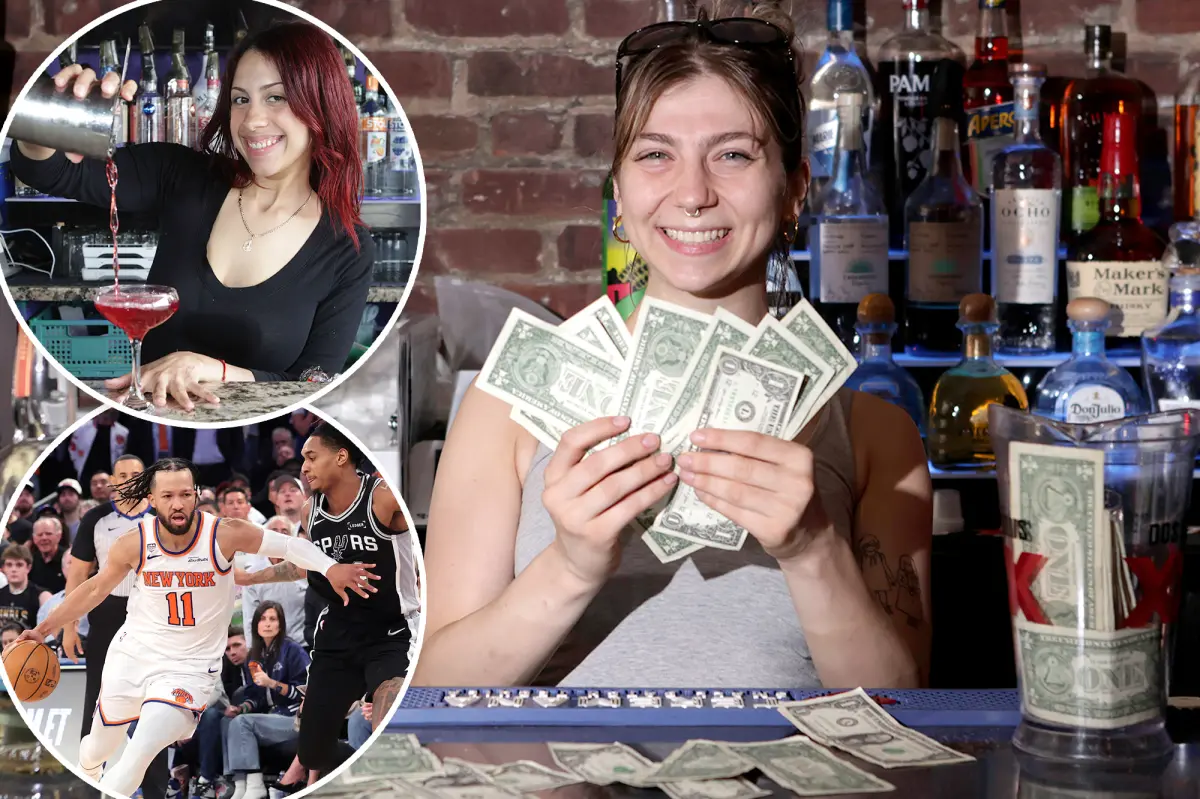
There is a unique, almost electric current that crackles through the busy streets of New York City whenever the Knicks are on a winning streak, but this current postseason run has transformed the entire metropolis into an absolute crucible of collective, unbridled joy. For decades, local basketball enthusiasts have harbored a quiet, bruised hope, nursing faded memories of past championship glories while enduring season after season of heartbreaking near-misses and disappointing rebuilds. Now, that half-century of collective yearning has finally erupted into a full-blown cultural renaissance, and its most dramatic effects are being felt not just on the hardwood of Madison Square Garden, but on the sticky, sweat-slicked floors of neighborhood bars, family-owned pubs, and cozy diners across all five boroughs. As the iconic blue and orange flags flutter proudly from brownstone fire escapes and car antennas, a wave of unprecedented financial generosity has swept through the local hospitality industry. Servers, bartenders, and kitchen staff, who represent the incredibly hard-working and often underappreciated backbone of the city’s legendary nightlife, are finding themselves at the receiving end of what many describe as the most lucrative shifts of their entire professional lives. The sheer euphoria of a late-game three-pointer or a gritty, game-saving defensive stop is translating directly into cold, hard cash, as ecstatic patrons celebrate each hard-fought victory by showering their favorite service workers with gratuities that defy standard conventions and boundaries. This is not merely a story about sports; it is a vivid, heart-warming testament to how a shared civic passion can ripple outward, radically improving the financial realities of ordinary, working-class New Yorkers who keep the taps flowing and the local spirits high long after the arena’s final buzzer has sounded.
The absolute epicenter of this beautiful economic love letter can be found in bustling neighborhood hubs like One Station Plaza in Bayside, Queens, where the air on game nights becomes incredibly thick with the savory aroma of chicken wings, spilled draft beer, and the high-stakes tension of playoff basketball. Here, Katherine Turk, an exceptionally dedicated bartender who has successfully navigated the fast-paced, exhausting currents of the New York service industry for two years, has witnessed the immense magnitude of this fan-fueled generosity firsthand. She describes the atmosphere during these high-voltage watch parties as absolute magic—an unforgettable, chaotic whirlwind where the traditional separation between staff and customer completely dissolves into a single, screaming mass of shared hope and vulnerability. During the high-octane drama of Game 2, Turk watched in utter disbelief as a single, appreciative patron left her a staggering $150 tip on a modest $300 check, a beautiful reflection of the profound happiness that only sports can invoke in a weary crowd. For John Ryan, the 63-year-old owner of the establishment, watching his beloved bar fill to the absolute gills with wide-eyed, passionate fans is the ultimate fulfillment of a lifelong dream. Ryan, who has lived through the devastating dry spells, empty promises, and underwhelming seasons of the past fifty years, understands deeply that this current playoff run is a historic milestone for his community. He notes with immense gratitude that the sudden influx of energetic patrons is not merely a temporary financial boost for his own cash registers, but a literal and figurative “shot in the arm” for every small business in the neighborhood, breathing new life into a local economy that has hungered for this exact kind of raw, unfiltered communal celebration after years of pandemic hardships.
This phenomenal surge in tipping is not just an anecdotal phenomenon talked about during hushed morning prep shifts; it is a hard, measurable economic reality backed by modern billing systems and comprehensive digital data. According to an extensive survey conducted by the digital payment platform sunday, which simplifies tap-to-pay billing in dining establishments, the deluge of financial goodwill officially began in earnest on May 19th, a day now written into local sporting lore when the Knicks triumphed over the Cleveland Cavaliers in a heart-stopping overtime victory during Game 1 of the Eastern Conference Finals. Since that pivotal, high-tension night, statistical trends reveal that average everyday patrons are tipping roughly four percent higher on nights that the Knicks storm the court compared to standard, non-game evenings out on the town. While four percent might seem like a modest variation on paper, when scaled across hundreds of tables and busy weekend crowds, it translates to hundreds of additional, life-changing dollars in the pockets of working servers by the end of a grueling week. Furthermore, the survey highlighted that a highly passionate segment of big-spending fans are routinely leaving gratuities that reach an astonishing thirty-three percent of their total bills, essentially rewriting the rules of modern dining etiquette out of pure, unadulterated sports joy. This unprecedented generosity is also directly linked to a massive spike in overall spending, with several local restaurants reporting instant profit surges of nearly $1,000 on game nights, creating a prosperous compounding effect where bigger checks are met with significantly higher tipping percentages.
Over at Tipsy Tequila, another vibrant and bustling hospitality hotspot situated along the busy strips of Bayside, twenty-six-year-old bartender Katherine Ritter describes the ongoing phenomenon as something entirely “next level,” easily eclipsing any standard holiday rush or rowdy holiday weekend crowd she has ever encountered in her career. Ritter, who has spent her young adulthood carefully observing the natural ebb and flow of New York’s complex nightlife, explains that the sheer, visceral excitement of the Knicks hovering on the precipice of an NBA championship has unleashed a level of consumer spending that feels almost carnivalesque in its intensity. On game nights, her bar undergoes a remarkable physical transformation, morphing into a sea of blue and gold jerseys where the boundaries between strangers disappear, and the collective desire to drink, eat, and celebrate turns a standard eight-hour shift into an exhilarating, fast-paced marathon. Ritter fondly recalls Game 2 as a definitive professional peak, a night when the sheer volume of unusually high tips left her and her hard-working colleagues in a state of stunned, emotional gratitude. What makes this historic era so beautiful and unique, she thoughtfully observes, is the way the excitement has successfully unified people of all ages, backgrounds, and walks of life under one roof, establishing a friendly, shared vocabulary of hope. Even when the games are incredibly tight and the nervous tension in the room is thick enough to cut with a glass, the underlying atmosphere remains incredibly kind and supportive, with patrons viewing the bartending staff not just as employees, but as vital co-conspirators in their shared journey toward sports history.
Remarkably, even when the scoreboard delivers a crushing blow and the room falls into a collective, disappointed hush, the financial support for the staff rarely falters, showcasing the deep-seated empathy and loyalty of the classic New York sports fan. Julia McElhoney, a proud resident of Little Neck who works alongside Ritter behind the bar at Tipsy Tequila, experienced this profound, post-game solidarity firsthand on a recent, tense Monday evening. Despite a heartbreaking, narrow loss that left many patrons nursing their sorrows in quiet frustration, one exceptionally generous customer handed McElhoney an incredible $240 tip on an $800 check—a remarkable forty-two percent gratuity on a night where she would normally expect a standard twenty percent tip. This kind of heavy financial cushion is a massive godsend for young workers navigating the notoriously exorbitant cost of living in the NYC metropolitan area, helping secure rent payments and grocery bills. This unprecedented swell of local support is driven largely by the massive, record-breaking crowds that these playoff games are drawing to neighborhood venues. Dan Geoghan, the seasoned manager of Bourbon Street on Bell Boulevard, notes with a shake of his head that his popular restaurant has not seen crowds of this magnitude in its entire three decades of operation on the avenue. Fans are eagerly arriving a full two hours before the opening tip-off just to secure a table with a clear view of the screens, staying late into the night to dissect every play, and transforming what would ordinarily be a quiet, slow weekday evening into an unforgettable festival of neighborhood camaraderie, local pride, and mutual appreciation.
Ultimately, this beautiful intersection of athletic triumph, community bonding, and grassroots economic revitalization has caught the attention of city leadership, highlighting the incredibly profound macro-economic footprint of a successful sports franchise on a metropolis. Mayor Mamdani recently revealed to the public that the Knicks’ deep, thrilling postseason run is projected to generate an astonishing, record-breaking $465 million in total economic activity for the Big Apple, a massive financial windfall that serves as a powerful reminder of how deeply professional sports are woven into the financial and social survival of the city. While the official press releases and political statistics naturally focus on major hotel bookings, expensive stadium ticket sales, and international tourism metrics, the true, authentic human heart of this economic miracle resides in the thousands of neighborhood bars, family-owned pubs, and cozy eateries that define New York’s distinct local culture. In a resilient city that has weathered devastating pandemic shutdowns, soaring inflation, and the daily, relentless stress of modern urban life, the Knicks have provided a rare, precious, and beautiful gift: a genuine reason for millions of disparate people to stand side by side, raise a cold glass in unison, and believe in something together. The extra cash sliding across wooden bar tops, the warm, shared smiles between physically exhausted servers and ecstatic fans, and the thunderous chants of “Go Knicks” echoing down Bell Boulevard are proof that when New York wins on the court, absolutely everyone in the city wins together.