





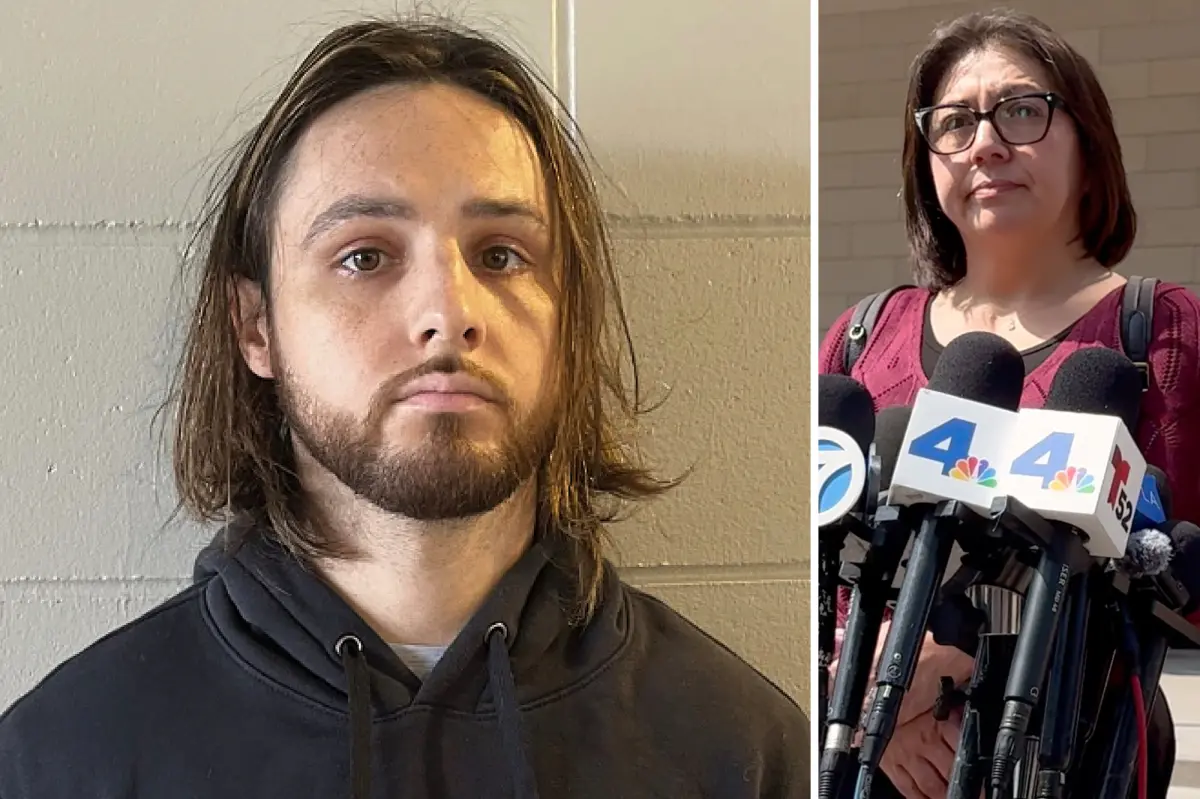
The weight of civic duty often comes with an expectation of solemnity, precision, and the execution of grand justice, but for Juror #4, a woman named Bryana hailing from the quiet coastal community of Lompoc, California, her experience inside the federal courthouse in Los Angeles was defined by a profound and frustrating sense of disillusionment. Sitting in the jury box of a high-profile federal trial, tasked with deciding the fate of Jonathan Rinderknecht—the man accused of igniting the devastating Palisades fire on the first day of 2025—Bryana found herself increasingly alienated by the government’s presentation of its case, ultimately describing the prosecution’s entire legal effort with the unfiltered and biting characterization of absolute “bullsh*t.” To Bryana and several of her fellow citizens on the panel, the trial felt less like a meticulous search for truth and more like an expensive, drawn-out exercise in futility, leaving her to question why so many public resources, intellectual energy, and precious hours were being poured into a narrative that seemed to fall apart under any real scrutiny. She recounted feeling a persistent sense of bewilderment during the proceedings, experiencing a recurring internal monologue of, “What are we doing here?” as the days dragged on. Rather than building a solid, airtight foundation of guilt that would justify depriving a man of his liberty, the federal prosecutors seemed to achieve the exact opposite effect on her; with every subsequent piece of evidence and witness testimony they introduced, they unwittingly chipped away at their own credibility, making her feel as though Rinderknecht was more and more innocent with each passing day. This disconnect between the theatrical gravitas of a federal prosecution and the flimsy reality of the evidence presented created a deep cognitive gap for Bryana, who noted that while television dramas often depict complex legal chess matches where dangerous criminals slip through technical loopholes, this real-life courtroom felt like a upside-down world where the state was simply failing to meet the basic, foundational burden of proof required to convict a human being.
The mounting tension within the jury room reached its inevitable, suffocating climax on a Friday afternoon when the twelve citizens were summoned back into the sterile, imposing environment of the Los Angeles federal courtroom to address their complete lack of consensus. The atmosphere was thick with anticipation as the judge systematically put a series of standard, yet heavily loaded, questions to the jury foreman, attempting to determine whether there remained any shred of hope that further deliberation could salvage the weeks of court time and prevent a costly reset. With each question—asking whether it was the foreman’s considered opinion that the jurors were deadlocked beyond repair, whether there was any clarifying instruction or assistance the court could provide to break the impasse, and whether sending them back into the deliberation room would yield a verdict—the foreman delivered a definitive, unyielding “no,” sealing the fate of the trial and forcing the judge to officially declare a mistrial. The deep ideological divide within the jury room was starkly revealed by the final tally: ten jurors voted to find Rinderknecht not guilty, while only a small minority of two stood firmly in the camp of the prosecution, believing he was guilty of the arson charges. Throughout this high-stakes courtroom drama, Jonathan Rinderknecht sat quietly at the defense table, showing almost no visible emotion as the announcement of the hung jury was read aloud to the court, maintaining a stoic composure that masked the immense personal stakes of the moment. Yet, despite the overwhelming majority of his peers concluding that the government had failed to prove its case against him, there was no triumphant exit or immediate path back to freedom for Rinderknecht, who was promptly escorted back into custody, where he remains trapped in a legal limbo, awaiting his next chapter in a jail cell.
The ink was barely dry on the judge’s declaration of a mistrial before the state’s aggressive legal machinery began to grind back into motion, propelled by the swift and public defiance of Los Angeles’s top federal prosecutor, Bill Essayli. Unwilling to accept the defense-leaning 10-2 split as a sign of structural weakness in his office’s case, Essayli took to social media to state his unwavering determination to drag the defense back into the arena, issuing a fiery post on X that served as a declaration of legal war. In his public statement, Essayli asserted with absolute confidence that the evidence gathered by investigators remained incredibly strong, pointing directly to Rinderknecht as the singular individual responsible for igniting the destructive brush fire on January 1, 2025, which would eventually blow up into the formidable and terrifying Palisades fire. He made it clear to the public, the victims of the fire, and the legal community that his office fully intends to retry the case in front of a brand-new panel of jurors, expressing an absolute certainty that they will secure guilty verdicts on each and every count leveled against the defendant. This swift, uncompromising response highlights the immense political and social pressures bearing down on prosecutors in high-profile environmental disaster cases, where public outcry for accountability and the devastation of natural landscapes demand a culprit, turning what some jurors saw as a weak case into a high-stakes crusade where the government simply cannot afford to back down or admit defeat.
Beneath the legal maneuvering and aggressive rhetoric lay a deeper, more empathetic human story that Bryana felt the prosecution had completely missed, particularly in their attempt to paint Rinderknecht as a sinister, isolated, and detached archetype of a dangerous arsonist. To Bryana, the portrait of the defendant painted by the government was not only unconvincing but actively dehumanizing, failing to account for the complex realities of human struggle and vulnerability that she recognized from her own life experiences. Instead of seeing a calculated and dangerous “loner” who harbored a desire to watch the world burn, she looked across the courtroom and saw a “regular, troubled person” who was dealing with the invisible, heavy burdens of mental health issues or personal misfortune that so many ordinary people face in silence. This perspective allowed her to look past the intimidating atmosphere of the federal courthouse and the scary label of “alleged firebug” to find a sense of shared humanity with Rinderknecht, a connection fueled by her own appreciation for her circumstances. Bryana candidly shared that she has an incredibly loving and supportive family who has caught her during her own difficult moments, acknowledging that without such a strong safety net, anyone could easily find themselves struggling on the outer margins of society, looking like an outsider to a system that is quick to judge and slow to understand. Armed with this deep empathy and a critical eye for detail, she had entered the final phases of the trial firm in her conviction that the government’s circumstantial evidence was nowhere near strong enough to justify destroying a troubled man’s life, showing how the personal histories and emotional intelligence of jurors can become the ultimate shield against the clinical authority of the state.
This defense of Rinderknecht’s humanity and legal standing was made vastly easier by the stellar performance of his defense attorney, Steve Haney, whose polished presence and eloquent style left a lasting positive impression on Bryana and likely influenced the overwhelming majority of the jury. Bryana was quick to praise Haney’s courtroom demeanor, admiringly referring to his stylish, sophisticated, and “bougie” dresswear, which gave him an air of command and confidence that stood out in the drab, bureaucratic environment of the federal court. But far beyond his impeccable fashion sense, it was Haney’s sharp, articulate, and deeply persuasive deconstruction of the prosecution’s narrative that truly won the day, as he masterfully highlighted the gaps, assumptions, and inconsistencies in the government’s timeline of the January 1st fire. She noted that Haney possessed a rare ability to lay out the defense’s arguments with such clarity and eloquence that it made the jurors feel respected and intelligent, pointing out critical details that made it easy for them to grasp the fundamental reasonable doubt at the core of the state’s case. By contrasting the prosecution’s heavy-handed and circular arguments with a clean, logical, and deeply human alternative story, Haney did not just defend his client; he built an intellectual bridge that allowed ten ordinary citizens to comfortably stand against the immense power of the federal government, proving that a dedicated, charismatic advocate remains one of the most powerful safeguards in the American legal system.
As the dust settles on this dramatic trial, the case of Jonathan Rinderknecht stands as a powerful testament to the messy, unpredictable, and deeply human nature of the pursuit of justice, leaving all parties involved in a state of tense anticipation of what lies ahead. For the taxpayers, the upcoming retrial represents another massive expenditure of public funds and institutional resources, as both sides prepare to go through the grueling process of jury selection, witness examination, and emotional arguments all over again, with no guarantee of a different result. For Bryana and the nine other jurors who voted for acquittal, their stand serves as a reminder that the system only works when everyday citizens have the courage to demand absolute proof over convenient narratives, even when facing the pressure of a major public disaster. Meanwhile, Rinderknecht remains behind bars, his life placed on an agonizing pause, caught in the middle of a systemic tug-of-war between a modern prosecutor determined to secure a conviction at all costs and a defense team ready to fight for his humanity once more. Ultimately, this mistrial exposes the deep divide between the clinical, punitive goals of the legal system and the messy, empathetic realities of human life, setting the stage for a second courtroom battle that will once again decide whether Jonathan Rinderknecht is a dangerous criminal who must be punished or simply a troubled, broken soul caught in the wrong place at the wrong time.