





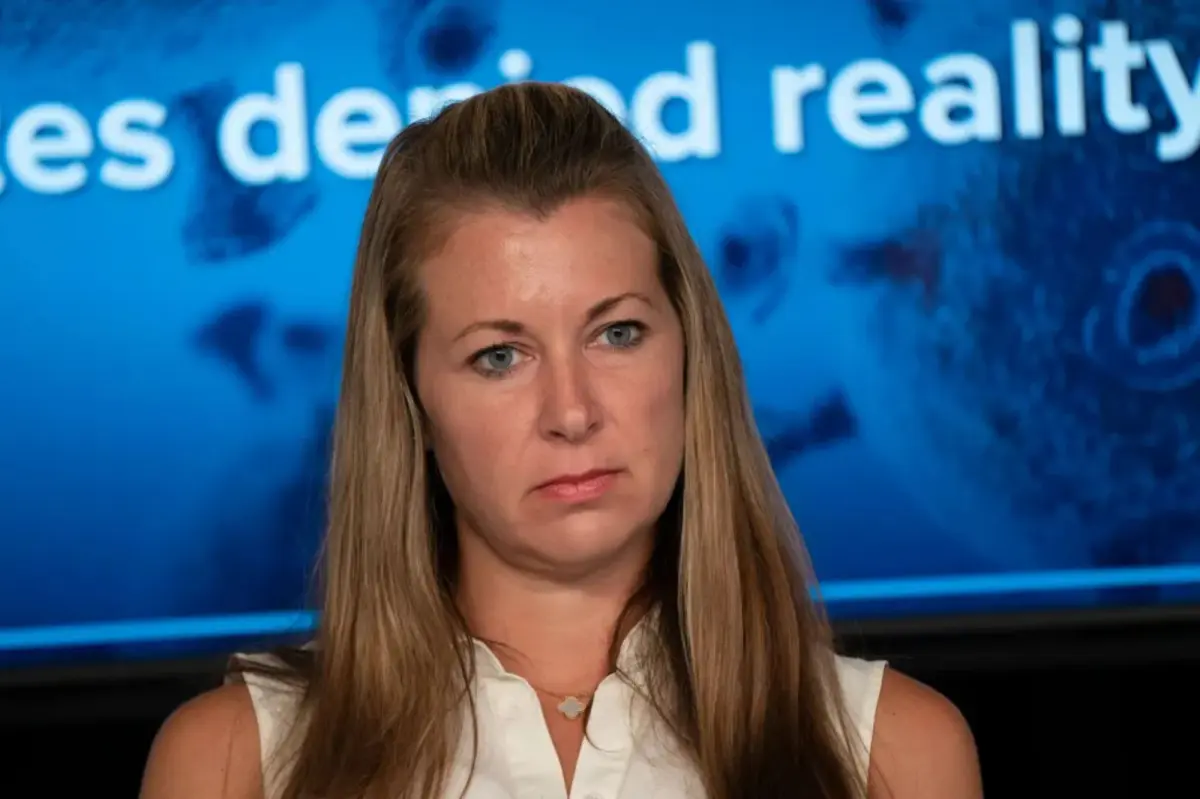
For years, New Yorkers have watched, with a mix of frustration and exhaustion, as the fallout of Albany’s most dramatic political eras played out not just in the court of public opinion, but inside actual courtrooms financed by the public purse. On Wednesday, however, a state supreme court judge drew a definitive line in the sand, sparing taxpayers from footing yet another staggering legal bill stemming from the final, turbulent days of former Governor Andrew Cuomo’s administration. Albany County Supreme Court Judge Danielle Jose-Decker officially denied a high-stakes bid by Melissa DeRosa, Cuomo’s former top aide and closest confidante, to force the state to reimburse her for more than $700,000 in personal legal fees. These bills were amassed by DeRosa’s elite defense team as they navigated a sexual harassment lawsuit filed by an anonymous state trooper, from which DeRosa had ultimately been dismissed. For everyday citizens who often feel like passive, unwilling underwriters of political scandals, the ruling represents a rare moment of financial boundaries being restored in a system where accountability is too often deferred. The decision cuts to the heart of a long-standing debate about the limits of public protection for state officials, raising profound questions about when the state’s obligation to defend its employees ends and when personal responsibility begins. By rejecting the petition, the court effectively declared that once a public servant is cleared from a lawsuit, the taxpayer’s financial exposure must also come to an end, regardless of how complex or high-stakes the surrounding political drama remains. For DeRosa, who once wielded immense, unparalleled influence within the state capitol, the decision is a harsh reminder of how lonely the legal landscape can become once the protective umbrella of the executive chamber is folded away. It marks a critical chapter in the ongoing reckoning of a political machine that once dominated New York, leaving behind an incredibly expensive legacy of litigation that citizens are still desperately trying to resolve.
To appreciate the gravity of this court battle, one must first understand Melissa DeRosa’s unique role as one of the most formidable power brokers in recent New York history. Long before she became engulfed in the legal wreckage of the Cuomo administration, DeRosa was known as the “secretary to the governor”—a title that vastly understated her actual authority. As Cuomo’s chief of staff and chief strategist, she was the fierce, highly visible architect of the state’s policy decisions, particularly during the darkest days of the COVID-19 pandemic when her daily appearances alongside the governor cemented her status as a household name. She was admired for her sharp intelligence and feared for her uncompromising loyalty to Cuomo’s brand, operating as both a shield and an enforcer in a highly competitive political arena. However, this absolute devotion proved to be a double-edged sword when the executive chamber was rocked by a series of devastating sexual harassment allegations against Cuomo, culminating in a bombshell report by Attorney General Letitia James. Among the accusers was an anonymous state trooper, known in legal proceedings as Trooper 1, who alleged that Cuomo had engaged in a pattern of inappropriate behavior and that his inner circle had actively facilitated a hostile work environment. DeRosa was swept into the resulting litigation, accused of playing a key role in protecting the governor and managing the political fallout at the expense of the female staff members who had raised complaints. Her transition from the pinnacle of executive influence to a co-defendant fighting for her professional survival and personal reputation illustrates the dramatic instability of political power. The lawsuit forced DeRosa to hire top-tier legal talent, transforming her defense into a grueling, multi-year ordeal that generated massive invoices, setting up a clash over who should ultimately pay for the consequences of loyalty in the halls of power.
At the core of the court’s decision was a meticulous examination of the legal arguments put forth by DeRosa’s defense team, led by the prestigious firm Morvillo Abramowitz Grand Iason & Anello. Her lawyers contended that even though DeRosa was successfully dismissed from Trooper 1’s civil suit, they were legally obligated to continue representing her because there remained a theoretical possibility that the dismissal could be reversed on appeal in the future. They argued that the ongoing nature of the broader litigation surrounding Cuomo required them to remain on active duty to protect her interests, a position they believed justified continuous taxpayer reimbursement under state law. However, Judge Jose-Decker was entirely unconvinced by this legal reasoning, cutting through the complex defense arguments with a refreshingly straightforward and grounded common-sense perspective. In her ruling, the judge dismissed the notion that taxpayers should pay for preventative, open-ended legal representation, characterizing the defense’s anxiety over a potential future reversal as highly speculative and legally remote. Her decision supported the prior stance taken by State Comptroller Tom DiNapoli’s office, which had initially rejected DeRosa’s reimbursement request, arguing that public funds could not be used to cover legal services rendered after a defendant had already been dismissed from active liability. By siding with the comptroller, Jose-Decker established a crucial legal boundary, emphasizing that taxpayer-funded legal shielding must have clear, logical limits rather than acting as a blank check for indefinite defense strategies. This ruling highlights a growing judicial skepticism toward the expansive, expensive arguments employed by elite legal teams, signaling to public officials that the public’s financial generosity is not infinite and cannot be used to insure them against every conceivable future legal hypothetical.
While the $700,000 at stake in this specific ruling is a substantial amount of money, it represents just a small fraction of the staggering financial toll that the downfall of the Cuomo administration has inflicted on New York taxpayers. To put this into perspective, DeRosa’s legal team has already been successfully reimbursed for approximately $2.6 million in taxpayers’ money for services rendered prior to her dismissal from the lawsuit, alongside Cuomo’s spokesperson, Rich Azzopardi. When one zooms out to examine the entire landscape of the investigations, legislative hearings, civil suits, and criminal defense strategies associated with the former governor’s exit, the cumulative cost to the public treasury exceeds an astronomical $60 million. This visual of millions of dollars flowing out of public coffers to pay for the self-preservation of elite politicians strikes a deep chord with everyday citizens who are concurrently navigating rising inflation, underfunded public schools, and decaying infrastructure. It reveals a profound disparity between the raw economic realities of working-class families and the insulated environment of political elites, where the consequences of personal misconduct are routinely externalized onto the public. The ongoing financial bleeding serves as a constant, painful reminder of the collateral damage of political corruption and the lack of systemic mechanisms to protect public resources from being drained by executive scams. This reality humanizes the dry legal mechanics of Judge Jose-Decker’s ruling, transforming a technical dispute over attorney fees into a vital victory for public decency and fiscal sanity. By halting further payments to DeRosa’s attorneys, the court provided a small measure of relief to a public weary of watching their hard-earned tax dollars used as a shield to insulate political figures from the natural consequences of their administrations’ toxic workplace cultures.
The reaction from DeRosa’s camp to the judge’s ruling was swift, defensive, and deeply revealing of the personal stakes and emotional exhaustion underlying this years-long legal saga. Her attorney, Catherine Foti, released a passionately worded statement that rejected the court’s decision and sharply criticized the original state investigation that initiated the entire political crisis. Foti argued that DeRosa was a dedicated, honorable public servant who was baselessly targeted and dragged through grueling, highly public litigation for years as a direct result of Attorney General Letitia James’s “fatally flawed” report. In her statement, Foti defended DeRosa’s honor by framing the entire lawsuit brought by Trooper 1 as a cynical, blatant attempt at a financially motivated money grab rather than a legitimate search for workplace justice. She contended that the supreme court’s decision was inconsistent with established legal precedent and past practices regarding the defense of public employees, expressing a fierce determination to see the ruling overturned on appeal. This combative stance illustrates that, for DeRosa and her allies, the legal battle is not merely about money, but about reclaiming their reputations, preserving their political legacies, and vindicating their actions during a period of unprecedented crisis. It highlights the deeply personal toll of public scandals, where former allies find themselves fighting on multiple fronts to salvage their names from the wreckage of a disgraced administration. While State Comptroller Tom DiNapoli’s office chose to remain silent in the wake of the ruling, the fiery defiance from DeRosa’s legal team guarantees that this battle is far from over, ensuring that the ghost of the Cuomo administration will continue to haunt New York’s legal and political landscape for the foreseeable future.
Ultimately, this judicial decision represents much more than a mere technical skirmish over unpaid legal invoices; it stands as a reflective mirror of a transformative moment in New York’s political culture, where the unbridled arrogance of previous eras is finally meeting the quiet authority of the law. For a long time, the Cuomo administration operated with a sense of untouchable permanence, utilizing a style of governance that relied heavily on intimidation, loyalty, and the aggressive suppression of dissent to maintain control. This ruling serves as a vital reminder that political power is transient, and that the protective structures built around leaders eventually dissolve, leaving individuals to face the consequences of their choices on equal footing with the citizens they once governed. It highlights the slow, painful process of restoring trust in public institutions, showing that true accountability requires not only political changes at the top but also the consistent, unyielding enforcement of ethical and financial boundaries in the courtroom. As New York continues to move forward under new leadership, the lessons of this era remain highly relevant, serving as a cautionary tale of how unchecked executive power can lead to systemic dysfunction, massive financial waste, and a devastating loss of public faith. By drawing a clear line on what taxpayers are obligated to fund, Judge Jose-Decker has contributed to a necessary shift toward fiscal responsibility and moral clarity, ensuring that while the scars of this political era may take a long time to heal, the public will no longer be forced to pay indefinitely for the defense of those who caused them.