





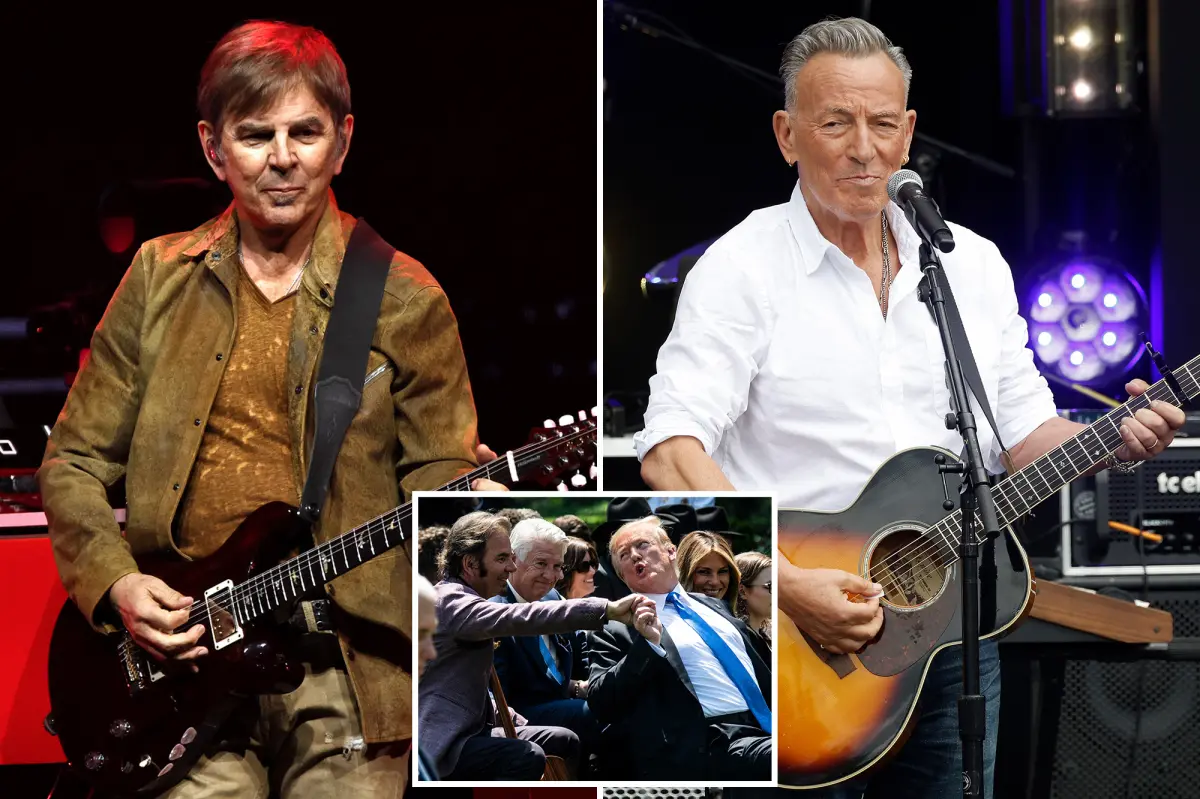
For decades, classic rock has served as the ultimate connective tissue of the American cultural landscape, a rare and sacred space where people from all walks of life, regardless of their political or social leanings, could gather under the glowing lights of a stadium to sing their hearts out in unison. However, the deep ideological fractures that have increasingly defined modern American life have finally breached the perimeter of this musical sanctuary, sparking a highly public and deeply personal ideological clash between two of the genre’s most iconic figures: Journey keyboardist Jonathan Cain and legendary singer-songwriter Bruce Springsteen. The dispute erupted into the public eye when Cain, the creative force behind anthems like “Don’t Stop Believin’,” launched a stinging critique against Springsteen, labeling him an “annoying, bitter old man” for utilizing his massive concert platform to lecture paying fans about his political grievances, specifically targeting former President Donald Trump. This confrontation is far more than a mere celebrity spat played out in the headlines; rather, it represents a profound philosophical debate about the fundamental role of the artist in society, the unspoken contract between a performer and their audience, and the ways in which our shared cultural touchstones are being reevaluated through the hyper-partisan lens of the twenty-first century. By exploring this tension, we gain a clearer understanding of how music, which once possessed the unique power to heal divisions and foster a sense of collective identity, has itself become a battleground in the ongoing struggle for the soul of the country.
Jonathan Cain’s candid remarks arrived during an revealing guest appearance on the “Complete Disaster Network” podcast, where he opened up about his own evolving political journey and his growing frustration with colleagues who use their celebrity status as a political cudgel. Refusing to mince words, Cain explained that while he had proudly counted himself among the ranks of the Democratic party in his younger years, the shifting landscape of American politics ultimately drove him away, leading him to fully embrace a devout Christian faith and a “diehard conservative” political identity. Yet, despite his deeply held personal convictions—which are further emphasized by his marriage to prominent spiritual advisor Paula White—Cain insisted that there must remain a strict, respectful boundary between an artist’s private beliefs and their public performance. He expressed a strong conviction that the stage should be a place of unity rather than division, questioning why Springsteen feels entitled to subject a diverse crowd of ticket-holders to ten-minute political sermons. “Now, people say, ‘Well, you’re a Christian and you’re conservative,’ and I’m like, ‘So what?’ I don’t preach it on stage; I don’t spend ten minutes talking about it,” Cain remarked, highlighting what he perceives as a double standard in the entertainment industry. For Cain, the essence of being a true entertainer lies in providing a temporary escape from the exhausting anxieties of daily life, making Springsteen’s persistent political commentary feel not only patronizing but completely out of touch with the very people who built his career.
On the other side of this musical divide stands Bruce Springsteen, affectionately known to millions as “The Boss,” whose entire artistic identity has long been intertwined with the struggles, hopes, and systemic disillusionment of the American working class. Springsteen has never shied away from using his platform to voice dissent, a characteristic that was on vivid display when he kicked off his highly anticipated “Land of Hope & Dreams American Tour” at a packed Target Center in Minnesota. Confronting a sold-out crowd of loyal followers, the 76-year-old rock icon did not hesitate to castigate the Trump administration, labeling its leadership as “reckless and treasonous” and warning his audience that they were currently living through some of the darkest times in modern American history. In a passionate speech delivered from the stage, Springsteen argued that the core democratic values that have sustained the United States for a quarter of a millennium are being challenged in unprecedented ways, pointing specifically to what he described as young service members’ lives being put at risk in an unconstitutional and illegal conflict. To Springsteen and his supporters, this kind of outspoken activism is not a betrayal of the performer’s duty, but rather its highest calling; they believe that an artist has a moral and civic obligation to act as the conscience of the nation, using the immense power of their voice to speak truth to power and challenge status-quo complacency.
The philosophical divide between the two rock stars deepened significantly when Jonathan Cain turned his critical gaze toward one of Springsteen’s most famous and enduring masterpieces, the 1984 mega-hit “Born in the U.S.A.,” which Cain boldly characterized as a covert “diss” toward the very country that birthed it. This provocative assertion touches upon one of the most famous and persistent misunderstandings in the entire history of modern pop music, revealing the complex tension between a song’s sonics and its underlying narrative. To the casual listener, “Born in the U.S.A.” sounds like a triumphant, flag-waving, stadium-shaking anthem of patriotic pride, a quality that famously led politicians like Ronald Reagan to attempt to co-opt it during political campaigns. However, a closer look at the actual lyrics reveals a devastating, sorrowful, and deeply critical portrait of a working-class Vietnam War veteran who returns home only to find himself abandoned by his government, denied employment, and stripped of his dignity. Cain’s critique suggests that such a biting commentary, masked by a booming and celebratory beat, reflects a fundamentally negative view of America that runs counter to genuine patriotism. “You were born in the USA, weren’t you, dude? So act like it,” Cain chided, suggesting that Springsteen’s artistic legacy is built upon a foundation of cynicism that contradicts the optimistic, uplifting spirit that classic American rock is supposed to embody.
This heated debate ultimately forces us to confront the delicate and rapidly evolving relationship between the modern consumer and the live entertainment experience. In an era where ticket prices for stadium tours routinely soar into hundreds or even thousands of dollars, the emotional contract between an artist and their audience has become more fragile than ever. The average concertgoer, burdened by economic pressures, daily stress, and a non-stop, exhausting twenty-four-hour news cycle, often views a live show as a valuable sanctuary of escapism—a precious few hours where they can unplug from reality and immerse themselves in nostalgic melodies that evoke simpler times. When a beloved artist disrupts this illusion by stepping up to the microphone to deliver a highly polarized political lecture, it can leave a significant portion of the audience feeling alienated, betrayed, and actively preached to. From Jonathan Cain’s perspective, this is a profound disservice to the fans who have invested their hard-earned money and emotional energy into an evening of shared joy. Conversely, defenders of Springsteen’s controversial approach would argue that true art cannot exist in a vacuum, asserting that to strip a performer of their political voice is to reduce them to a mere jukebox, robbing the live musical experience of its urgency, its power, and its capacity to provoke meaningful intellectual reflection.
Ultimately, the clash between Jonathan Cain and Bruce Springsteen serves as a poignant mirror for the broader cultural and political paralysis that characterizes contemporary American society, illustrating how even our most cherished monuments of shared culture can become deeply divided. Both men are, without a doubt, towering giants of the American songbook, responsible for writing the sonic backdrops of countless lives, first dates, road trips, and family celebrations across multiple generations. Whether one prefers the unyielding, optimistic, and soaring escapism of Journey’s “Don’t Stop Believin'” or the gritty, poetic, and confrontational realism of Springsteen’s “Born to Run,” both artistic expressions represent authentic, albeit vastly different, facets of the complex American experience. It is a sobering reminder that behind the brilliant stage lights, the roar of the crowd, and the timeless guitar riffs are real, deeply passionate human beings who are trying to navigate the complex social landscape of their country. As the cultural divide in America continues to widen, this public disagreement between two music legends leaves us with a compelling question: can we still find a way to stand together in the arena, singing the same songs, even when we can no longer agree on the words spoken between them?