





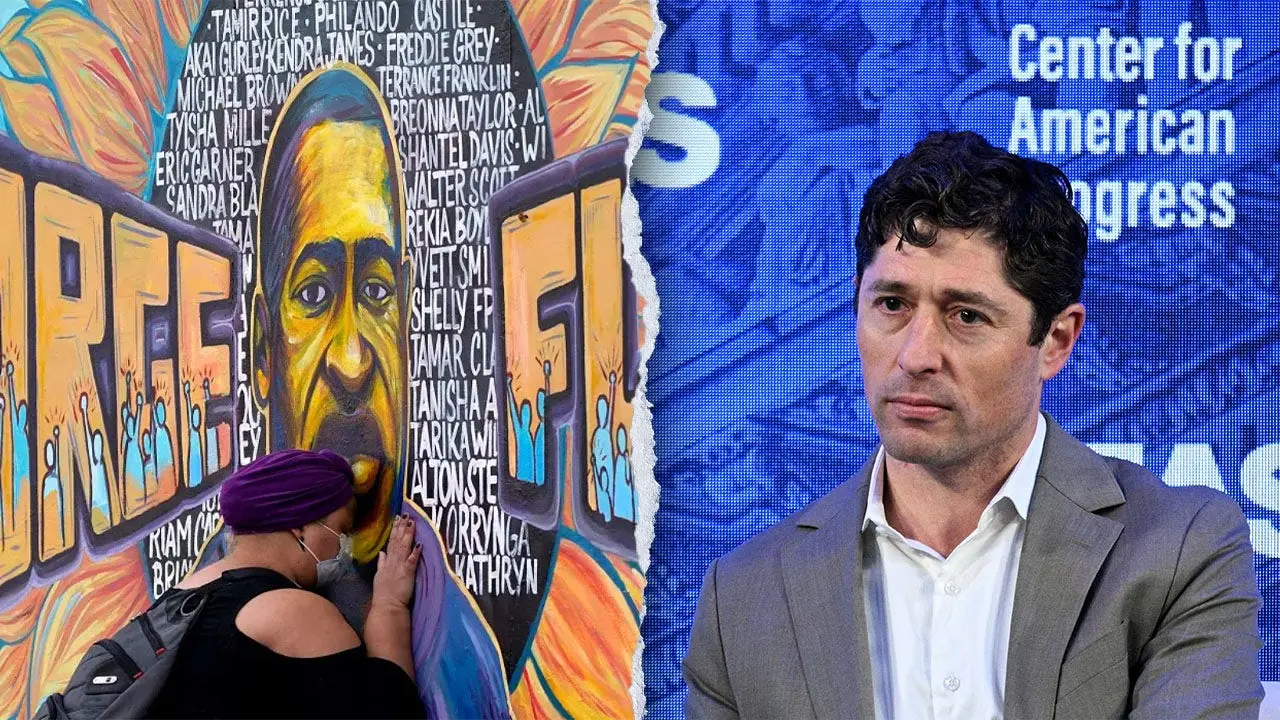
On a day traditionally reserved for quiet reflection, solemn gratitude, and honoring the ultimate sacrifices of America’s military personnel, a digital firestorm erupted in Minneapolis, revealing the raw, unhealed fractures of a nation still grappling with its identity. On Memorial Day, Minneapolis Mayor Jacob Frey took to the social media platform X to share a commemorative message. However, his post did not initially focus on the fallen soldiers of foreign wars; instead, it marked the solemn anniversary of George Floyd, who was killed by a Minneapolis police officer six years prior on that very same holiday. For Frey, the intersection of these two dates was a moment to reflect on a localized tragedy that rapidly mutated into a global reckoning on race, authority, and systemic injustice. Yet, for a large and highly vocal segment of the public, the Mayor’s decision to elevate Floyd on a day historically consecrated for military heroes was seen as a profound misstep—an act of cultural tone-deafness that ignited a fierce debate over patriotism, grief, and political priorities.
Frey’s digital reflection sought to address the heavy, enduring legacy that has reshaped the twin cities since the summer of 2020. Writing to his constituents and the broader public, the Mayor acknowledged that the murder of George Floyd by a former city police officer was a watershed moment that permanently altered the trajectory of Minneapolis. He expressed that the tragedy forced the metropolitan community to confront deeply uncomfortable truths regarding racial disparities, law enforcement practices, and the fragile thread of public trust. Frey emphasized that the years following Floyd’s death have been a continuous test for the city, demanding not just performative promises of reform, but tangible, verifiable actions. He closed his series of thoughts by reaffirming his administration’s commitment to preserving the site of Floyd’s arrest as a monument of global historic weight, while simultaneously striving to revitalize the surrounding neighborhood as a space for community healing, daily life, and economic resilience.
To understand the intensity of the vitriol aimed at Frey, one must revisit the agonizing physical reality of the event that set this chain reaction in motion. On May 25, 2020, outside a neighborhood convenience store, George Floyd’s life ended under the knee of former officer Derek Chauvin, an agonizing sequence of events captured on bystander video that horrified viewers worldwide. Floyd had been detained under suspicion of passing a counterfeit twenty-dollar bill, an encounter that quickly escalated into physical restraint. The medical examiner eventually ruled Floyd’s death a homicide, citing cardiopulmonary arrest brought on by law enforcement’s subdual, restraint, and intense neck compression. Later reports also highlighted contributing factors, such as Floyd’s pre-existing heart condition and the presence of fentanyl and methamphetamine in his system, details that would become deeply politicized battlegrounds in public discourse. The legal fallout was swift and historic, culminating in lengthy prison sentences for Chauvin and three other responding officers, but the societal wounds proved far more difficult to suture.
The immediate reaction to Mayor Frey’s Memorial Day post was swift, sharp, and highly polarized, illustrating how easily digital spaces can transform into ideological battlefields. Critics quickly pointed out the perceived disrespect of centering a domestic civil rights tragedy on a holiday specifically designed to honor military veterans who lost their lives in service to the country. Florida State Representative Randy Fine sharply rebuked the Mayor, asserting that Memorial Day must never be conflated with the memory of George Floyd, and characterized the Mayor’s decision-making as a disgrace to the families of fallen service members. Other commentators, including conservative columnist Dustin Grage and media personality Tomi Lahren, expressed outrage over what they viewed as the moral equivalence of honoring a civilian with a drug-use history alongside soldiers who valiantly sacrificed their lives on foreign battlefields.
Beyond the immediate debate over holiday etiquette, the online backlash brought back to the surface the deep anger surrounding the civil unrest that followed Floyd’s death. Critics like independent journalist Andy Ngo utilized the moment to remind the public of the catastrophic consequences of the 2020 riots, which saw parts of Minneapolis and multiple cities across the nation engulfed in flames, leading to civilian deaths, looted small businesses, and billions of dollars in property damage. This lens of resentment views the post-2020 social justice movement not as a path to progress, but as a destructive force that ushered in radical “Defund the Police” policies. Opponents argue that these policies ultimately backfired, stripping resources from law enforcement agencies, demoralizing police forces, and leaving vulnerable communities exposed to spikes in violent crime, thereby worsening the very inequities they sought to resolve.
In an effort to navigate this minefield of public opinion and fulfill his duties to all constituents, Mayor Frey subsequently published a separate post dedicated entirely to honoring military veterans. In this message, he expressed his deepest gratitude to the soldiers who made the ultimate sacrifice and to the families who continue to carry the heavy burden of their absence. However, this dual approach did little to quiet the storm, underscoring the near-impossible balancing act facing modern civic leaders in a hyper-connected, deeply polarized society. The controversy serves as a stark reminder of the ongoing culture wars in America, where even moments of public mourning are intensely contested, and where metropolitan leaders must constantly choose between addressing local sociological trauma and honoring deeply rooted national traditions.