

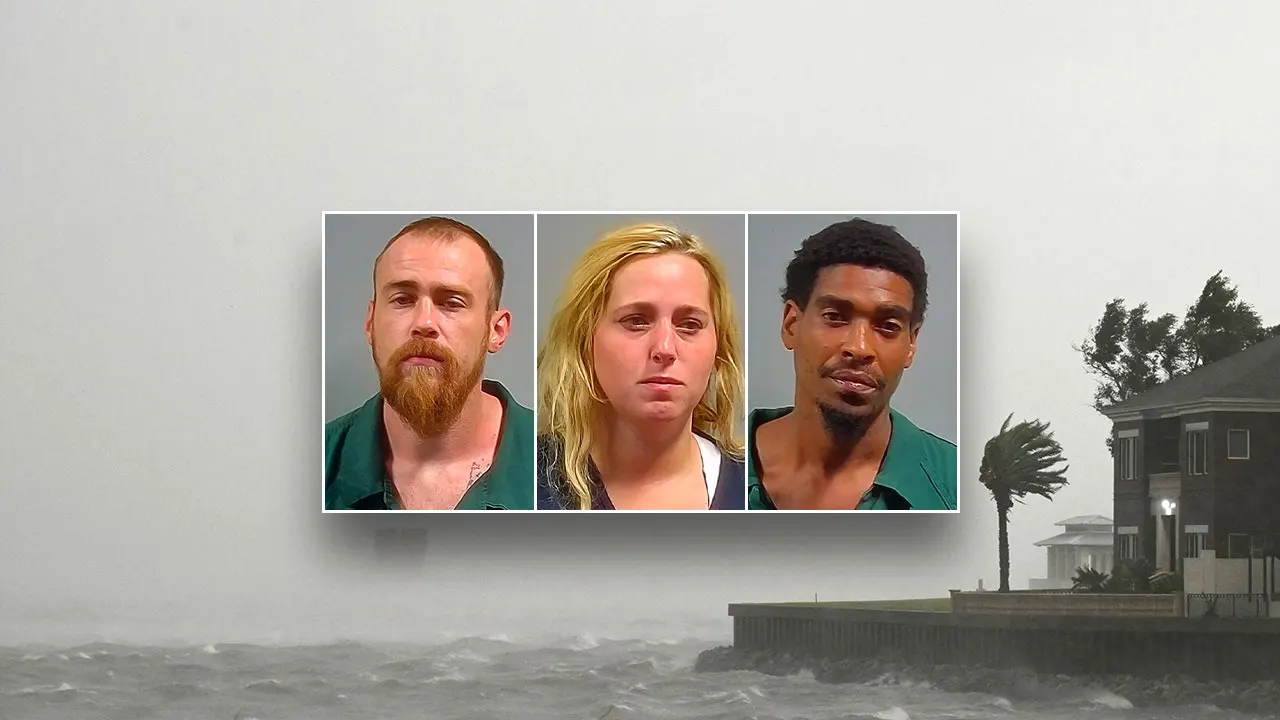
When a storm like Hurricane Isaias tears through a community, it leaves behind more than downed trees and scattered debris. It leaves people exhausted, vulnerable, and often caught up in the overwhelming work of putting life back together. In those moments, most neighbors reach out to help one another. They check on the elderly, share supplies, and offer whatever comfort they can. But there are always a few who see the confusion and darkness as an opportunity. That is exactly what authorities in Escambia County, Florida, say happened in the aftermath of the storm, when at least three people were arrested for allegedly exploiting the chaos for their own benefit. Sheriff Chip Simmons took to Facebook to share the details, and his message was equal parts frustration and reassurance. While Florida officials were racing to clear roads and restore power, and while linemen were working around the clock to get electricity back, the sheriff’s office was also keeping a close watch on the streets. The message was simple: a hurricane is not a free pass for crime. The storm may have knocked out the lights, but it did not knock out the deputies. And as the arrests show, law enforcement was ready for anyone trying to turn a community’s misfortune into a personal payday.
The first case involved a woman whose kindness was used against her in the most cynical way possible. According to Sheriff Simmons, Dustin Kelley, 30, and Amanda Carr, 29, approached her with a story designed to win her sympathy. They said they were in the area helping with recovery work after the hurricane. Their phone had died, and they desperately needed to charge it. Could they use her car’s outlet for just a few minutes? It seemed like a small, harmless request. The woman agreed and let them sit inside her car to plug in the phone. Carr, according to Simmons, was crying because she didn’t have a charger. That detail was probably meant to make the story more believable. A tearful woman is not usually seen as a threat. She is someone you want to comfort. The victim likely thought she was doing a good deed, helping two tired relief workers who had been out in the storm all day. But it was all an act. The tears, the excuse about the phone, the story about recovery work—everything was designed to get her to let down her guard. Once she stepped away from the car, Kelley and Carr allegedly seized the moment. They slid into the driver’s seat, started the engine, and drove off. The woman was left standing in the street, watching her car disappear around a corner. It wasn’t just a stolen vehicle. It was a stolen sense of security. She had opened her heart to a stranger, and that trust was violated in the most painful way.
But the two suspects did not get far. A deputy from the Escambia County Sheriff’s Office happened to be nearby and spotted the stolen car. What followed was a brief chase, one that ended with the vehicle crashing and, remarkably, no one seriously injured. It was the kind of ending law enforcement always hopes for in a pursuit—no innocent bystanders hurt, no hospital visits, and the suspects in custody. Sheriff Simmons made a point to highlight the irony of the situation. “So these two angels pretended like they needed a phone charged and ended up stealing a car,” he said. “Unfortunately for them, they didn’t realize that the Escambia County Sheriff’s Office has been out in full force looking for people just like them, and they’re going to jail now.” The word “angels” was dripping with sarcasm. These were not guardian angels. They were con artists who used emotional manipulation as a weapon. Kelley now faces charges of larceny, fleeing or eluding police, and possession of marijuana. Carr faces a larceny charge. The possession of marijuana charge adds another layer to the story, suggesting that Kelley may have had more on his mind than just getting away from the scene. But the core crime is the theft, and the way it was committed makes it particularly hard to forgive. The victim did not just lose a car. She lost a little bit of her faith in people. That kind of loss is harder to recover from than a broken taillight. It takes time, and sometimes it never fully heals.
While the stolen car case was being sorted out, deputies were dealing with another attempt to take advantage of the storm. Van Gary Spikes Jr., according to authorities, decided that a 24-hour store with no power was the perfect target. With the lights out and the streets quiet, he allegedly smashed a window and tried to get inside. It might have worked if a deputy had not been watching. Sheriff Simmons described how the deputy saw the incident as it was happening, pulled up to the store, and spotted the suspect. Spikes took off running, but it was not much of a contest. “He took off running, but didn’t get far,” Simmons said. The image of a suspected burglar sprinting away from a deputy is almost comical, but the situation was serious. A store with a smashed window is more than just property damage. It is a small business owner’s worst nightmare, especially during a disaster when insurance claims, repairs, and lost sales are already piling up. And for the community, it is a reminder that even in the middle of a crisis, there are people who are willing to make things worse for everyone else. The fact that the store was a 24-hour business meant it was probably already struggling to operate under emergency conditions. This break-in only added to the burden. No one was inside, thankfully, and the damage was limited to the window, but the disruption was real. The deputy’s quick response likely prevented the loss of merchandise and spared the owner from an even longer road to recovery.
Spikes Jr. now faces a long list of charges that make it clear how seriously law enforcement and prosecutors view crimes committed during a state of emergency. He was charged with possession of burglary tools, wearing a mask during the commission of a second-degree felony, attempted burglary of an unoccupied structure during a state of emergency, loitering and prowling, criminal mischief involving damage of $200 or more, and obstruction without violence. Each charge tells part of the story. The burglary tools suggest he came prepared. The mask suggests he was thinking about hiding his identity. The loitering and prowling charge suggests he was hanging around the area before making his move. And the obstruction charge suggests that when deputies arrived, he did not exactly cooperate. The charge of attempted burglary during a state of emergency is particularly important because crimes committed during emergencies often carry enhanced penalties. Looting after a hurricane is not just a property crime. It undermines the entire recovery effort. It forces police to divide their attention between helping residents and chasing criminals. It makes people feel unsafe in their own neighborhoods. And it sends a message that the community is not united in the aftermath of the storm. The sheriff’s office was clearly sending its own message with these charges. If you commit a crime during a disaster, you can expect to face the full weight of the law. The public information officer at the sheriff’s office identified Spikes as the suspect, and Fox News Digital reached out to him and the other two suspects for comment. As of now, there is no word on whether they have responded, but the legal process will move forward, and the courts will have their say.
Stories like this are hard to hear, especially after a hurricane, because they remind us that not everyone is working toward the same goal. While linemen are climbing poles, neighbors are clearing debris, and volunteers are handing out supplies, a few people are looking for ways to profit from the pain. It is enough to make you feel cynical about human nature. But it is important to remember that these arrests represent only a tiny fraction of the stories coming out of the storm. For every person who tried to steal a car or break into a store, there were dozens of others who spent their time helping total strangers. The Escambia County Sheriff’s Office itself was part of that response, with deputies working long hours to protect the people and property in their community. Sheriff Simmons’ decision to share these arrests publicly was likely intended to serve two purposes. First, it was a warning to anyone considering similar crimes: you will be caught. Second, it was a reassurance to residents: we are here, we are watching, and we will not let a disaster turn into an invitation for lawlessness. That kind of message matters. After a storm, people need to feel safe before they can start rebuilding. They need to know that the person knocking on their door at night is actually there to help, not to case their home. The victims in these cases will carry the memories of what happened to them. But they will also, hopefully, see that justice was done. The stolen car was recovered. The suspect in the store break-in was arrested. The legal system will handle the rest. In the meantime, the rest of us can take a lesson from this story. Kindness is a strength, but it needs to be paired with awareness. You can help someone in need without letting them into your car or your home. You can be a good neighbor without being a naive one. And you can trust that, after the storm passes, the community will come back stronger—not despite the bad actors, but because of all the good ones who refused to let them win.