





A Fragile Quiet: Iran Rebuilds Arsenal Under the Shadow of Looming Conflict
The uneasy silence hanging over the skies of Tehran has become a canvas for intense geopolitical posturing, as the Islamic Republic navigates the final, critical hours of a precarious bilateral cease-fire. In a deeply symbolic audio address broadcast nationwide, General Mohammad Bagher Ghalibaf, the influential speaker of Iran’s Parliament and the designated head of the country’s high-stakes negotiation team with the United States, made it clear that Tehran has not used the temporary cessation of hostilities merely to sue for peace. Instead, Ghalibaf asserted that the nation’s armed forces have strategically exploited the tactical pause to repair critical defense systems, replenish depleted missile arsenals, and restructure command chains damaged in the initial waves of confrontation. “Our military forces have made the best possible use of the cease-fire period to rebuild their capabilities,” Ghalibaf declared, his voice carrying the deliberate resonance of state television broadcasts designed to project absolute domestic resilience to a anxious public while warning international adversaries against miscalculating Iranian resolve. “We will make the enemy regret any renewed aggression against Iran.” The general’s rhetoric highlights a complex dual-track strategy embraced by Iran’s leadership: projecting formidable military readiness to deter further American or allied airstrikes, while simultaneously operating behind closed doors to secure a grand diplomatic exit from an economically neutralizing war.
The Shuttle Diplomacy Offensive: Tehran’s Backchannels to the West and Asia
Underneath this layer of aggressive military posturing, Iranian diplomats have launched a frantic, coordinated diplomatic offensive across global capitals, hoping to institutionalize the temporary truce before the region slides back into a war of attrition. Foreign Minister Abbas Araghchi has emerged as the spearhead of this diplomatic push, holding intensive telephone conferences and backchannel meetings with his European counterparts, key Middle Eastern power brokers, and United Nations Secretary-General António Guterres. According to official diplomatic readouts released by the Iranian Foreign Ministry, Araghchi has sought to leverage international concerns over global energy supply disruptions and humanitarian crises to secure a structured de-escalation framework. The diplomatic theater expanded significantly this week when Tehran hosted a high-level delegation from Pakistan, including Prime Minister Shehbaz Sharif and the powerful Army Chief, Field Marshal Syed Asim Munir. The presence of Pakistan’s top civilian and military leaders in Tehran emphasizes the deep regional anxiety surrounding the conflict; Islamabad, which shares a volatile border with Iran and maintains critical defense relationships with both China and the Gulf states, has emerged as a crucial mediator. Sharif and Munir reportedly spent hours in closed-door sessions with Iran’s political and military elite, presenting a highly structured, multi-step peace proposal backed by international guarantors, and urging Tehran’s leadership to accept realistic compromises before the diplomatic window closes completely.
Coercion vs. Compromise: The Shifting Calculus of the Trump Administration’s Foreign Policy
This intense diplomatic activity comes amid a growing consensus among international relations experts that foreign policy based entirely on unilateral coercion is yielding diminishing returns. “The Iranians have shown that Trump can achieve less through threats and coercion than through diplomacy,” noted Omid Memarian, a senior analyst at DAWN, a Washington-based think tank specializing in U.S. foreign policy in the Middle East. Memarian’s analysis points to a fundamental miscalculation in Washington’s strategic approach: while the United States holds overwhelming conventional military superiority, the actual costs—geopolitical, economic, and military—of attempting to force a highly militarized state of 85 million people into unconditional surrender are proving prohibitively expensive for a Washington administration anxious to avoid another indefinite foreign entanglement. For both Washington and Tehran, the sheer exhaustion of sustained conflict has transformed negotiation from a choice of political preference into a strategic necessity. The Trump administration’s aggressive policy of “maximum pressure” has succeeded in devastating Iranian infrastructure and paralyzing its energy sector, yet it has failed to trigger the domestic regime collapse or the complete geopolitical capitulation that hawks in Washington had predicted. Consequently, both administrations find themselves pushed toward the negotiating table, driven by the realization that continuing down the path of escalation offers no clear military victory, only the certainty of a hollowed-out global economy and prolonged regional instability.
Command from the Shadows: Ayatollah Mojtaba Khamenei’s Secret Delegation of Power
The domestic political landscape guiding these negotiations has been further complicated by a profound and unprecedented transition of power within the Islamic Republic’s theological hierarchy. Iranian officials, speaking on the condition of anonymity due to the extreme sensitivity of state leadership dynamics, confirmed that the newly elevated Supreme Leader, Ayatollah Mojtaba Khamenei, has taken a backseat in the day-to-day management of the crisis, operating entirely from an undisclosed location. The younger Khamenei, who reportedly sustained serious injuries during a devastating targeted airstrike on the very first day of the war, has remained out of public view, fueling intense speculation about both his physical health and the stability of the clerical establishment. In a historic move that departs from the highly centralized governance style of his late father, the supreme leader has formally authorized General Ghalibaf to make binding decisions regarding the terms of the cease-fire and the broader peace agreement. This mandate, which has been formally communicated to Iran’s top military commanders and foreign ministry negotiators, outlines the precise parameters of what Iran is prepared to concede—including potential limitations on long-range missile development and regional proxy support—in exchange for immediate sanction relief and the preservation of the ruling establishment. By delegating this immense responsibility to Ghalibaf, a pragmatic conservative with deep roots in both the Islamic Revolutionary Guard Corps (IRGC) and municipal governance, the supreme leader has insulated the religious office from the domestic political fallout of a negotiated settlement that hardliners might view as a compromise of national sovereignty.
A Crippled Engine: The $300 Billion Economic Ruins and Humanitarian Crisis in Tehran
For the civilian population of Iran, the geopolitical chess match is secondary to a brutal, everyday struggle for human survival. The country is currently reeling from the catastrophic economic fallout of a war that has systematically dismantled its vital civilian infrastructure, resulting in damages estimated by independent economists to exceed $300 billion. The destruction of domestic oil refineries, regional power terminals, and transport logistics hubs has triggered systemic economic paralysis, characterized by cascading corporate bankruptcies, widespread labor layoffs, and hyperinflation that has rendered basic food items a luxury for the working class. Ordinary citizens are facing a severe shortage of lifesaving medicines, as the combination of naval blockades and financial transaction bans has halted the import of critical oncology drugs and insulin. Compounding this daily hardship is a severe gasoline shortage, which has produced miles-long lines at the few functioning service stations in major municipal zones and paralyzed public transit systems. The psychological toll of the conflict is equally devastating; for weeks, the population had been living under the terrifying assumption that massive allied airstrikes would resume immediately upon the official expiration of the cease-fire. The public fear was amplified by repeated, highly publicized warnings from the White House, where Donald Trump had threatened to systematically target Iran’s domestic power grids, civil water treatment systems, and remaining industrial hubs, creating a pervasive state of panic among an already exhausted and economically vulnerable population.
Perspectives from the Threshold: Tehran Civilians Breathe a Sigh of Exhausted Relief
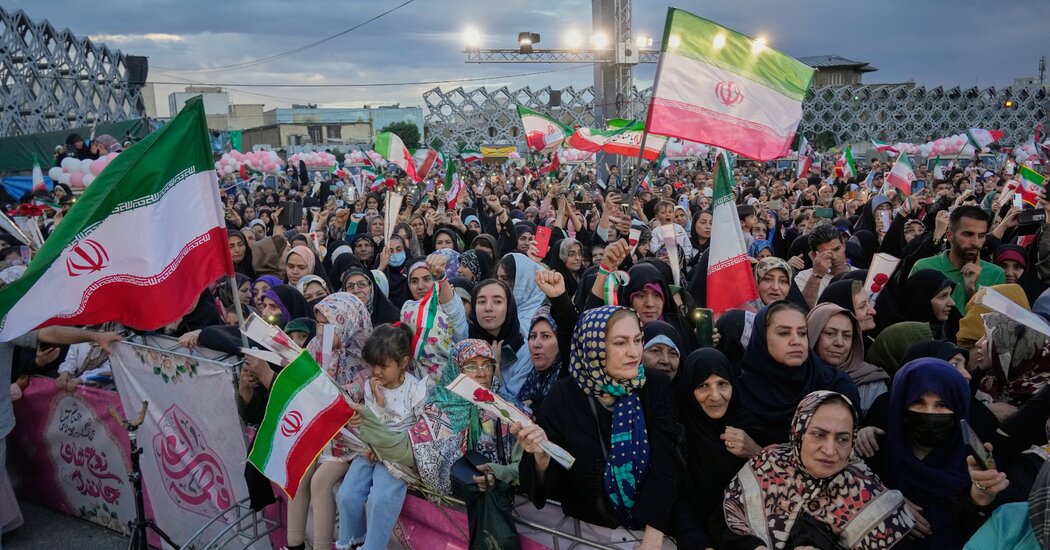
Nowhere is the human impact of this diplomatic breakthrough felt more deeply than in the middle-class neighborhoods of Tehran, where families spent the lead-up to the cease-fire deadline preparing for the worst-case scenario. “We were trying to figure out if we should leave Tehran if bombs fall again, and buying water and batteries,” recalled Nazanin, a 56-year-old structural engineer living in the central district of the capital, who requested that her last name be withheld to protect her family from potential state repercussions. Her preparation mirrored those of millions of others who filled local markets to stock up on flashlights, canned food, and emergency medical kits, anticipating that a resumption of hostilities would permanently cut off water and electricity to municipal centers. The sudden announcement that diplomats had reached a tentative understanding to extend the pause in fighting brought an immediate, emotional reprieve to communities that have spent months under the constant threat of air raid sirens. “I gave a big sigh of relief,” Nazanin said in a quiet phone interview, a sentiment that captures the collective exhaustion of a population that has borne the heavy burden of a conflict they did not choose. As diplomats in distant cities continue to debate the technical details of borders, enrichment percentages, and regional influence, the ordinary citizens of Tehran find themselves clinging to a fragile peace, acutely aware that their safety remains hostage to a delicate international agreement that could easily unravel at any moment.