




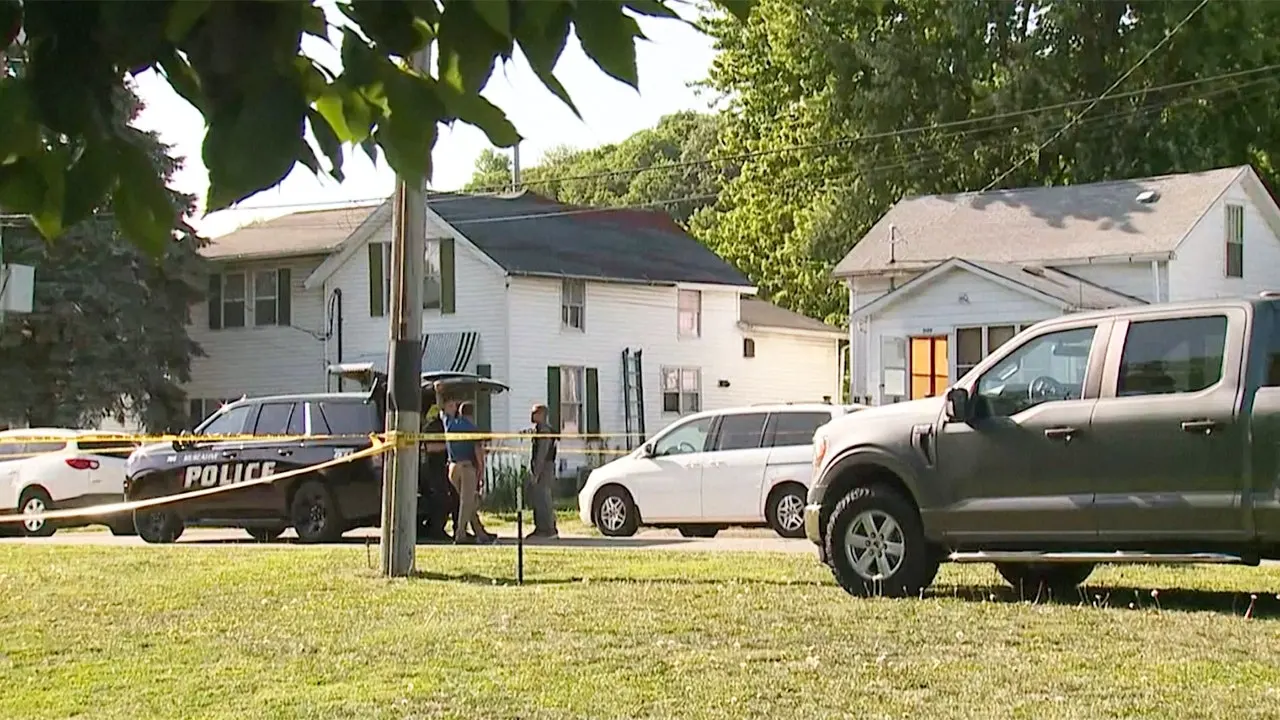
Muscatine, Iowa, is a picturesque community of roughly twenty-four thousand residents nestled along the sweeping, scenic bends of the Mississippi River—a place historically celebrated as the “Pearl Button Capital of the World” where life typically flows at a gentle, predictable Midwestern pace. On what began as a completely routine Monday afternoon in late autumn, this peaceful facade was violently shattered by a sequence of events so devastating that it has left the entire region reeling in absolute disbelief and profound sorrow. At approximately 12:12 p.m., the tranquil air on Park Avenue was suddenly punctured by the wails of emergency sirens as local police officers rushed toward a residence following an urgent, frantic report of active gunfire. Armed with a deep sense of duty but wholly unprepared for the sheer scale of the horror awaiting them, first responders crossed the threshold of the home only to confront an unspeakable scene of carnage. Inside the residence lay four individuals, all suffering from catastrophic, fatal gunshot wounds, their lives ended in a sudden burst of violence that defied comprehension. Paramedics rushed forward to render life-saving aid, but the injuries were far too severe, and all four victims were pronounced dead at the scene. As news of the tragedy began to trickle out into the surrounding neighborhood, a heavy, suffocating silence fell over a community where children usually play freely on lawns and neighbors greet one another by name. The sudden loss of four innocent lives in a single moment instantly transformed a quiet residential street into an active, barricaded crime scene, leaving shocked onlookers to grapple with the terrifying realization that a monster of domestic violence had clawed its way into the very heart of their close-knit town. This initial discovery was only the agonizing first chapter of a complex and sprawling tragedy that would test the resolve and the spirit of the entire Muscatine community.
The urgent quest for answers and public safety immediately galvanized the Muscatine Police Department, with investigators working rapidly to piece together the identity of the assailant before any further harm could be inflicted on the community. Within hours of the initial discovery, authorities focused their attention on fifty-two-year-old Ryan Willis McFarland, a local Muscatine resident whose past interactions with the law had already marked him within the criminal justice system. Realizing that the armed suspect had fled the Park Avenue home long before patrol cars arrived, law enforcement launched a high-stakes manhunt across the city, mobilizing multiple agencies to prevent any potential continuation of the violence. The search eventually culminated along Muscatine’s scenic riverfront trail, a beautiful public pathway near a prominent pedestrian bridge where locals frequently gather to watch riverboats, run, and enjoy the natural landscape. When officers finally intercepted McFarland on this peaceful trail, a high-stakes standoff ensued, filled with desperate pleas and tense negotiations aimed at capturing the suspect peacefully and bringing him to justice without further loss of life. However, the confrontation reached a sudden and tragic conclusion when, during active dialogue with police negotiators, McFarland drew a weapon and took his own life, dying at the scene despite the immediate efforts of officers and emergency medical technicians to administer life-saving medical aid. This final, desperate act of violence not only put a premature end to the manhunt but also sealed away the immediate answers that a grieving community so desperately sought, leaving behind a trail of unanswered questions, complex emotional fallout, and a profound sense of loss for multiple families involved. It highlighted the tragic reality of these situations, where the perpetrator’s final act of self-destruction leaves the living to navigate the wreckage of a broken system and a broken family without the closure that a trial might bring.
As the afternoon progressed, police soon realized that the tragedy did not end at the riverfront or the Park Avenue home, as the deepening investigation began to unearth a wider network of heartbreak spread across the city. Driven by forensic evidence, communication logs, and initial witness accounts, detectives developed the chilling suspicion that there were more victims elsewhere in Muscatine, prompting officers to conduct urgent welfare checks at other locations associated with the suspect. At a residence on Mill Street, officers forced entry only to discover another adult male dead from an apparent gunshot wound, his life stolen in the same quiet, lethal rampage that had defined the day. Shortly thereafter, the investigation led authorities to a local business on Grandview Avenue, where yet another adult male was found deceased from similar gunshot injuries, bringing the total number of victims to six. The sheer logistical nightmare of managing three separate, highly active crime scenes simultaneously put an immense strain on local resources, requiring the urgent logistical support of the Muscatine Fire Department, the Muscatine County Sheriff’s Office, the Iowa State Patrol, and the highly specialized agents of the Iowa Division of Criminal Investigation. Each new location painted a grim picture of a meticulously executed plan of violence, suggesting that McFarland had moved systematically through the city to target those closest to him, leaving a map of sorrow that stretched from private living rooms to a place of daily commerce. The psychological toll on the first responders, police officers, and forensic investigators who had to process these multiple scenes back-to-back was immense, as they were confronted with the stark reality of an entire family wiped out in a matter of hours. The sheer scale of the tragedy required a collaborative effort that crossed jurisdictional boundaries, drawing together state and county resources to ensure every piece of evidence was meticulously cataloged, even as the community struggled to comprehend how such widespread violence could happen so quickly in their midst.
While law enforcement has maintained a necessary degree of discretion by withholding the names, ages, and specific familial relationships of the six victims, the collective weight of their loss has sent shockwaves through every corner of Muscatine. To lose six members of a single family in one fell swoop is an atrocity that fundamentally alters the social fabric of a small town, creating a vast, aching void where grandparents, siblings, parents, or children once stood. Behind the cold, sterile language of police press releases are real human lives: individuals who worked in local establishments, attended nearby schools, volunteered in civic organizations, and shared daily laughs with friends. The business on Grandview Avenue, suddenly transformed from a place of honest labor into a site of violent death, serves as a painful reminder of how domestic violence refuses to remain confined behind closed doors, spilling over into the public spaces where people seek to build their livelihoods. Neighbors who lived next door to the Mill Street and Park Avenue residences now look at these familiar structures with a sense of profound grief and lingering fear, wondering how such immense, boiling resentment could have built up so quietly in their midst without anyone noticing the warning signs. The tragedy serves as a stark reminder of the hidden currents of pain that often run beneath the surface of family lives, highlighting the catastrophic potential of unresolved domestic conflicts when they escalate without intervention. This massive loss leaves a permanent scar on the community, as empty seats at dinner tables and vacant desks at workplaces serve as physical monuments to a family unit that was suddenly and violently erased from existence. The grief of the surviving extended family members is unimaginable, as they are left to plan six funerals simultaneously, a burden of sorrow that no family should ever have to bear, and one that the community must help them carry in the difficult days ahead.
This cataclysmic event underscores the urgent, life-saving necessity of addressing the complex intersections of domestic disputes, mental health crises, and the availability of lethal means within our communities. While police chief Anthony Kies confirmed that McFarland possessed a prior criminal record, the systemic gaps that allow domestic tensions to escalate into a mass casualty event remain a subject of deep concern for community leaders and advocacy groups alike. Experts in domestic violence emphasize that tragedies of this scale are rarely sudden anomalies; they are often the climax of a long history of coercive control, escalating threats, and mental health deterioration that goes unaddressed due to stigma or lack of resources. The horrific outcome in Muscatine emphasizes why crisis intervention tools, such as the national Suicide & Crisis Lifeline accessible by calling or texting 988, are so vital not only for individuals contemplating self-harm but also for families living under the constant shadow of domestic terror. Humanizing this tragedy requires us to look beyond the immediate shock of the crime and confront the uncomfortable reality of domestic abuse, advocating for stronger protective networks, accessible mental health counseling, and proactive community intervention strategies that can identify warning signs before they culminate in irreversible violence. If there is any lesson to be gleaned from the ashes of this heartbreaking event, it is that we must become more vigilant, more compassionate, and more proactive in supporting those who are suffering in silence behind locked doors. We must foster an environment where people feel safe coming forward to seek help, whether they are victims of abuse or individuals battling their own internal demons, so that we can prevent such dark moments from consuming entire families. True prevention lies in community-wide education and breaking down the barriers of shame that prevent people from seeking help before anger turns to violence.
In the wake of this unimaginable “act of evil,” as Muscatine Police Chief Anthony Kies solemnly described it, the people of Muscatine must now begin the agonizingly slow process of healing and rebuilding their shattered community. Chief Kies spoke for an entire city during his emotional news conference when he admitted, “Today, I simply do not have the words,” a candid expression of grief that resonated deeply with residents who found themselves similarly paralyzed by shock. As the Major Crimes Unit continues its meticulous work of processing physical evidence and conducting extensive witness interviews, the community has begun to rally around the surviving relatives who are now forced to navigate a future stripped of their loved ones. Local churches, civic organizations, and mental health professionals have mobilized to offer grief counseling and support spaces, recognizing that the psychological trauma of this day will linger in the collective memory of Muscatine for generations to come. Though the physical scars of the crime scenes on Park Avenue, Mill Street, and Grandview Avenue will eventually be cleaned away, the memory of the six souls lost to this senseless act will be preserved through the enduring solidarity of a community that refuses to be defined by evil, but rather by the love, compassion, and resilience with which they support one another through their darkest hour. By coming together in vigils, sharing memories of the departed, and advocating for a safer future, the people of Muscatine are proving that even in the face of absolute darkness, the bonds of human connection and community can never be truly broken. In time, the town will find its footing again, but for now, they stand united in their shared sorrow, holding onto each other as they mourn the lives so cruelly stolen from them, and keeping the light of hope alive in the midst of profound grief.