



For more than two decades, the titans of the global technology sector operated under a highly enviable financial paradigm: they were essentially self-funding empires. Companies like Apple, Microsoft, and Alphabet sat atop mountain ranges of cash generated by their near-monopolistic core businesses, allowing them to fund research, pursue massive acquisitions, and buy back their own stock without ever needing to ask Wall Street for a helping hand. At the end of March, for instance, Alphabet boasted a staggering treasury of roughly $125 billion, while Microsoft held a comfortable cushion of $80 billion. However, the sudden, hyper-accelerated gold rush to dominate the artificial intelligence landscape has shattered this long-standing philosophy of self-reliance. The sheer financial scale required to build, power, and maintain the infrastructure for advanced artificial intelligence is so monumentally expensive that even these cash-rich giants cannot, or perhaps choose not to, bear the entire burden alone. According to projections from Goldman Sachs, global spending on the physical backbone of AI—data centers, high-performance semiconductors, and electrical grids—is poised to hit an incredible $765 billion this year alone, with the cumulative total forecast to exceed a mind-boggling $7 trillion by 2031. To fund this insatiable appetite for computing power, the world’s most powerful technology companies are stepping back into the capital markets, actively raising billions of dollars in fresh equity and corporate debt from eager external investors.
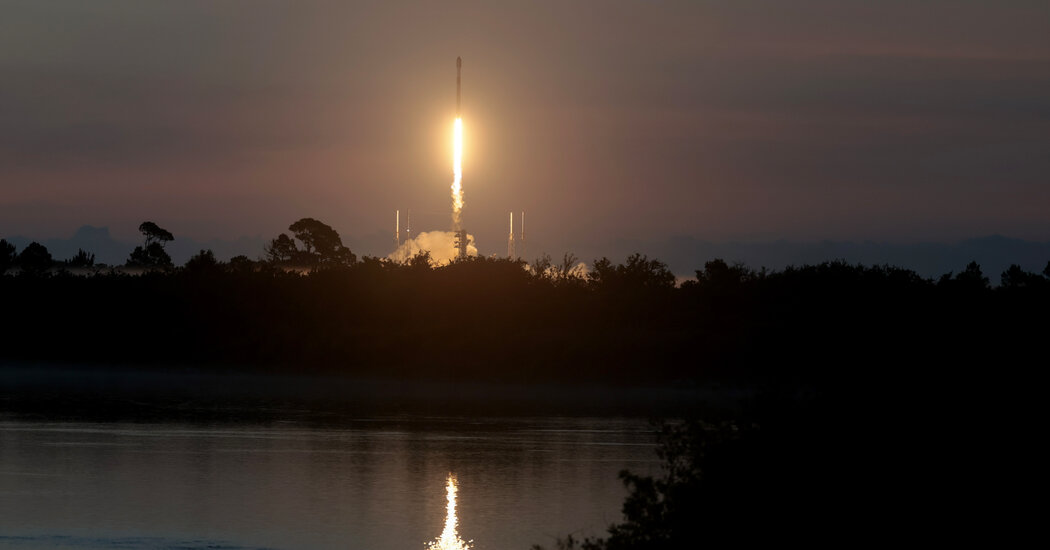
This massive capital migration was vividly illustrated by two jaw-dropping financial maneuvers that occurred almost simultaneously, highlighting the public’s endless appetite for all things related to AI. In a move that sent shockwaves through global financial hubs, Elon Musk’s SpaceX—a pioneer in rocketry and a key player in the deployment of AI-integrated satellite constellations—is currently preparing to launch a historic $75 billion initial public offering. This gargantuan deal would value the private space-faring giant at a breathtaking $1.77 trillion, instantly crowning it as the largest IPO in recorded financial history. Not to be outdone, Google’s parent company, Alphabet, quietly executed its own record-shattering move by issuing modern market-refreshing stock worth an unprecedented $85 billion. This transaction represented the single largest stock-raising initiative ever completed by an already-listed public company, expanding on an initial $80 billion target simply because investor demand was too overwhelming to ignore. This particular deal also secured a highly coveted stamp of approval from Berkshire Hathaway, which injected $10 billion into the transaction. This represented a major, uncharacteristic bet on tech by Warren Buffett’s conglomerate, now directed by newly minted chief executive Greg Abel, who has clearly signaled a willingness to embrace the AI epoch with pragmatic boldness.
The mania surrounding AI has trickled down from these trillion-dollar titans to transform the fortunes of mid-sized hardware and computing enterprises, creating a feeding frenzy on public exchanges. Silicon Valley semiconductor upstart Cerebras, which designs massive, single-chip processors tailored specifically for heavy-duty AI model training, witnessed this institutional hunger firsthand during its recent public debut. Investors aggressively bid up Cerebras’s initial public offering price from a modest $115 per share to a final listing price of $185, sending the stock soaring more than 30 percent in subsequent weeks despite market volatility. Similarly, the advanced computing firm Quantinuum capitalized on this buoyant wave by pricing its June IPO higher than originally forecasted, joining a crowded field of specialized tech firms eager to monetize the present hype cycle. According to analytics from financial data firm Refinitiv, technology deals have accounted for an astonishing 40 percent of all equity raised during the first half of this year through IPOs, follow-on offerings, and convertible debt structures. This momentum is set to accelerate further, with industry heavyweights such as Anthropic and OpenAI heavily rumored to be planning their own public listings later this year, promising to drag even more global investment capital into the AI ecosystem.
While the equity market’s multi-billion-dollar deals grab the most sensational headlines, an equally historic and telling drama is unfolding in the corporate bond and debt markets. The “Magnificent Seven”—Apple, Microsoft, Alphabet, Amazon, Meta, Nvidia, and Tesla—have collectively embarked on a borrowing spree unlike anything seen since the turn of the millennium, taking advantage of a global investment community desperate to park cash in highly reliable, tech-backed debt. Amazon led the charge by breaking the record for the largest corporate bond ever issued denominated in euros, followed immediately by another record-breaking debt offering in Canadian dollars. Alphabet likewise took the unprecedented step of tapping the British bond market for $1 billion in debt with a 100-year repayment term, a stunning testament to the sheer confidence investors have in the long-term survival and relevance of the tech giant. All told, technology companies have collectively borrowed more than $150 billion globally so far this year, effectively doubling the pace of their dollar-denominated debt issuance compared to the same period in the previous year. This debt acquisition strategy serves a dual purpose: it keeps their massive cash reserves intact as defensive shields, while allowing them to construct expensive, power-hungry data centers utilizing incredibly cheap capital provided by willing bondholders.
This torrent of fundraising and the resulting astronomical corporate valuations have naturally invited immediate, nervous comparisons to the infamous dot-com bubble of the late 1990s. Academics and veteran market observers note the distinct, familiar smell of speculative euphoria in the air, pointing out that today’s “risk-on” environment mirrors the early days of the internet age when any company with a Web address could command multi-million-dollar valuations. Steven Kaplan, a distinguished professor of finance at the University of Chicago Booth School of Business, observed that the market currently feels eerily reminiscent of the late 1990s, driven by a profound, almost spiritual excitement over a revolutionary new technology that investors believe will change the fabric of humanity. However, optimistic analysts and bankers are quick to point out a critical difference between then and now: the dot-com crash was precipitated by un-profitable, highly speculative startups that burned through venture capital without a viable business model. Today, the massive capital expenditure driving the AI revolution is being piloted by enormously profitable, cash-generative powerhouses that possess actual earnings, tangible hardware dependencies, and diversified streams of revenue to survive potential market downturns.
Yet, even the most passionate evangelists of this artificial intelligence renaissance must confront a nagging, deeply uncomfortable economic reality: much of this currently raised capital is being spent to construct an infrastructure for an unrealized and highly speculative future. The massive data centers, custom-designed graphic processing units, and high-tech cooling systems built today represent an enormous gamble that AI software will soon generate real-world commercial profits capable of justifying trillions of dollars in upfront expenditure. As Professor Kaplan eloquently warned, the underlying question that remains entirely unanswered is whether these massive investments in physical infrastructure will ever truly pay off, or if we are simply witnessing the building of a digital highway to nowhere. In the grand theater of financial history, we find ourselves at an incredibly tense moment, moving forward with breathless anticipation, completely unable to determine if the calendar reads 1998—the beginning of a long, prosperous era of digital expansion—or the year 2000, standing right on the precipice of a devastating economic correction.