






The Cost of Gold: How an Invisible Killer Is Ravaging Congo’s Lawless Mining Towns
The Silent Threat in the Shadow of War
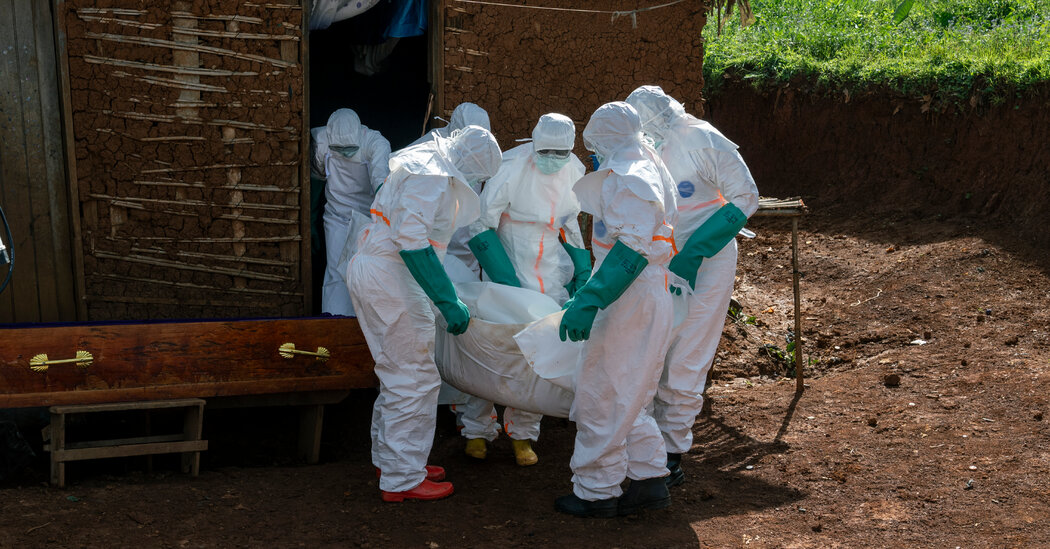
After the local Islamic State-affiliated Allied Democratic Forces (ADF) militia attacked his family farm and turned his birthplace into a slaughterhouse, twenty-seven-year-old Mumbere Saidi fled to the gold mines of northeastern Democratic Republic of Congo, embarking on a grueling 200-mile migration across one of Africa’s most perilous conflict zones to secure a future for his young family. Settling in a remote, mud-slicked mining enclave nestled in the hills of Ituri province, he found grueling, physically exhausting work panning for gold in deep muddy pits, earning just enough on good days to send a few dollars back to the older parents he left behind, and struggling during lean weeks to feed his wife and infant daughter. In this lawless, isolated outpost, far from the reach of the armed gangs that had decimated his homeland, Saidi finally believed he had found a precarious sanctuary—until last week, when an invisible, microscopic assassin invaded his mud-walled home and ended his life in a matter of days. “The disease got him,” whispered his brother, Kondu Ganda, himself a gold miner, employing a widely used local euphemism to avoid pronouncing the terrifying word “Ebola” in a town where merely speaking the virus’s name is believed to invite tragedy and social ostracization. Behind Ganda, under a gray sky, Red Cross workers clad in pristine, ghostly white protective suits and heavy respirators carefully hoisted Saidi’s heavy wooden coffin out of the humble dwelling, while traumatized neighbors watched from a distance, realizing that the violence of the country’s armed conflict had simply been replaced by an even more insidious threat.
Delayed Warnings and the Rapid Spread of a Rare Strain
+————————————————————————–+
| EBOLA OUTBREAK TIMELINE |
| |
| February: Epidemic begins silently in Mongbwalu gold mines. |
| May 15: First official cases detected after months of spread. |
| Prior to detection: Estim. 80+ deaths in community without treatment. |
| Current Status: ~300 suspected deaths; Bundibugyo strain confirmed. |
+————————————————————————–+
For more than a century, the glittering promise of gold has been the undisputed lifeblood of Mongbwalu, a rapidly growing, hard-to-reach hill town in Ituri province that acts as a magnet for desperate laborers and ambitious traders from every corner of the Congo and neighboring East African nations. Yet, this very mineral wealth is now driving one of the most complex public health emergencies in modern history, as Mongbwalu find itself transformed into the epicenter of a devastating Ebola outbreak that experts believe raged undetected for months before health authorities raised the alarm. Epidemic investigators now estimate that the deadly virus began mutating and spreading through the mining camps as early as February, but went completely unnoticed by local clinics until mid-May, largely because the outbreak was triggered by the rare and elusive Bundibugyo strain of the filovirus. Unlike the more common Zaire strain, which has been the target of intensive international pharmaceutical research, the Bundibugyo variant has no approved vaccine, no targeted monoclonal antibody treatments, and presents with broader, easily misdiagnosed symptoms that easily mimic common tropical illnesses like malaria or typhoid. By the time regional health officials officially declared an emergency on May 15, the virus had already established a firm foothold in the dark, cramped, and poorly ventilated tunnels of the gold mines, where thousands of men work shoulder-to-shoulder in unsanitary conditions, passing contaminated tools and trading unprocessed gold across porous national borders.
From Colonial Exploitation to Modern Mining Anarchy
              =========================================
              MONGBWALU: HISTORICAL TIMELINE OF CONFLICT
              =========================================

                 [ Early 1900s: Belgian Colonial Rule ]
                    - Forced labor under Kilo-Moto mines
                                 |
                                 V
                    [ 1965-1997: Mobutu Dictatorship ]
                    - Infrastructure collapse & corruption
                                 |
                                 V
                   [ 1997-2003: Congo Wars & Militia Rule ]
                    - 2,000+ civilians killed in Ituri
                                 |
                                 V
                    [ Present: Artisanal Mining Era ]
                    - 80+ deaths from Ebola before detection
To understand why Mongbwalu is so uniquely vulnerable to this epidemiological disaster, one must look to the long, traumatic history of the Kilo-Moto gold belt, which has historically embodied the tragic paradox of the Congo: vast natural wealth paired with endless human suffering. Over a century ago, Belgian colonialists first plundered these verdant hills, establishing the region’s first industrial gold mines through the brutal imposition of forced labor, a system that set a heavy precedent of resource extraction at the expense of human dignity. Following the chaotic post-independence era and the subsequent decades of stagnation under the kleptocratic dictatorship of Mobutu Sese Seko, the state-run industrial mining infrastructure collapsed entirely, leaving behind a power vacuum that was violently filled by heavily armed ethnic militias and greedy regional warlords during the Great African War of the late 1990s and early 2000s. During one particularly dark period between 2002 and 2003, at least 2,000 civilians were systematically slaughtered in and around Mongbwalu during intense fighting between rival factions seeking to control the gold deposits, according to exhaustive investigations by Human Rights Watch. Today, although the town is enjoying a fragile peace while ethnic violence continues to ravage the surrounding countryside, the formal mining sector has vanished, replaced instead by a sprawling network of informal, unregulated artisanal mines where hundreds of thousands of internal refugees—many fleeing previous Ebola outbreaks in neighboring North Kivu province—risk their lives daily in search of a hard-earned paycheck.
The Perilous Math of Survival in the Pits
+————————————————————————–+
| DAILY RISK VS. REWARD PROFILE |
| |
| Average Gold Miner Weekly Wage: $136 – $272 (Highly lucrative) |
| Occupational Hazards: Mercury poisoning, tunnel collapse, malaria |
| Biological Vectors: Fruit bats (reservoir hosts) nesting overhead |
| Community Outlook: “Nothing is above God; we must work to eat.” |
+————————————————————————–+
The irresistible economic gravity of Mongbwalu’s gold mines continues to pull in a dense, highly mobile population of transient laborers, commercial sex workers, regional merchants, and international smugglers, creating a perfect storm for rapid disease transmission that local authorities are powerless to stop. As the toxic gold economy pumps raw cash through the town, former mayor Jean-Pierre Bikilisende warned that the confirmed death toll of over 300 lives represents only a fraction of the actual fatalities, lamenting that “we fear we are just at the very beginning of our misfortune” as the infected slip away into the dense surrounding jungle to die in isolation. Along the muddy edges of the town, where the lush green vegetation gives way to open scars of red earth, legions of young men in mud-caked clothing can be found wading through quicksand-like sediment, shoveling earth into wooden sluice boxes powered by the deafening roar of diesel generators, entirely unbothered by the nearby health crisis. To these workers, the abstract threat of a virus pale in comparison to the immediate danger of starving or the insidious, long-term health risks of their daily work, which includes mixing toxic liquid mercury with bare hands to extract gold amalgams—a chemical process that causes irreversible neurological damage and developmental disorders. Even as they labor under the canopy of towering forest trees teeming with screeching fruit bats—the natural animal reservoirs for the Ebola virus—miners like Bienvenue Bironyi and Michel Anguma shrug off the danger, pointing out that when a worker can earn between $136 and $272 a week in a country where most survive on less than two dollars a day, no biological threat is great enough to halt the gold rush.
Deep-Seated Distrust and the Rise of Medical Resistance
+————————————————————————–+
| CAUSES OF PUBLIC SKEPTICISM |
| |
| 1. No Treatment/Vaccine: Patients admitted to clinics often die anyway. |
| 2. Historical Distrust: Centuries of government and foreign exploitation.|
| 3. Hostile Rumors: Belief that clinics poison patients for cash/organs. |
4. Severe Poverty: Belief that Ebola is a lucrative foreign aid scam. |
+————————————————————————–+
Perhaps the most formidable obstacle to containing this escalating public health crisis is not the logistical challenge of navigating Ituri’s decaying road infrastructure, but rather the deep-seated, historically justified skepticism that local communities harbor toward government health officials and foreign humanitarian organizations. Decades of institutional neglect, state corruption, and Western corporate exploitation have fostered a culture of profound cynicism, leading many locals to conclude that the Ebola virus is either a fictional creation design to attract lucrative foreign aid budgets or a biological weapon deployed to depopulate the gold-rich region. In the absence of an effective vaccine or cure for the Bundibugyo strain, patients escorted to government-run isolation facilities almost always return in body bags, which has fueled terrifying local conspiracy theories that doctors are administering lethal injections or harvesting human organs. This volatile atmosphere of fear and paranoia frequently erupts into open hostility; in one harrowing incident, a grieving soldier brandished a combat knife at hospital staff, threatening to kill the medics whom he blamed for the death of his infected son. DRC Health Minister Dr. Samuel Roger Kamba acknowledged that the primary battleground of this epidemic is not fought in sterile laboratories, but in the minds of suspicious citizens like Deborah Singo, a prominent female gold miner and village community leader, who defiantly declared that she would refuse to believe in the existence of the deadly virus until she witnessed its physical symptoms with her own eyes.
A Town of Extravagant Wealth and Fatal Denial
Despite the mounting body count and the quiet panic whispering through the hillside homesteads of Mongbwalu, the town continues to hum with a surreal, business-as-usual vibrancy, refusing to let the shadow of a pandemic slow down its lucrative trade. Heavily armored United Nations peacekeeping vehicles still lumber through the deeply rutted, muddy streets, navigating past bustling open-air markets and packed, neon-lit nightclubs that operate just stones’ throw from the sparse hotel rooms where international World Health Organization (WHO) epidemiologists plot their containment strategies. Even in the informal mining camps like Kanza Kanza, where fearful community leaders have implemented basic preventative guidelines—such as reducing the capacity of workers’ sleeping tents from five men to three—the sheer pressure of economic survival overrides the basic principles of quarantine and social distancing. As gold prices continue to climb on the global market, driving a steady stream of new, unsuspecting miners into the toxic pits of Ituri, the fragile community of Mongbwalu remains caught in a deadly vice, trapped between the immediate, undeniable demands of economic survival and the slow, relentless advance of a disease that threatens to consume them all. Ultimately, the tragedy of this gold-rush town lies in its inability to pause; as long as the world demands gold and the Congolese state remains unable to offer its citizens basic security and reliable healthcare, the desperate search for mineral wealth will continue to act as a highly efficient delivery system for one of the world’s most terrifying pathogens.