




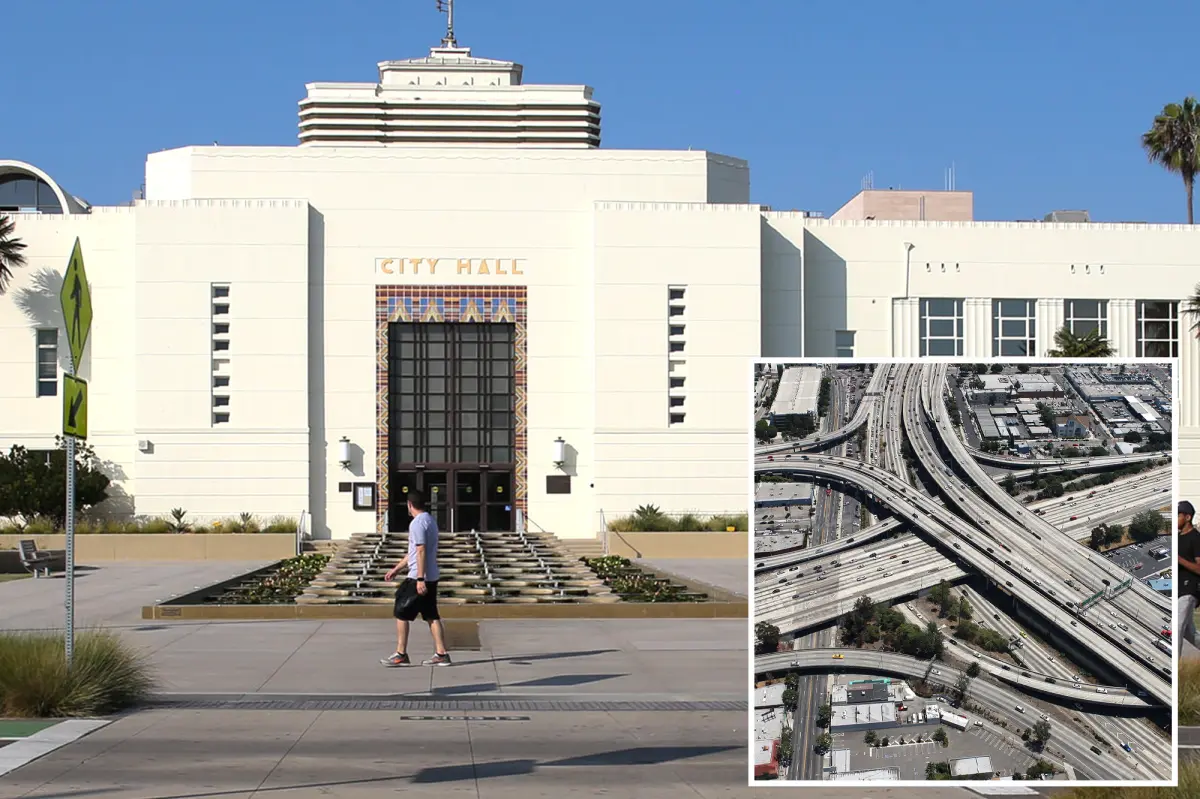
Beneath the sun-drenched, postcard-perfect facade of Santa Monica, California, lies a deep-seated historical trauma written in concrete and asphalt. For decades, the Interstate 10 freeway has sliced through the heart of this coastal city, acting as a noisy, polluting barrier that segregates its communities. Recently, the Santa Monica City Council ignited a fierce public debate by accepting a $2 million federal grant to study how to heal this long-standing spatial divide. The ambitious and highly controversial study aims to explore ways to reconnect neighborhoods historically fractured by the highway’s construction, specifically focusing on the historically Black and Latino Pico Neighborhood. By examining options to either cover a major stretch of the freeway with a massive park or to tear the roadway out entirely, city officials hope to address historical environmental injustices and systemic harms. However, this visionary pursuit of restorative justice has run headfirst into a wall of modern civic outrage. To many local residents and fiscal conservatives, the project represents an absurd, taxpayer-funded fantasy that threatens to plung the region’s already-stressed transportation network into absolute chaos.
The crux of the city’s study revolves around two radical architectural concepts that sound more like utopian science fiction than traditional urban planning. The first, and relatively more moderate proposal, is a “freeway cap”—a colossal, structural land bridge constructed over the Interstate 10 corridor between 11th and 20th streets. This engineering marvel would essentially create a sprawling, elevated green park floating directly above the rushing traffic, restoring a physical connection between long-isolated communities while mitigating noise and air pollution. Senior Park Planner Antonio Lopez candidly admitted to the city council that the proposal is currently in its absolute infancy, describing it as a conceptual design project that does not yet actually have a physical design. However, Councilmember Ellis Raskin pushed the envelope even further, arguing that merely capping the freeway is an inadequate plaster on a much deeper wound. Raskin advocated for the ultimate goal of complete freeway removal, suggesting that the city should follow the path of global municipalities that have successfully dismantled massive highways to replace them with pedestrian-friendly grand boulevards, public housing, and community-serving parks.
To understand why local leaders are willing to entertain such radical measures, one must look back at the dark, often-ignored history of Santa Monica’s rapid mid-century development. In 2022, the city issued a searing, formal apology acknowledging its systemic historical role in targeting communities of color for displacement and eminent domain condemnation during the 1950s and 1960s. Decades ago, thriving Black neighborhoods in the Belmar Triangle were systematically confiscated, with some historical structures occupied by African American residents literally burned to the ground to make way for the Civic Auditorium and local high school expansions. When the Interstate 10 freeway was built shortly thereafter, it plowed directly through the heart of the city’s minority residential areas, arbitrarily stripping more than 550 minority families of their homes, generational wealth, and local businesses. For advocates of the new study, this $2 million grant is not merely about traffic mitigation; it is a vital, symbolic step toward civic repentance, restorative spatial justice, and healing an environmental hazard that has disproportionately impacted marginalized residents for over half a century.
Yet, for many everyday residents navigating the harsh economic realities of Southern California, the city’s high-minded ideals feel wildly out of touch with immediate civic needs. News of the grant quickly unleashed a torrent of fierce backlash online and in local community forums, where critics condemned the study as a patronizing, wasteful use of public funds. Apprehensive residents pointed out that the city is grappling with far more pressing, immediate crises, such as rising crime rates, homelessness, and high local taxes, which they believe should take precedence over ideological infrastructure projects. Some online commentators went so far as to accuse the local government of performative virtue signaling or outright financial nepotism, whispering skepticism about who would ultimately benefit from the expensive, multi-year consulting contracts required for such a study. To these vocal critics, the notion of spending millions of dollars to study the removal of a critical transportation artery represents a profound mismanagement of public resources that serves the academic egos of politicians rather than the daily struggles of the taxpaying public.
Beyond the immediate financial skepticism lies a deeply practical panic regarding the logistical fallout of altering one of Southern California’s most crucial commuter arteries. The Interstate 10 freeway serves as the lifeblood of regional travel, carrying hundreds of thousands of commuters, workers, and beach-going tourists in and out of Santa Monica on a daily basis. Local skeptics warn that closing or even narrowing this vital corridor near 20th Street would inevitably redirect an overwhelming deluge of high-speed traffic directly onto residential side streets. The resulting gridlock would turn quiet neighborhoods into hazardous, smog-choked bypasses, destroying the very quality of life the city council claims it wants to protect. This view was captured sharply by local Op-Ed writer Charles Andrews in the Santa Monica Mirror, who expressed utter disbelief that elected officials could propose eliminating the freeway with a straight face. Andrews urged residents to remember these radical proposals when they head to the voting booths, characterizing the plan as a reckless, short-sighted threat to the functional reality of Southern California life.
As the debate rages on, the reality of the situation remains suspended in a long-term bureaucratic holding pattern, leaving both hopeful advocates and furious critics waiting for answers. The city council’s approved resolution is currently constrained to a highly speculative research phase, with no final recommendations expected to be delivered until July 2029, and the associated grant funding structured to run through 2030. This decade-long timeline highlights the immense complexity of modern urban redesign, where the historical demand for social justice constantly clashes with the functional demands of modern car culture. Whether Santa Monica will eventually pave the way for a revolutionary, highway-free paradise or simply file away another multi-million-dollar study into the archives of bureaucratic fantasy remains to be seen. In the meantime, the bitter divide over the future of the Interstate 10 freeway stands as a powerful, cautionary reminder of just how difficult it is to dismantle the concrete choices of the past to build a more equitable future.