





Tragedy in the Outback: The Heartbreaking Discovery of Kumanjayi Little Baby
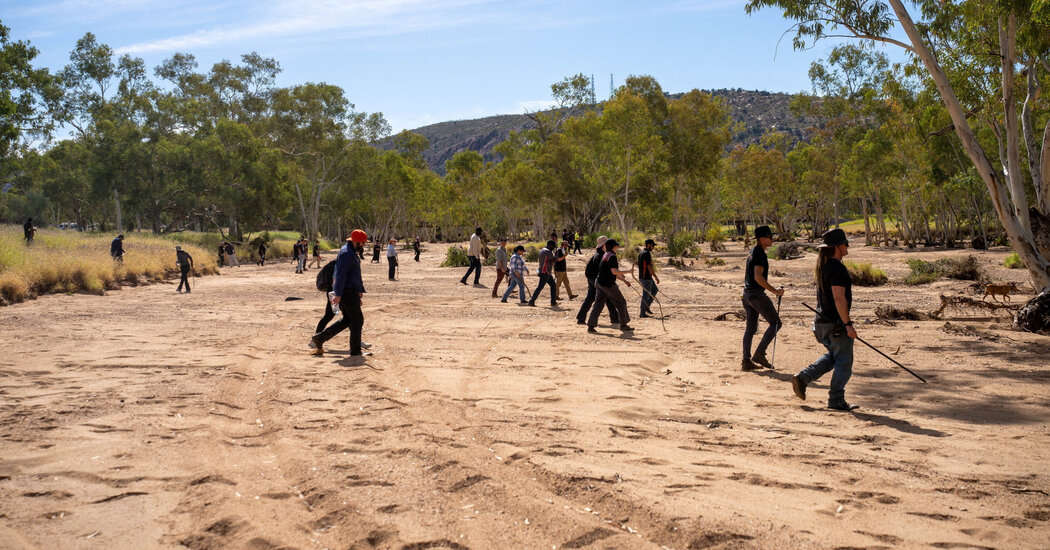
In the unforgiving expanse of Australia’s Northern Territory, a tense, five-day saga unfolded as law enforcement combed the rugged wilderness surrounding Old Timers Aboriginal Town Camp, a remote Indigenous settlement nestled south of Alice Springs. At the heart of this exhaustive search was a glimmer of hope for the safe return of five-year-old Kumanjayi Little Baby, a vulnerable child who had vanished under mysterious circumstances. But on Thursday, what began as a desperate plea for clues morphed into a somber confirmation from Police Commissioner Martin Dole: the worst imaginable outcome had come to pass. Amidst the arid outback landscape, where the sun beats relentlessly on crimson earth and ancient gum trees stand sentinel, police revealed they had unearthed the body believed to be that of the young girl, more than three miles south of her last known sighting on a Saturday night. This revelation sent shockwaves through the region, highlighting an incident that has not only gripped national attention but also underscored deep-seated concerns about safety in Australia’s isolated Indigenous communities.
The search operation itself was a testament to human resolve against nature’s harsh dictates. For days, dozens of volunteers—local residents driven by community ties and a sense of urgency—joined officers in trudging through dense, shoulder-high grass and tangled scrub where visibility was so poor that searchers often lost sight of their own feet in the undergrowth. Helicopters buzzed overhead, their rotors churning the hot air, while thermal imaging drones scanned the terrain for any hint of movement. Yet, the brutality of the outback environment posed relentless obstacles: biting insects, scorching daylight, and the ever-shifting sands that could conceal even the most determined seekers. Police described the effort as one of the largest in the Territory’s history, with more than 200 individuals working around the clock, fueled by coffee and quiet prayers. As the days wore on, early discoveries added layers of dread—a comforter strewn in the bush, an adult’s yellow shirt, and a pair of children’s underwear—that hinted at foul play. It was a scene reminiscent of untold wilderness tragedies, where the vastness of the land swallows secrets and tests the limits of hope.
Kumanjayi Little Baby, as revealed by family wishes and Indigenous customs, was far more than a victim in a headline; she was a cherished child whose nonverbal world was one of silent expressions and gestures. Unable to speak, she communicated through hand signs, a poignant detail that humanizes her story and amplifies the cruelty of her fate. Her mother, whose name was withheld for privacy, released a statement steeped in profound grief, expressing undying love and the aching void left behind. “It is going to be so hard to live the rest of our lives without you,” she wrote, adding words that echoed the timeless pain of loss: “Me and your brother will meet you one day.” The family had traveled to the camp that fateful Saturday to handle mundane tasks like laundry, drawn by familiar faces in this tight-knit community of about 40 residents. Undated photos released by the Northern Territory Police Force captured her innocent smile, a stark contrast to the darkness that shrouded her end. Her story resonates beyond the outback, touching on issues of vulnerability among Indigenous youth and the urgent need for protective measures in remote areas where resources are scarce.
At the center of the police investigation stands Jefferson Lewis, a 47-year-old man whose shadowy presence looms large over the case. Authorities confirmed he had been seen holding hands with the girl late on that Saturday night in the camp, raising immediate red flags given his recent release from prison just days earlier. Lewis remains at large, prompting a manhunt that has stretched across the Territory and into Western Australia, where officials have reached out to his family members in scattered towns. The evidence collected during the search paints a damning picture: two DNA profiles lifted from the found underwear—one unmistakably Kumanjayi Little Baby’s, the other matching Lewis’s—solidifying suspicions of abduction and worse. His criminal past, marked by multiple imprisonments over the past decade for offenses including serious assaults, domestic violence breaches, and resisting arrest, adds fuel to the narrative of a repeat offender preying on innocence. As details emerge, the case amplifies broader societal discussions on recidivism in Australia’s justice system and the challenges of integrating former inmates back into society, especially in underserved regions.
The emotional toll echoed through the voices of Northern Territory leaders, who struggled to articulate the collective heartbreak. Chief Minister Lia Finocchiaro, addressing reporters with a voice tinged by sorrow, spoke of a nation holding its breath. “Every Territorian has had their heart in their throat, waiting for the moment that we got the announcement that she’d been found safe and well,” she said, her words heavy with resignation. “That news did not come, and it’s fair to say everyone is feeling this loss acutely.” Assistant Commissioner Peter Malley, channeling the resolve of the force, vowed unwavering pursuit: “Our sole focus is finding Jefferson Lewis,” he declared, addressing the suspect’s relatives directly. “We believe he’s murdered this child. Do not assist him—get him to the police station and we’ll look after him.” Turning to Lewis himself, Malley issued a chilling ultimatum: “We’re coming for you.” The response highlighted the raw tension of a community united in grief yet divided by fear, as the search transitioned from rescue to reckoning.
Yet, beneath the surface urgency lies a unique set of investigative hurdles, forcing police to adapt strategies rooted in a different era. Commissioner Malley likened the chase to policing in the 1930s, lamenting the absence of modern digital tools because Lewis lacked a phone, bank account, or vehicle—all hallmarks of traceable life in 2024. “Some of the usual practices that we do today aren’t applicable,” he explained, underscoring how the case defied conventional manhunts reliant on GPS tracking and electronic footprints. Instead, officers resorted to boots-on-the-ground intelligence, community outreach, and old-school detective work, canvassing remote settlements and relying on eyewitness accounts in a landscape where isolation is both a refuge and a trap. This anomaly not only prolonged the ordeal but also sparked conversations about technology’s role in rural law enforcement, revealing gaps in coverage for those living off the grid. As the net tightens, the case serves as a stark reminder of how Australia’s vast interior can become a hiding place, testing the endurance of justice systems designed for urban realities. With Lewis still elusive, the outback holds its breath, a vast canvas of unanswered questions and quiet resolve.