






Nineteen is an age of infinite promise—a threshold where the world is supposed to open up with endless possibilities, academic pursuits, and the vibrant, untamed energy of youth. For Julissa Salazar, a young woman whose life was deeply woven into the fabric of the Tucson community near the University of Arizona, that bright future was brutally and permanently extinguished inside an off-campus apartment. To those who knew and loved her, Julissa was far more than just a tragic name in a police report; she was a beloved daughter, a loyal friend, and a young woman navigating the threshold of adulthood with hope and determination. The sudden, unnatural silence that fell over her life on a fateful Thursday left an agonizing, permanent void in the hearts of her family—a void that quickly transformed into a living nightmare when police officers discovered her lifeless body. She had been strangled, her life violently stolen in a domestic setting that should have been a sanctuary of safety, leaving her family to grapple with an unfathomable grief that no parent should ever have to endure. This heartbreaking loss has reverberated deeply through the university campus and the wider Tucson community, serving as a devastating, intimate reminder of the quiet terrors of domestic abuse that so often unfold behind closed doors, away from the protective eyes of those who care the most.
The horror of Julissa’s death was compounded by a calculated and chillingly deceptive cover-up executed by the very person who claimed to love her. Immediately after her life was taken, her 20-year-old boyfriend, Varun Batchigari, allegedly set a sinister plan into motion to mask his heinous deed and secure his own escape from justice. Instead of facing the consequences of his actions or showing an ounce of human remorse, investigators reveal that Batchigari stole Julissa’s cellphone and credit cards, using them as tools of manipulation. In a desperate bid to buy himself precious hours to flee the country, he began sending a series of fabricated text messages to Julissa’s mother, posing as the deceased teenager. These messages, designed to mimic Julissa’s voice, were meant to paint a false picture of normalcy and reassure a worried parent. However, a mother’s intuition is a powerful, protective force, and the unnatural tone and unusual content of the texts quickly sparked deep suspicion and escalating panic in her mother’s heart. Driven by a growing, sickening dread that something was terribly wrong, Julissa’s family pleaded with law enforcement to conduct a welfare check at her apartment. It was this desperate act of maternal love that ultimately led Tucson police officers to breach the apartment door, only to confront the devastating reality that Julissa was already gone, her body left behind while her killer was already miles away, racing against the clock to vanish overseas.
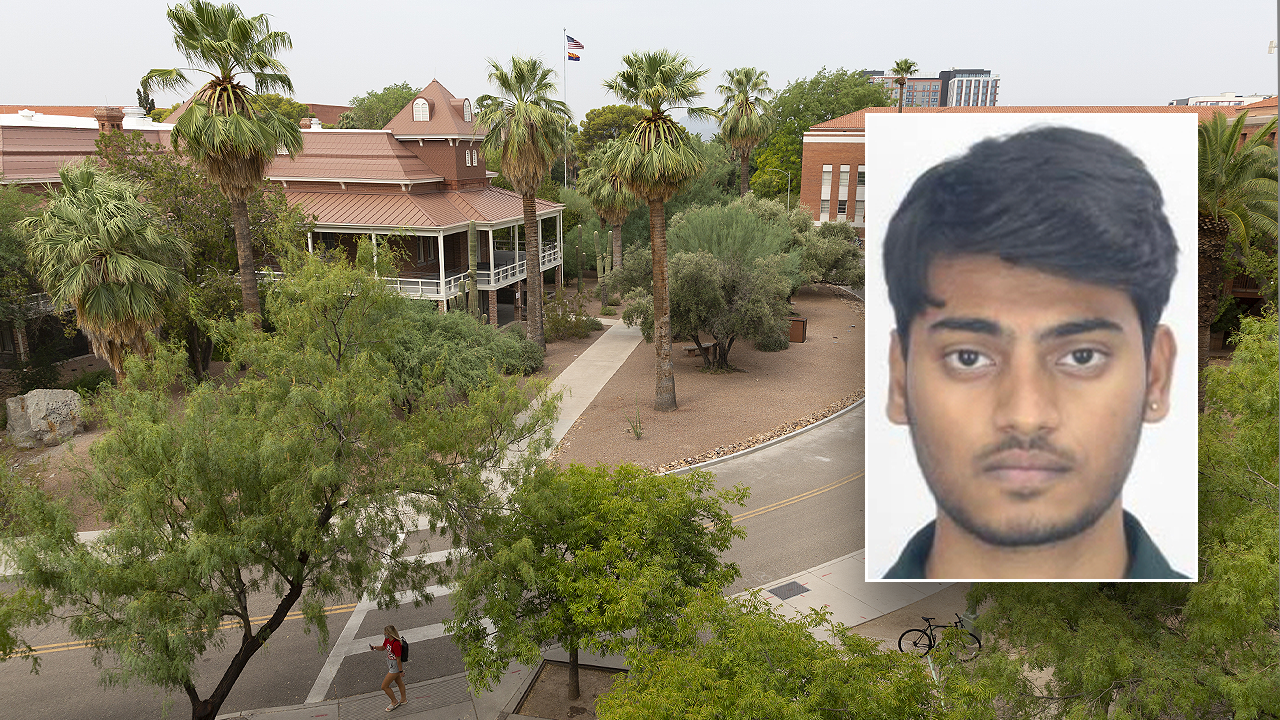
While Julissa’s family was beginning to process the unimaginable tragedy, Batchigari was already embarking on an international flight path designed to put oceans between himself and American justice. An Indian national who had entered the United States through Los Angeles International Airport in January 2024 on an F-1 student visa, Batchigari utilized his remaining resources to book a multi-leg journey back to his home country. He boarded a flight from Houston, Texas, bound for India, with a scheduled layover in Germany, hoping to disappear into the vastness of the global landscape before his crimes were fully realized. But the wheels of justice, though quiet, moved with swift and decisive precision. As soon as the Tucson Police Department uncovered the murder and identified Batchigari as the prime suspect, federal law enforcement agencies were immediately mobilized. The Federal Bureau of Investigation (FBI) sprang into action, issuing international alerts and coordinating in real-time with German authorities. When Batchigari’s flight touched down in Germany for its layover, he was not met with the freedom of a successful escape, but rather by German police officers who intercepted and arrested him on the spot. He now sits in a foreign holding facility, facing a complex extradition process as federal prosecutors and the FBI work diligently to bring him back to Arizona, where he will finally stand trial for first-degree murder.
Behind the sudden violence of that Thursday lay a dark and escalating pattern of behavior that paints a tragic picture of a relationship deteriorating under the weight of abuse, control, and fear. A felony warrant obtained by local media outlets reveals that Julissa had been living in a state of growing anxiety, trying desperately to untangle herself from Batchigari’s toxic grip. Witnesses interviewed by investigators painted a harrowing picture of their final months together, noting that Julissa had officially moved out of their shared living space after experiencing persistent problems and an alleged history of domestic violence. She was actively planning to end the relationship entirely, recognizing the danger she was in, but tragically, her brave attempt to reclaim her independence was cut short before she could fully escape. Furthermore, the investigation unearthed a disturbing history of wider aggression associated with Batchigari. Multiple acquaintances came forward with chilling allegations of past misconduct, including one witness who described being sexually assaulted by Batchigari at a Halloween party—an assault she felt too intimidated to report to law enforcement at the time. Another witness recalled Batchigari’s explosive temper, noting that he had previously been investigated by the University of Arizona Police Department for his involvement in a separate physical assault case, indicating that the warning signs of his capacity for violence had been flashing red for months.
As the community demands answers, the case has also exposed alarming institutional lapses and systemic failures that allowed a dangerous individual to remain in the country despite a crumbling personal and academic life. Prior to the murder, Batchigari’s life had reportedly entered a severe downward spiral; he had been formally expelled from the University of Arizona following a violent altercation and subsequently lost his job. These setbacks triggered acute financial distress, leaving him struggling to pay rent and facing the imminent threat of losing his student visa status, which is strictly contingent upon continuous academic enrollment. Yet, despite his expulsion and the clear violation of the terms of his F-1 visa, federal records reviewed after the tragedy revealed a baffling discrepancy: Batchigari remained in active, lawful immigration status at the time of Julissa’s murder. This critical administrative gap raises troubling questions about the lack of communication between educational institutions and federal immigration authorities, as the system designed to monitor international students failed to flag his expulsion in time to intervene or deport him. The realization that a violent offender was able to slip through these bureaucratic cracks while his victim lived in fear adds a layer of profound frustration to an already unbearable tragedy, prompting calls for stricter oversight and faster reporting mechanisms to prevent such oversights from costing more innocent lives.
Today, the vibrant spirit of Julissa Salazar lives on in the memories of those who loved her, even as her family prepares for the long, painful road toward legal justice and healing. The vacant silence of her off-campus apartment stands as a somber monument to a life stolen far too soon, a devastating casualty of a pattern of domestic abuse that continues to plague communities everywhere. While the Tucson Police Department and federal agencies continue their meticulous work to ensure Batchigari’s extradition and eventual prosecution, Julissa’s loved ones are left to navigate a world forever changed by her absence. They must carry the heavy burden of her loss, remembering her not for the horrific manner of her death, but for the light, warmth, and joy she brought into their lives during her nineteen years. This tragedy serves as a solemn plea for society to listen more closely to those who whisper of their fears, to strengthen the safety nets for victims of domestic violence, and to demand accountability from the institutions meant to protect the vulnerable. As the legal system prepares to hold her accuser accountable under the full weight of the law, the memory of Julissa Salazar remains a powerful, heartbreaking reminder of the human cost of violence, and the enduring necessity of fighting for justice, safety, and peace in her name.