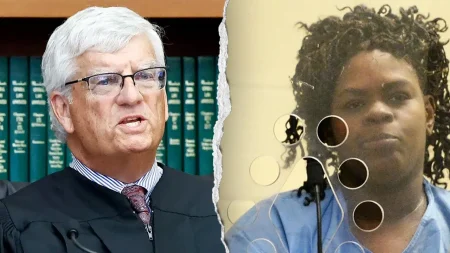







Imagine a courthouse in Fort Worth, Texas, that has become a kind of legal pilgrimage site. It is not the most beautiful building in America, and it does not sit on a famous plaza or boast the marble grandeur of Washington. But for more than a decade, conservative litigants have filed into its hallways the way travelers might enter a shrine. They came from Texas, from Oklahoma, from Washington, D.C., and from all over the country. They brought lawsuits against the federal government—challenges to health care laws, civil rights guidance, immigration policies, and rules they believed the government had no right to make. They did not come because they had a personal connection to North Texas. They came because the courthouse was home to Judge Reed O’Connor, a federal judge appointed by George W. Bush with a reputation for taking conservative legal arguments seriously. And they won. Again and again. O’Connor issued rulings that did not simply decide the case in front of him; he issued nationwide injunctions that froze policies for the entire country. That made his courtroom one of the most important centers of American law, a place where a single lawsuit could change the lives of millions of people. The district itself became known as a favorable venue, a kind of judicial safe haven for the conservative legal movement. People did not just file cases there; they chose to file there, carefully, strategically, because they knew that the geography of a courtroom could matter as much as the merits of a claim.
To understand how this happened, you have to understand the strange mechanics of forum shopping. In the federal system, plaintiffs often have several lawful places to file a same lawsuit. They can file where they live, where the defendant lives, or where a substantial part of the events occurred. That flexibility was meant to be a convenience, not a weapon. But it has become a strategic game. Conservative legal organizations realized that if they filed certain cases in the Fort Worth or Amarillo divisions of the Northern District of Texas, they were almost certain to draw a judge with a particular worldview. The court’s local rules allow for civil cases to be assigned to a single judge in a division, and with only a handful of judges in a given division, plaintiffs could effectively choose their judge. O’Connor was the most prominent example, but he was not the only one. Once the pattern was clear, the filings became a flood. Lawsuits were written with an eye toward the docket in Fort Worth, not toward the actual facts or the deeper legal questions. The result was a judicial system in which the most consequential decisions about federal law were made by a small group of judges in one corner of Texas. It was an anomaly, but a powerful one. And it gave conservative litigants something rare in modern American life: a home court advantage. The people who took advantage of it were not shadowy forces; they were Texas officials, religious nonprofits, small businesses, and ordinary citizens who felt that the federal government had grown too large and too distant. They were looking for a judge who would listen, and in O’Connor they found one.
Judge O’Connor’s rulings have been felt far beyond Fort Worth. One of his most famous decisions came in a challenge to the Affordable Care Act, when he ruled that the individual mandate was unconstitutional and that the entire law had to fall. Another set of rulings blocked federal guidance on transgender bathroom access in schools and expanded religious exemptions to contraception coverage. These decisions were celebrated by conservative groups and condemned by civil rights organizations. They also made O’Connor a national figure. To his supporters, he was a judge willing to stand up to an administrative state that had grown too powerful. To his critics, he was an activist in robes, using his courtroom to advance a political agenda. Whatever the label, his impact was real. A young transgender student in a small town, a woman needing birth control, a small employer worried about insurance costs—all of them could find their lives altered by a ruling issued in a courtroom they had never seen. The people who filed those cases were not abstract concepts. They were state attorneys general, conservative activists, religious organizations, and families who believed they were fighting for their own survival. They came to O’Connor’s court because they thought it was the one place where they could get a fair hearing. And in the years when Washington was dominated by liberal policy, that court became a refuge. It was not just a place to win a lawsuit; it was a place to stop a national trend. The courtroom itself became a symbol of resistance, a quiet corner of Texas where the power of the federal government could be challenged and, often, defeated.
Now the tables have turned. The Justice Department, the very institution that had so often been the defendant in those lawsuits, has begun to appear in North Texas as a plaintiff. It has filed cases in the district, looking for a place where it can challenge state laws, protect federal agencies, and assert the authority of the national government. The shift is striking. The same courthouse that was once the federal government’s worst nightmare has become a place where federal lawyers choose to do business. It is not that the Justice Department is guaranteed a sympathetic judge; O’Connor is no more likely to rule for the federal government than for a state. But the department has learned the lesson that conservative litigants have known for years: the choice of venue is a weapon. If a state is going to pass laws that collide with federal statutes, the federal government can decide where to fight. And North Texas, with its dockets, its judges, and its place in the national legal conversation, has become an attractive battlefield. The lawyers who arrive there now are not the nervous defendants of the past. They are the plaintiffs, the ones walking through the front door with a stack of complaints and a plan. They may not feel as at home as the conservative litigants who came before them, but they understand that in the modern era, the most important legal battles are often won not by the best legal argument alone, but by the best choice of place. The courthouse that once symbolized federal overreach to conservatives has become a symbol of federal power to everyone else.
This is not a healthy development for anyone who believes in a neutral judiciary. Judge shopping has long been a dirty word in legal circles. It is seen as a way for litigants to avoid the rules that are supposed to make courts fair. The Supreme Court’s own chief justice has called for an end to the practice, and Congress has debated limiting the power of federal judges to issue nationwide injunctions. When the Justice Department now engages in the same strategy, it may be doing more harm than good. It gives legitimacy to a system that is already fragile. If the government itself chooses its judges, how can ordinary citizens trust the courts? The problem is not that Judge O’Connor is a conservative or that the Justice Department is progressive. The problem is that the law is becoming a game of geography. The rights of Americans should not depend on the accident of where a lawsuit is filed, yet they increasingly do. Behind every docket number there are real people: a family waiting for a decision about health care, a teacher trying to figure out what rules to follow, a small business owner unsure whether the federal government can regulate her industry, a young person whose entire identity is being debated in legal briefs. For them, the debate over venue is not academic. It determines whether their lives are stable or upended. When a single judge in one corner of the country can issue a ruling that affects every state, every school, every hospital, and every family, the stakes become almost impossible to overstate. The courthouse in Fort Worth has become a place where national policy is made and unmade, and that is a heavy burden for any judge, any court, and any community to carry.
In the end, the story of Judge Reed O’Connor’s district and the Justice Department’s new interest in North Texas is a story about the transformation of American law. Years ago, conservative litigants went to North Texas because they were losing everywhere else. Today, the federal government goes to North Texas because it is fighting for its own authority. Both sides have decided that the courthouse in Fort Worth is a prize worth winning. That may make legal sense, but it has a cost. It makes the judiciary look like an extension of politics, and it erodes the idea that justice is blind. The judges who sit in that district, including O’Connor, are not cardboard characters. They are people with histories, beliefs, and a sense of duty. But they are being asked to decide cases that will affect the entire nation, and the litigants are being allowed to choose which judge will hear their case. That is not the way a healthy judicial system is supposed to work. The courthouse in North Texas has become a symbol of something larger: a country that cannot agree on the basic rules, so it fights about the referees instead. For now, both the conservative movement and the Justice Department seem to believe that North Texas is the place to be. And until the rules change, that is likely to remain true. But the people who are most affected—the ordinary Americans who never set foot in the courthouse—are the ones who will live with the consequences. They are the ones who will feel the whiplash of a legal system that shifts with the filing of a complaint, the stroke of a pen, and the location of a judge. The law is supposed to be stable, predictable, and fair. But when the same courthouse becomes a favorite destination for both sides, it is hard not to wonder whether the law has become just another battlefield in a long and unresolved war.