




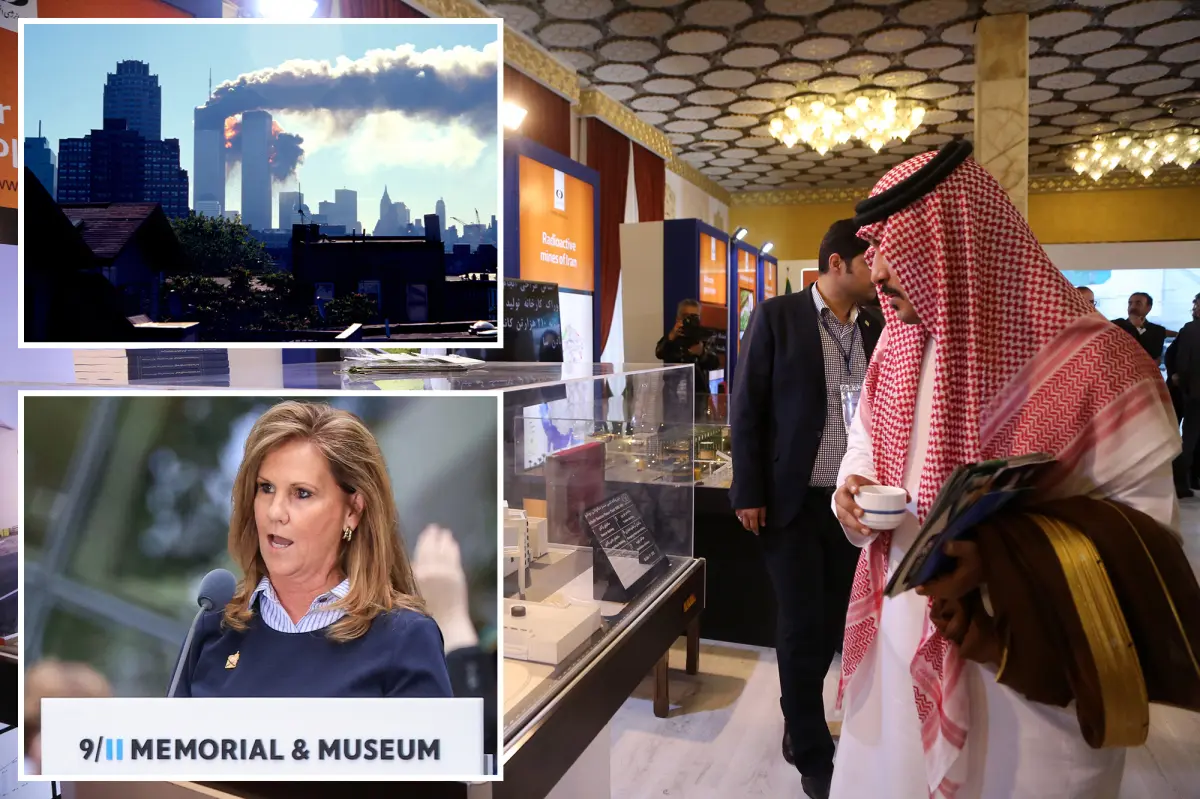
For twenty-five years, the ache has not dulled for Terry Strada. She still remembers the crisp September morning, the ordinary goodbye, the way her husband Thomas, a bond trader at Cantor Fitzgerald, kissed her and headed off to a day that would never come. He was one of nearly three thousand souls stolen when al-Qaeda terrorists turned hijacked planes into instruments of slaughter, and fifteen of the nineteen hijackers were citizens of Saudi Arabia. That fact has never left her. It has become a quiet, burning core in her chest, a wound that refuses to heal because, in her view, the kingdom that produced those men has never truly answered for it. Now, a quarter century later, Strada and the anguished families of 9/11 victims are preparing to go nuclear in a very different sense. They are determined to gum up Saudi Arabia’s push to build civilian nuclear reactors with the Trump administration’s blessing. For them, this is not merely a foreign policy debate. It is a moment of reckoning, a chance to force a reluctant superpower to confront a painful truth. They believe the nuclear deal is leverage, and they are tired of waiting for justice to arrive on its own.
The nuclear agreement in question is formally known as a “123 Agreement,” a civilian nuclear cooperation pact that would allow American companies to work alongside Saudi Arabia on nuclear energy projects worth billions of dollars. To the families, the enormous financial stakes make it the perfect pressure point. They are hoping to use the approval process to force the Saudi government to admit what they maintain is its complicity in the 9/11 attacks. “How do you give a country nuclear weapons that is responsible for murdering 3,000 people and they’ve never owned up to it?” Strada fumed recently, her voice thick with frustration and grief. “They’re not trustworthy. They’re not honest brokers.” She dismissed the kingdom’s repeated claims that its nuclear program is peaceful and transparent, arguing that a government with so much unanswered bloodshed in its past cannot be entrusted with technology that could one day produce a bomb. The families have found powerful allies in Congress. A bipartisan group of senators has pushed the White House to release concealed “side agreements” that were negotiated alongside the main nuclear cooperation plan. Senator Richard Blumenthal of Connecticut, who has spent years pressing for declassification of documents about Saudi Arabia’s role in the attacks, recently said he would oppose or at least question the nuclear agreement until the 9/11 family claims against Saudi Arabia are resolved. Congress has the capacity to try to block the deal through a joint resolution of disapproval, and the families intend to make sure that option stays very much on the table.
This is not a new fight. For more than two decades, the families have pursued every avenue of truth and accountability. They have sued in federal court, seeking punitive and compensatory damages that could total billions of dollars. Their legal path was strengthened by the Justice Against Sponsors of Terrorism Act, a law passed in 2016 that cracked open the door to holding foreign governments accountable for terrorist acts on American soil. Fifteen of the nineteen hijackers were Saudi nationals, a fact that has always hung over the case like a dark cloud. The Saudi government has strenuously denied any complicity in the attacks, and it has fought the lawsuit every step of the way. But the families have remained resolute, dragging the kingdom through deposition questions, document demands, and public scrutiny. They have gathered evidence, listened to witness testimony, and watched as the kingdom’s lawyers attempted to shield their clients behind sovereign immunity. It has been exhausting, heart-wrenching work. Every hearing reopens the wound. Every legal procedural victory feels small against the enormity of what was lost. Yet they keep going, because they believe that accountability is not just a legal concept. It is a form of remembrance. It is a way of telling a murdered husband, a lost daughter, a missing brother, that their lives mattered and that the world has not simply moved on.
President Trump’s recent comments have given the families a flicker of hope. Last week, at a ceremony marking the twenty-fifth anniversary of the attacks, Strada delivered an impassioned speech, standing before a president who has often spoken of his own determination to declassify secrets. Trump said he was “going to look at” releasing 9/11 records related to Saudi Arabia’s role. For Strada, that vague promise is not enough. She does not want records, she says. She wants Trump to pressure the Kingdom to stop denying responsibility. She wants him to stop what she sees as a long-standing pattern of American presidents shielding a strategic ally. “Don’t continue covering for them or providing them cover,” she pleaded. “He can be the one that stops that pattern.” The White House, for its part, has responded with carefully measured language. Press secretary Olivia Wales touted the administration’s transparency credentials, noting that Trump had already authorized the declassification and release of hundreds of pages of documents related to the attacks. “The President will always pay tribute to the American heroes we lost in the tragic attacks, their beautiful family members, and to the acts of heroism that defined that fateful day when the unbreakable spirit of the American people prevailed,” she said. But to the families, those words ring hollow. They have heard comforting speeches before. They have watched presidents of both parties offer condolences and then quietly move on. They are no longer interested in sentiment. They are interested in leverage.
The Saudi government, for its part, continues to insist that its nuclear ambitions are peaceful and transparent. It says the reactors are meant to diversify its economy and provide clean energy for a nation that has long depended on oil. It presents itself as a responsible actor in a volatile region, a counterweight to Iran, a modernizer under its young crown prince. But the families see a different picture. They see a country that has never fully acknowledged the actions of its citizens, a country that has spent millions on lobbying and public relations to shape its image in Washington, a country that has repeatedly used its financial and strategic clout to avoid hard questions. The idea of handing such a government a civilian nuclear program—one that could, in theory, provide the technical know-how and enriched materials necessary for a weapons program—strikes them as an unforgivable gamble. “They’re not honest brokers,” Strada said, and she is not alone. Nuclear nonproliferation experts have long warned that any 123 Agreement with Saudi Arabia must include strict safeguards, including the so-called “gold standard” prohibitions on enrichment and reprocessing. The Saudis have resisted those restrictions, raising alarm bells both on Capitol Hill and among foreign policy analysts. The families have taken note. For them, the nuclear deal is not some abstract strategic arrangement. It is a moral test. It asks the United States to choose between a strategic partnership with a wealthy, powerful kingdom and justice for its own citizens.
In the end, this fight is not really about nuclear reactors. It is about the ache of unfinished business. It is about the widows who still sleep on one side of the bed, the children who grew up without fathers, the parents who bury their sons and daughters and then watch the world move on. It is about the stubbornness of ordinary people who have been forced into extraordinary grief and who refuse to let that grief be erased. Terry Strada has stood at Ground Zero, felt the cold air, listened to the names being read aloud, and wondered if anyone in power truly hears them. She has watched presidents come and go, watched wars begun and ended, watched the news cycle turn and turn again, and still, the question remains unanswered: who was responsible, and who will own it? The nuclear deal has given the families a rare piece of leverage, a way to make the powerful stop and listen. They intend to use it. They know that time is running out—the youngest survivors are aging, the witnesses fading, the memories growing softer around the edges. But they are not going away. They are going nuclear, not in the sense of rage alone, but in the sense of consequence. They are forcing the nation to ask itself what it values more: a profitable deal with a foreign power, or the truth owed to the dead. They have buried their loved ones once. They will not bury the truth. And so, on this anniversary and in the months to come, they will stand in front of the White House, in the halls of Congress, in the quiet corners of their own hearts, and they will demand that America remember. Not with a plaque. Not with a moment of silence. But with action.