






The Geopolitical Ripple: How Distant Conflict Chokes the Dreams of West Africa’s Farmers
The Shattered Promise of the Cocoa Boom
THE GEOPOLITICAL TRANSITION WAVE[ Middle East Conflict ] ───► [ Strait of Hormuz Blockade ]
│
▼
[ Smallholder Farmer ] ◄─── [ Costly Farm Inputs & Urea ]
(Michel Bla: Stalled Dreams) (Skyrocketing Fertilizer Costs)
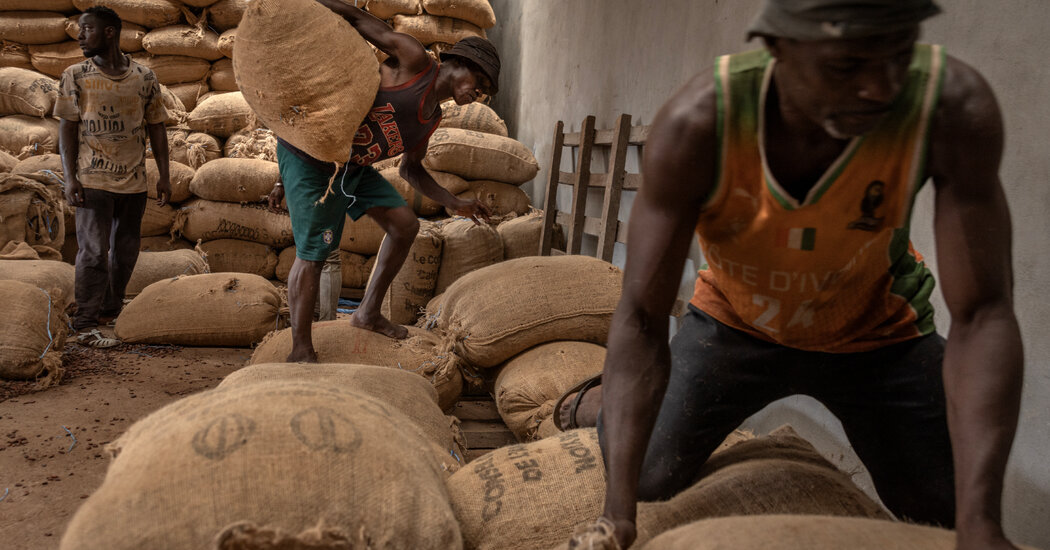
Until quite recently, Michel Bla’s life offered a classic narrative of upward mobility within one of the developing world’s most resilient economic success stories. On his multi-hectare plantation nestled along the humid, tropical fringes of Divo—a bustling agricultural city in the southern forest belt of Côte d’Ivoire—the 52-year-old farmer watched with pride as his cocoa trees yielded increasingly abundant harvests. This steady agricultural bounty allowed him to directly benefit from the insatiable global consumer demand for chocolate, turning raw agricultural labor into tangible middle-class prosperity. With his hard-earned savings, Bla had sent his eldest son to university, eyeing a future defined by the secure, white-collar comfort of a civil service career. Back home, he kept a meticulous list of life-improving projects: drilling a domestic water well to liberate his family from their hazardous daily treks to a muddy local river for drinking water, and purchasing solar panels to power electric fans that would invite cool relief during the oppressive, restless heat of tropical nights. However, this hard-won stability evaporated when a sudden, destabilizing contraction in the global cocoa market collided with a major geopolitical crisis in the Middle East, shutting down the Strait of Hormuz and driving up the cost of fuel, shipping, and synthetic inputs. Today, Bla’s son is back home from university, the family still drinks contaminated river water, and the untended cocoa trees are beginning to wither under the weight of unaffordable fertilizer. “This year has been a catastrophe,” Bla says quietly as his backyard chickens peck at the dusty soil. “I have absolutely nothing left in my pocket.”
Geopolitics on the Dinner Plate: The Middle East Conflict and the Fertilizer Emergency
                 FERTILIZER SUPPLY CHOKEPOINTS

             ┌───────────────────────────────────┐
             │    Middle East Gulf Countries     │
             │  (Iran, KSA, Qatar, UAE, Bahrain) │
             └─────────────────┬─────────────────┘
                               │  Produces 1/3 of Urea
                               ▼
                   [ Strait of Hormuz Choke ]
                               │  Blockade / Conflict
                               ▼
                   [ Globallized Raw Materials ]
                   (West Africa, Latin America, Asia)
The economic reversal experienced by smallholders like Bla is not an isolated incident of bad luck, but rather a structural vulnerability felt by tens of millions of people across developing economies who are bearing the collateral damage of distant geopolitical conflicts. When military engagements broke out near the Persian Gulf, triggering retaliatory strikes on energy infrastructure and causing the near-complete closure of the Strait of Hormuz, the supply chains for critical global raw materials fractured overnight. This vital marine channel is the primary oceanic highway for nitrogen-based agricultural inputs; five Gulf nations—Iran, Saudi Arabia, Qatar, the United Arab Emirates, and Bahrain—collectively manufacture one-third of the global supply of urea, the world’s dominant nitrogen fertilizer, alongside one-fifth of global phosphate exports. Deprived of these critical chemical inputs due to shipping blockades and localized manufacturing disruptions, farmers from Latin America to Southeast Asia faced immediate shortages, causing the cost of basic agronomic inputs to spike beyond reach. The United Nations Development Program recently issued a sobering warning that up to 33 million people in developing nations risk falling below the poverty line this year due to this toxic combination of high energy prices and agricultural inflation. In highly vulnerable nations with pre-existing humanitarian crises, such as Sudan and Somalia, these dynamics have reached life-threatening proportions, combining with a cash-strapped global aid network to expand the boundaries of systemic hunger. Even in peaceful, relatively prosperous nations, the psychological toll is marked by a deep, generational downgrading of expectations as families realize how easily their hard-earned progress can be dismantled by global crises.
From Golden Harvest to Volatility: The Mechanics of the Global Cocoa Market Collapse
COCOA MARKET CYCLE (2022-2026)[ 2022-2025: Crop Squeeze ] ──► [ Oct 2025: Gov Price Hike ]
│ │
▼ ▼
Historic price spike Confectioners shift ingredients
│ │
└───────────────┬─────────────────┘
▼
[ Early 2026: Market Collapse ]
(Farmgate prices slashed by 57%)
Adding insult to the injury of expensive fertilizer was a simultaneous collapse in the international cocoa market, a major crisis for a country that derives nearly two-thirds of its export revenues from cacao beans. The roots of this agricultural bust lie in the extreme volatility of the preceding years; between 2022 and early 2025, cocoa prices quadrupled on global commodity exchanges as prolonged droughts, aging tree stocks, and spreading crop diseases devastated plantations in Ivory Coast and Ghana, which together supply about 70 percent of the global market. To protect small family farms from sudden fluctuations, the Ivorian government strictly regulates local cocoa purchasing, setting fixed farmgate prices at the start of each harvest season. In October 2025, ahead of crucial national elections, the government capitalized on the global shortage by raising the official farmgate price by more than 25 percent to reward its rural base. However, this policy change accelerated a shift already underway in Western markets: global chocolate manufacturers in Europe and North America, pushed to their limit by years of high material costs, aggressively reformulated their products, reduced package sizes, and substituted real cocoa butter with alternative vegetable fats. As consumer demand cooled under the weight of retail inflation, corporate demand for raw beans plummeted. Within months of its peak, the international price of cocoa collapsed by two-thirds, forcing the Ivorian government to implement a painful 57 percent reduction in regulated farmgate prices just as the Middle Eastern fuel crisis sent the cost of imported farming inputs soaring.
Stalled Progress in West Africa’s Economic Engine
                THE IVORIAN GROWTH PARADOX

 [ Post-Civil War Miracle ]     ──►     [ Present Day Stasis ]
 * 8%+ annual GDP growth                * Unfinished homes (Daloa)
 * Abidjan: regional trade hub          * Deferred university studies
 * Modern highways & grid access        * Growing sense of vulnerability
This sudden economic reversal is particularly jarring for Ivory Coast, which for over a decade stood as a beacon of post-conflict recovery and upward mobility in Sub-Saharan Africa. Following a turbulent decade of civil war and political instability that ended in 2011, this nation of nearly 34 million people embarked on a period of remarkable economic expansion, averaging over 8 percent annual GDP growth between 2012 and 2019, and even weathering the worst of the COVID-19 pandemic with positive economic performance. This sustained growth allowed the country to invest heavily in public infrastructure, modernizing nation-spanning highways, building rural medical centers, and extending electrical grid access to over 72 percent of households by 2023, up from just 56 percent a decade prior. Abidjan, the economic capital, grew into a glittering regional hub of commerce where modern skyscrapers overlook the Ébrié Lagoon, and shopping malls, tennis courts, and industrial parks sit alongside rapidly developing neighborhoods. This environment fostered a strong sense of optimism, encouraging smallholder farmers to invest their earnings back into their land, build permanent concrete homes, and educate their children. Yet, a journey through the agricultural heartland reveals communities grappling with an unfamiliar sensation: the sudden loss of momentum. The ongoing crisis shows that even the most dynamic emerging markets remain highly vulnerable to external geopolitical shocks, as global instability threatens to undo years of domestic development.
The Cost of Farming: Micro-inflation in Rural Agri-Markets
                  RETAIL COST INFLATION

Input Item        Pre-Conflict Price      Current Price
────────────────────────────────────────────────────────
Herbicide (1kg)   28,000 CFA (~$50)  ──►  30,000 CFA (~$53)
Urea (one bag)    18,000 CFA         ──►  22,000 CFA
Yamoussoukro Food Markets: Carrots up 33%, Black Pepper up 50%
On the ground in rural trading centers like Divo and Daloa, these macroeconomic challenges translate into daily friction between merchants and cash-strapped farmers. At his shop in the center of Divo, agricultural supply merchant Adama Toure routinely deals with the anger and confusion of local farmers as he quotes them the prices of imported herbicides, pesticides, and fertilizers. Pointing to a one-kilogram package of herbicide hauled by diesel truck from the port of Abidjan, Toure explains that a bag he sold for 28,000 West African CFA francs (roughly $50 USD) a year ago now costs 30,000 francs, while a standard sack of urea fertilizer has jumped from 18,000 to 22,000 francs. “They blame me and sometimes they are angry,” Toure says, gesturing toward his quiet storefront. “But I blame America and the escalation in the Middle East. Ivory Coast has no stake in this conflict, and yet we are the ones paying the price.” This frustration is shared by smallholders like Konan Kouaidio, who walked over three miles to Toure’s shop hoping to buy insecticides for the small plot where he, his brother, and his mother grow eggplants, corn, and tomatoes. Their plan to use crop profits to buy shoes and fabric for resale—and eventually buy a transport motorbike—is now on hold indefinitely. A similar story of stalled progress unfolds in Daloa, where 57-year-old cocoa farmer Edouard Yao stands beside the unfinished concrete shells of three homes he was building for rental income and his children’s lodging. Forced to slash his fertilizer use from ten bags to just five because of high costs and delayed crop payments from cash-strapped buyers, Yao faces a significantly smaller harvest. “I’m worried,” Yao admits, looking at the exposed rebar of his suspended building project. “I’ve had to lower my expectations for the future.”
Mitigating the Shockwave: Co-ops, Organic Alternatives, and an Uncertain Horizon
RESILIENCE ENGINE (ECAKOOG)[ Fairtrade Premium Savings ] ───► Local Credit & Microloans
[ Agri-Waste Recycling ] ───► Organic Compost Production
(Cocoa husks, leaves, manure)
- Lowers chemical reliance to 70%
In response to these supply disruptions, some farming communities are turning to cooperative networks and local resources to protect themselves from volatile global markets. Near the southern town of Lakota, the Ecakoog cooperative—a progressive agricultural collective with more than 4,000 member farmers—offers a potential model for building local resilience. By meeting strict environmental and fair-labor standards, the cooperative secures a guaranteed price premium through the global Fairtrade certification system, using these extra funds to run a community savings-and-loan department that extends credit to members when commercial banks refuse. Additionally, the cooperative distributes shade trees to protect cacao crops from worsening heatwaves and has begun producing organic compost from local agricultural waste, combining discarded cocoa husks, fallen leaves, and chicken manure to bypass expensive chemical imports. Yet, as the cooperative’s founder and president, Ousmane Traore, points out, these local efforts can only do so much; Ecakoog still relies on imported chemical fertilizers for 70 percent of its nutrient needs, leaving its members highly exposed to the shipping bottleneck in the Strait of Hormuz. “We are scared,” Traore explains, reflecting the deep uncertainty shared by millions of smallholders across the developing world. “We don’t know what will come next.” Ultimately, the crisis reveals the deep connections of the modern global economy, showing how a political stalemate or military action in one hemisphere can quietly threaten the food security, development, and hard-won progress of families thousands of miles away.