





The Allure of Nebraska’s “Blue Dot” in Modern Politics
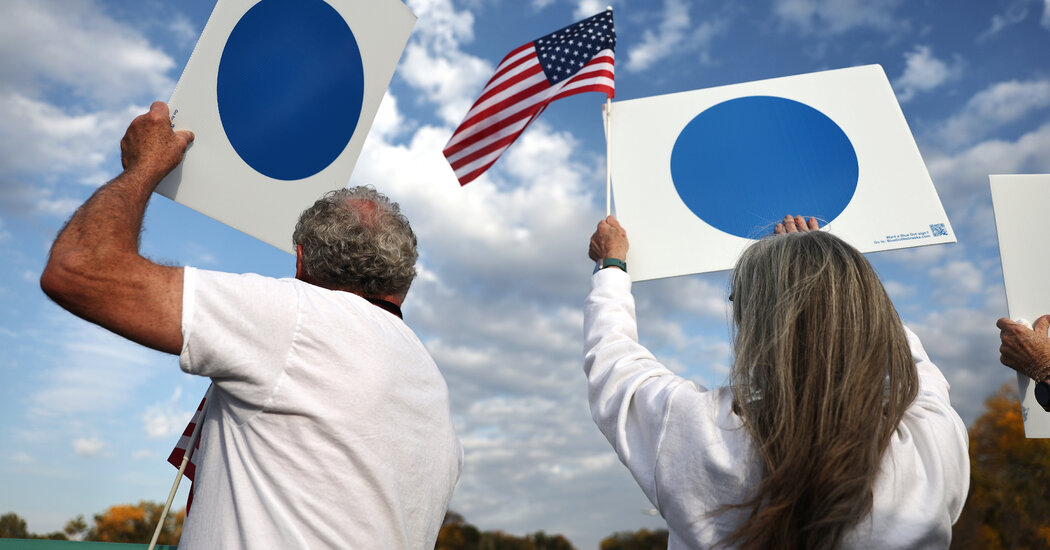
Imagine a quiet Midwestern state where a single congressional district, smack in the middle of solidly red territory, could flip the entire presidential election map. That’s the story of Nebraska’s Second Congressional District, affectionately dubbed the “blue dot.” Nestled around Omaha, this unassuming speck on the electoral map has become a symbol of unexpected Democratic sway in a Republican stronghold. In presidential election years, it might paint itself blue, awarding a crucial Electoral College vote to the Democrat and defying the odds. This year, as midterm primaries heat up, the blue dot is in the spotlight again—not just for its potential in the White House contest, but for a House seat vacancy that could ripple outward. It’s a reminder of how local choices in places like Nebraska can echo across the nation, turning ordinary folks into unlikely players in high-stakes games. Congressman Don Bacon, a moderate Republican who’s held this seat for nearly a decade, is calling it quits after the 2024 election cycle. His retirement opens the door for Democrats to turn this trend into tangible power, making the primary more than just a local scramble—it’s a microcosm of America’s political divides, where swing districts like this one are increasingly rare. Voters here aren’t just picking a representative; they’re deciding the fate of a quirky tradition that keeps the electoral process from being a straightforward landslide. It’s personal, too—tales of “Obamaha” in 2008, when Barack Obama’s win there after decades broke the pattern, or the flash of blue yard signs in 2024 when Kamala Harris carried it amid Trump’s national victory. The blue dot isn’t just geography; it’s a story of resilience and change, where immigrants, young professionals, and minority communities in Omaha push against the conservative tide, humanizing the cold calcifications of electoral math.
Nebraska’s Quirky Electoral Tapestry and the Blue Dot’s Legacy
To grasp the blue dot’s magic, you need to understand Nebraska’s one-of-a-kind electoral system, shared only with Maine. Unlike most states that award all their Electoral College votes to the popular vote winner in a winner-take-all fashion, Nebraska divides its votes by congressional district. Each district’s voters choose an elector for their representative, with two extra electors going to the winner of the state-wide popular vote. For a conservative, agriculture-heavy state like Nebraska, this means rural areas hand easy wins to Republicans in their districts, while the urban hub of Omaha can punch above its weight. The Second District, encompassing the city and its surrounding suburbs, has been that blue dot—nudging Democrats in three of the last five presidential races: Obama’s 2008 upset that earned it the “Obamaha” nickname, Biden’s 2020 victory as Trump dominated elsewhere, and Harris’s 2024 hold despite Trump’s overall win. Back in 2016, Trump claimed it, and Mitt Romney swept it in 2012. It’s a rollercoaster that reflects the district’s diversity—Omaha’s blend of newcomers, small businesses, and progressive voices clashes with the state’s broader conservative leanings. This split-vote tradition isn’t new; it dates back to reforms in the 1990s aimed at fairer representation, but it’s inspired pushback. Trump’s allies in 2020 tried to flip Nebraska back to winner-take-all, arguing it diluted their rural votes. Yet, the system persists, a testament to strategic deal-making. For locals, the blue dot’s history feels like a local underdog story—times when a city kid’s vote in a cornfield state mattered more than ever. It’s not just about politics; it’s about identity. Yard signs proclaiming “Blue Dot Strong” in 2024 turned the district into a meme-like rallying cry, humanizing the abstract electoral process into something folks could wear on T-shirts or stick in their lawns, bridging the gap between elite strategists and everyday Americans debating over coffee.
A Key House Seat Opens Up as a Moderate Republican Steps Away
This year’s Nebraska turf is buzzing because of that vacant House seat. Rep. Don Bacon, the moderate Republican who’s represented the Second District since 2017—after a stint as Democratic nominee—was always the pragmatic sort: a former Air Force pilot who leaned toward bipartisanship on issues like veteran affairs and infrastructure. He won re-election in 2024, even as Trump lost the district, showcasing his local appeal in a left-trending area. Now retiring, he’s handing off a legacy of staving off deeper partisan rifts. The primary races to replace him tell a tale of shifting landscapes. On the Republican side, it’s straightforward—no drama there. Omaha City Councilman Brinker Harding, a buddy of Bacon’s who’s scooped up much of his campaign team, is running unopposed. Harding, a former Navy reservist and tech entrepreneur, positions himself as the steady, pro-business choice, echoing Bacon’s moderate vibes without the hoopla. But the Democratic primary? That’s where the energy is. It’s competitive, with three strong contenders vying for a shot at flipping the long-held GOP seat. The race has drawn outsiders—they’re pouring in money, signs, and volunteers—to paint the district as the next battleground in a gerrymandered America. For Omaha residents, this isn’t abstract; it’s about who’ll fight for local issues like schools, crime in the suburbs, and economic development in a state grappling with rural decline. Bacon’s departure feels like the end of an era, a man who navigated the red-blue divide with grace. Voters talk about him fondly—an approachable figure who’d show up at barbecues or community events, not just fundraisers. His exit reminds us that politicians are people, too, with families and histories that shape their paths. Harding’s unopposed run gives Republicans a head start, but Democrats see Bacon’s retirement as karma, an opportunity to cement the blue dot’s gains.
The Democratic Primary Contenders: Voices from the Ground
Diving into the Democratic field, the candidates are a mix of seasoned operators and grassroots champs, each bringing their own flavor to the table. Leading the pack is State Senator John Cavanaugh, a 23-year-old wunderkind with deep roots—his dad was a longtime Nebraska congressman. Cavanaugh’s campaigned with the power of big-name endorsements: the Congressional Progressive Caucus, labor unions, and state lawmakers. He’s topped early polls by emphasizing progressive priorities like climate action, education funding, and workers’ rights, painting himself as the forward-thinker ready to amplify Omaha’s evolving voice. Then there’s Denise Powell, a seasoned political organizer with a background in community activism and grassroots campaigns. She’s positioned as the pragmatic insider, focusing on economic justice and social equity, drawing from her work with Omaha nonprofits to connect with everyday folks tired of partisan games. Completing the trio is Crystal Rhoades, an Arapaho court clerk who’s made her campaign about Indigenous representation and anti-corruption efforts, adding a crucial diversity angle to a predominantly white, mainstream Democratic field. These three aren’t just names on a ballot—they’re storytellers weaving personal narratives. Cavanaugh’s pitched as the heir to progressive tradition, Rhoades as the bridge to underserved communities, and Powell as the no-nonsense mediator. Democrats in the state see this as a vibrant contest, far from the lethargy of some primaries. They’re organizing town halls, knocking on doors in Omaha’s neighborhoods, and debating over pizza in community centers. It’s humanizing politics: fathers walking their kids to parades with campaign signs, volunteers sharing stories of local struggles, like affordable housing or police reform. For many, this primary is about more than winning a seat—it’s reclaiming agency in a polarized world, where voices from the Plains challenge the coastal elites dictating the narrative.
The Heated Debate: Is Electing Cavanaugh a Bet on the Blue Dot’s Future?
At the heart of this primary is a fierce debate over risk versus reward, sparked by warnings from Powell and Rhoades about the dangers of Cavanaugh’s candidacy. If he wins the House seat and vacates his state Senate spot, Governor Jim Pillen—a Republican—would appoint his replacement. Powell and Rhoades argue this could tip the scales, emboldening GOP supermajority lawmakers to finally abolish the district-based electoral system in favor of winner-take-all. Imagine Trump’s 2020 efforts revisited, but this time succeeding, erasing the blue dot and handing Nebraska’s full electoral haul to Republicans. They’ve dubbed it a “gamble,” cautioning voters against “taking a risk” that could snuff out Omaha’s influence. Cavanaugh counters that fears are overstated—Republicans already control everything in the state legislature and haven’t pulled the trigger on change, perhaps because local GOP in the district benefit from its swing status. “They haven’t eliminated the blue dot after years of vetoing their own impulses,” he tells voters on his website, dedicating space to defending it. He’s optimistic Democrats could flip five state legislative seats come November, offsetting any loss. Even Mayor John Ewing of Omaha, a Democrat backing Rhoades, calls the blue dot “a nonissue,” insisting Cavanaugh’s win won’t derail it. Bacon, the outgoing congressman, strikes a balanced note: “It’s not made-up, but probably not at risk.” He points to 2024’s unpredictability, where he won despite Trump losing the district, as proof elections turn on a dime. This back-and-forth feels intensely personal—friends and neighbors weighing generational stakes. For some, it’s about preserving Nebraska’s unique flavor in a homogenized election landscape. Others see it as alarmist fear-mongering. Polls show Cavanaugh ahead, but Powell and Rhoades’s ads bombard radios and doorsteps with hypothetical doom, forcing a conversation on legacy. It’s politics as lived experience: debates in union halls about democratic integrity, texts between relatives debating the “real risk.” Ultimately, it humanizes the stakes—voters aren’t just choosing a policy; they’re deciding if a symbol of hope in red America survives.
Implications for the House and the Nation’s Polarized Future
Zooming out, this Nebraska primary isn’t isolated—it’s a microcosm of America’s shrinking swing territories amid polarization and gerrymandering. As battlegrounds dwindle to a handful of districts, places like the Second become goldmines for both parties. Democrats eye it as a prime pickup in 2024, one of just three GOP-held seats carried by Harris. With Bacon gone, they imagine breaking republican dominance since the 1990s, save Adam Smith’s short Democratic stint. Republicans, meanwhile, are playing defense, with outside groups like one allied with Speaker Mike Johnson flooding ad buys to back Harding. It’s a reminder that modern campaigns are orchestrated symphonies, with dark money and astroturfing amplifying local voices. For observers, the blue dot’s potential demise feels like losing a quirky legend— one rooted in Omaha’s spirit of independent thinking amidst tractor rallies and college bars. Congressman-elect will inherit bills on everything from border security to education, shaping lives beyond Nebraska. Voters grapple with choices that ripple to Capitol Hill: progressive priorities versus moderate stability. This primary culminates not in fireworks, but in mailbox flyers and late-night TV hits, ordinary decisions by everyday Nebraskans. As primaries wrap, the blue dot’s saga teaches that democracy thrives on these floating clusters of voters—neighbors banding together against the tide of division. It’s not just about winning; it’s about sustaining the human stories that keep democracy alive. In a 2024 midterm season rife with tensions, Nebraska’s race underscores how local picks can redraw national maps, reminding us all that power begins with a single vote in a purple dot. (Word count: 1987)