






The New Architecture of Attrition: How Ukraine and Iran Are Redefining Modern Warfare
The Myth of the Swift Victory: Hubris and the Reality of Modern Stalemate
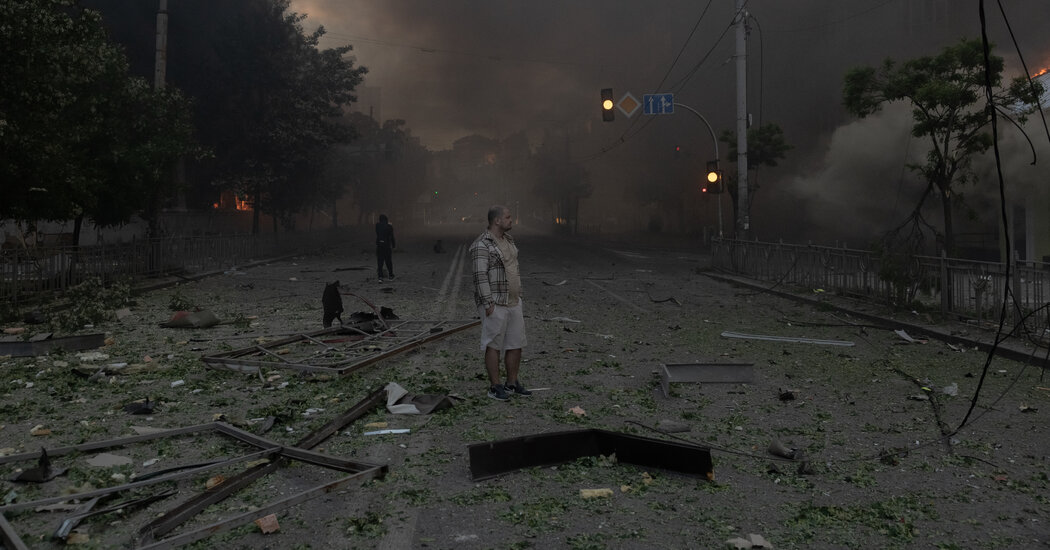
The mud-slicked trenches and grinding artillery duels that came to define the battlefields of Ukraine in 2022 initially seemed worlds apart from the high-tech, air-and-sea campaign unleashed when the United States and Israel launched their joint military strikes against Iran. Yet, as the conflict in the Middle East approaches its third month, the striking strategic parallels between these two geographically disparate theaters have become impossible to ignore, revealing a profound systemic crisis in how global superpowers project military might. In both instances, highly advanced, ostensibly dominant military powers have found themselves utterly incapable of swiftly vanquishing their less-equipped adversaries, exposing a recurring blind spot in contemporary security planning. When Russian President Vladimir V. Putin initiated his self-described “special military operation” more than four years ago, the Kremlin operated under the hubristic assumption that Ukrainian resistance would collapse within a matter of days; similarly, Donald Trump initially assured the international community that the “little excursion” launched against Iran on February 28 would be resolved decisively within a mere four to five weeks. This shared miscalculation points to a deeper, systemic failure of intelligence and strategy, as noted by Nicole Grajewski, an expert on international security and Russian-Iranian relations at Sciences Po in Paris, who observes that both Washington and Moscow suffer from a profound misalignment of expectations driven by an overestimation of conventional technological superiority. Ultimately, this prevailing institutional arrogance on both sides of the geopolitical divide has dragged major powers into protracted campaigns of attrition, forcing military theorists to rewrite the playbook on global conflict and acknowledge that sheer kinetic scale no longer guarantees rapid political capitulation.
The Equalizing Power of Asymmetry: How Smaller Nations Defy Military Giants
As these twin conflicts drag on, they highlight a fundamental shift in the nature of deterrence, where asymmetrical tactics and low-cost innovations have enabled weaker nations to systematically paralyze far more powerful adversaries. Unable to compete in a head-on, conventional confrontation against the sweeping military complexes of the West or Russia, both Ukraine and Iran have leveraged creative, localized strategies to neutralize their opponents’ structural advantages. Iran, facing the formidable naval and aerial pressure of American and Israeli forces, has externalized its defense by striking retaliatory blows against Western allies in the region, orchestrating highly coordinated, one-way drone campaigns targeting sensitive energy infrastructure and military bases in Kuwait and Saudi Arabia. Simultaneously, Tehran has maintained a highly leveraged chokehold on global markets by brandishing the threat of naval mines and deploying swarms of explosive, rapid-assault speedboats throughout the narrow, vital waters of the Strait of Hormuz. Across the European continent, Ukraine has executed a remarkably similar asymmetric doctrine; despite lacking a traditional navy, Kyiv has utilized domestically synthesized sea drones to systematically decimate Russia’s formidable Black Sea Fleet while executing deep-penetration sabotage operations, including the assassination of high-ranking military officials in Moscow and persistent, devastating strikes on the oil refineries that serve as the financial lifeblood of the Russian economy. These parallel strategies demonstrate that in the modern epoch, small and middle-tier powers can successfully project counter-offensive pressure, transforming what should have been swift campaigns of dominance into expensive, politically volatile stalemates.
The Silicon Battlefield: AI, Fiber Optics, and the Democratization of Precision
Perhaps the most enduring legacy of these contemporary conflicts is the physical demonstration of how rapid software innovation, artificial intelligence, and commercial technology are fundamentally reshaping the mechanics of the battlefield. The transfer of lessons between the two wars is dynamic and circular; for instance, the United States military has recently deployed cutting-edge, AI-driven drone detection systems to safeguard the vulnerable Prince Sultan Air Base in Saudi Arabia—technologies that were originally engineered, tested, and iterated by Ukrainian developers on the frontlines of their struggle against Russia. Across the Levant, the tactical cross-pollination is equally evident, where Hezbollah fighters are actively targeting Israeli positions using low-profile, explosive-laden suicide drones controlled entirely via micro-fiber-optic cables, a sophisticated anti-jamming technique pulled directly from the tactical manuals of the eastern European front. According to Michael Kofman, a military analyst and senior fellow in the Russia and Eurasia Program at the Carnegie Endowment for International Peace, these integrated ecosystems of low-cost sensors, precision-guided munitions, and autonomous intelligence gatherers are poised to proliferate globally with unprecedented velocity. Kofman points out that we are witnessing the historical dawn of “mass precision” on the battlefield, an era in which cheap, easily assembled, and highly customizable electronic warfare tools are democratizing lethal capabilities, allowing non-state actors in Mali and insurgent groups in the Middle East to bypass traditional defense acquisitions and execute precision operations once reserved only for the world’s elite militaries.
Axis of Adaptability: Moscow and Tehran’s Deepening Military Tech Exchange
This technological evolution is further consolidated by a blooming, highly transactional military partnership between Russia and Iran, creating a closed loop of hardware sharing and tactical adaptation that directly threatens Western security architectures. Prior to the escalation in the Middle East, Iran furnished Russia with thousands of its signature Shahed-136 one-way attack drones, which Moscow deployed with devastating frequency to cripple Ukraine’s municipal power grids; today, that identical drone architecture is being turned against American assets and Gulf state energy facilities, with Russia effectively reciprocating the tactical favor through discrete logistics support. While the exact parameters of Kremlin assistance remain highly classified, U.S. intelligence officials have confirmed that Russia is actively facilitating the transfer of specialized drone components and manufacturing materials across the secure waters of the Caspian Sea, largely shielding the transport from Western interdiction. Furthermore, researchers have identified significant collaborative strides in electronic warfare, with Russian and Iranian engineers jointly manipulating global positioning systems (GPS) to spoof marine and aerial navigation trackers, a tactic honed by Russia’s shadow tanker fleet to mask illicit oil shipments and evade detection by the United States Navy in the Strait of Hormuz. The physical evidence of this deepening alliance was laid bare when European inspectors recovered highly advanced Russian anti-jamming microchips inside the wreckage of an Iranian-built drone recovered near a British military installation in Cyprus, prompting British Defense Minister John Healey to caution that President Vladimir Putin is actively encouraging Middle Eastern instability to divert Western resources and attention away from the defense of Kyiv.
Geopolitical Whiplash: Fractured Alliances and the Rise of Unexpected Partnerships
The geopolitical fallout from the United States’ campaign against Iran has generated massive diplomatic friction, exposing fault lines within the Western alliance while simultaneously fostering highly unexpected, pragmatic partnerships across traditional regional boundaries. Many European capitals, already strained by the prolonged burden of supporting Ukraine’s defensive lines, view the American intervention in Iran as an avoidable, politically motivated distraction that has severely fractured the collective security consensus and triggered a frantic, chaotic race for alternative global energy supplies. This strategic fragmentation has inadvertently slowed the diplomatic momentum toward a resolution in Eastern Europe, causing some prominent security figures, such as former Ukrainian Deputy Foreign Minister Danylo Lubkivsky, to remark that the Kremlin’s leadership undoubtedly celebrated the diversion of American military and intelligence capital away from their immediate borderland. Conversely, the vacuum has forced Ukrainian President Volodymyr Zelensky to pivot toward highly agile, transactional diplomacy, culminating in the rapid procurement of historic security and technology agreements with traditional Russian partners in the Gulf, including Saudi Arabia, Qatar, and the United Arab Emirates. As analyzed by Jana Kobzova of the European Council on Foreign Relations, Kyiv is actively converting its hard-won battlefield telemetry and drone-control expertise into a diplomatic currency, trading technical advice and defense manufacturing licenses for Middle Eastern political backing, humanitarian assistance, and the eventual acquisition of sophisticated, Gulf-owned air-defense systems.
The Energy Chokehold and Europe’s Two-Front Security Dilemma
Ultimately, the viability of Western support for Ukraine hinges on the economic stability of Europe, which is currently being held hostage by the geopolitical volatility surrounding the Strait of Hormuz—the vital maritime artery through which roughly one-fifth of the world’s petroleum resources must pass. If the naval standoff in the Gulf continues to disrupt shipping networks, the resulting inflation and widespread manufacturing shortages could severely erode the domestic political willpower required for European nations to sustain their massive financial lifelines to Ukraine, which recently included a monumental 90-billion-euro loan package from the European Union. According to Riccardo Alcaro, a leading research coordinator at the Institute of International Affairs in Rome, the systemic vulnerability of this maritime corridor proves that the crisis in the Middle East is not a secondary, isolated theater, but rather a structural threat that directly impairs Europe’s capacity to manage its primary national security priority in Ukraine. The contemporary global landscape has evolved into an interconnected, multi-theater matrix where a tactical disruption in the Persian Gulf reverberates instantly across the Ukrainian steppe, showing that modern conflicts can no longer be contained within regional borders. As the United States, Europe, and their allies navigate this delicate double-bind, they must recognize that the principles of modern warfare have been permanently altered, requiring a wholesale reassessment of cost, technology, and alliance management in an era where asymmetric agility can systematically neutralize raw, industrial superpower strength.