





From Art House to the Oscars: How the Cannes Film Festival Became Ground Zero for Global Cinema
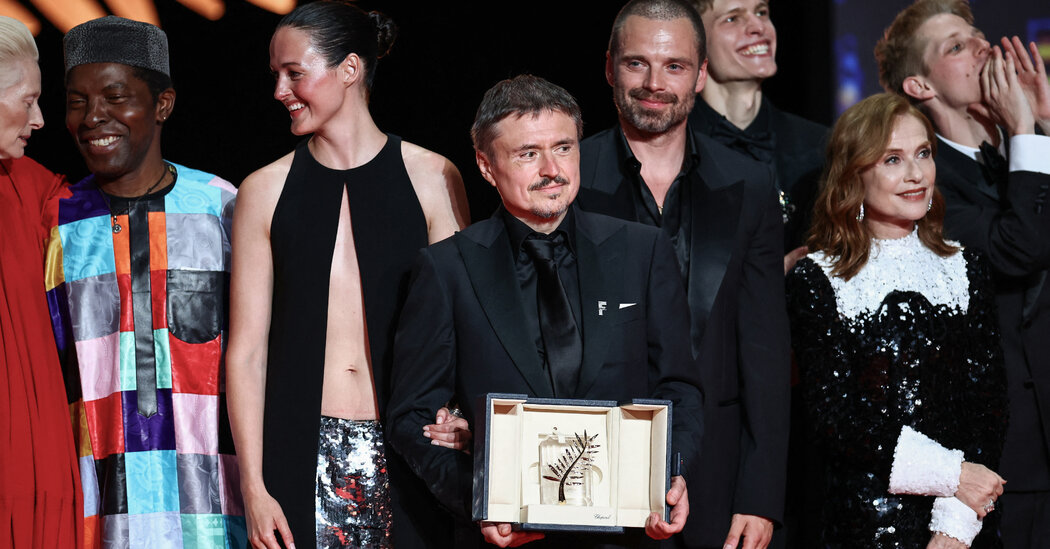
For decades, the Cannes Film Festival existed in a realm strictly distinct from the mainstream glamour of the American awards season, operating as a fiercely protective sanctuary for experimental, auteur-driven, and distinctly European cinema where artistic subversion was prized far above commercial viability. Yet, the modern landscape of the annual festival has undergone a profound transformation, evolving from a niche, art-house haven into the definitive launching pad for the global Oscars awards race. This seismic cultural shift, catalyzed by the historic Best Picture triumph of Bong Joon Ho’s Parasite after it claimed the prestigious Palme d’Or in 2019, was on full display during the latest iteration of the festival, where the coveted top prize was awarded to Fjord, a polarizing, multilingual drama directed by Romanian filmmaker Cristian Mungiu. Starring Sebastian Stan and Renate Reinsve as traditionalist parents who find themselves locked in a devastating conflict with well-meaning but uncompromising progressive authorities in Norway, Fjord stands as a direct reflection of the contemporary culture wars, promising to ignite fierce debates on global film circuits just as its predecessors did. The festival’s growing influence on Hollywood’s ultimate prize is undeniable; recent years have seen Palme d’Or winners like Anora go on to sweep the Academy Awards for Best Picture, Best Director, and Best Actress, while cinematic masterpieces such as Sentimental Value and The Secret Agent initiated their march toward critical immortality right from the sun-drenched steps of the Palais des Festivals. Beyond the awards posturing, this year’s competition was deeply marked by the unsettling arrival of the artificial intelligence era, which dominated conversations both on and off the red carpet. Prominent artistic figures like jury member Demi Moore and visionary director Nicolas Winding Refn spoke with surprising optimism regarding the disruptive technology’s potential to reshape Hollywood’s creative frontiers, even as audiences wrestled with Steven Soderbergh’s controversial decision to employ AI-generated imagery in his poignant documentary, John Lennon: The Last Interview—a stylistic choice that many viewers argued ran in direct opposition to the late musician’s famously humanistic philosophy. Despite these polarizing technological debates, the artistic triumphs of the competition remained undeniable, highlighted by Ryusuke Hamaguchi’s deeply quiet, three-hour intimate masterpiece All of a Sudden, spectacular performances from Sandra Hüller in Fatherland and Javier Bardem in The Beloved, and the unveiling of future Oscar contenders like Javier Ambrossi and Javier Calvo’s sweeping Spanish epic The Black Ball alongside Ira Sachs’ passionate, 1980s New York-set drama The Man I Love, starring a remarkably transformative Rami Malek.
Behind the Velvet Rope: The Glamour, Absurdity, and Evolving Traditions of the Croisette
To understand the enduring allure of Cannes is to appreciate the delicate balance it maintains between world-class cinematic excellence and sheer, unadulterated social absurdity, structured around rigid traditions that date back to the post-war dawn of modern celebrity culture. For decades, the festival’s red-carpet dress codes have been fiercely guarded by an uncompromising fleet of security personnel, who routinely turn away men arriving without formal bow ties or women who choose to eschew high heels in favor of comfort—a strict protocol that remained unchallenged until superstar Kristen Stewart famously wore Converse sneakers on the steps, forcing a tacit, modern renegotiation of the festival’s archaic rules. This performative elegance is further animated by the legendary volatility of European film critics, who still maintain the ancient, theatrical custom of loudly booing screenings that offend their sensibilities, providing a raw and immediate counterpoint to the polite standing ovations that define American premieres. Yet, the true mythology of the festival is forged in the shadows of its extravagant afterparties, which historically featured massive, cinematic spectacles—such as Lionsgate’s legendary Hunger Games celebrations, where entire French chateaus were transformed into opulent, Capitol-themed palaces—and ultra-exclusive gatherings in Antibes accessible only via private helicopter. Though the sheer scale of this corporate spending has scaled back in recent years, the persistent illusion of unlimited wealth and prestige continues to flourish along the Croisette, offering a dazzling cosmetic distraction from the harsh financial realities currently facing the global entertainment industry. Ultimately, Cannes survives because it successfully manufactures a singular brand of high-octane glamour, convince-the-world spectacle, and artistic romance that makes even the most cynical industry veterans believe, if only for a fortnight, that the magic of cinema is entirely indestructible.
Shifts in Global Geopolitics: Inside the Fragile U.S.-Iran Nuclear Deal and Rising International Tensions
While the cinematic elite celebrated on the French Riviera, the realities of global geopolitics continued to shift dramatically behind closed diplomatic doors, as senior United States officials revealed that Washington and Tehran have reached a highly delicate agreement in principle aimed at de-escalating military hostilities in the Middle East. Under the tentative parameters of this emerging accord, the strategically vital shipping lanes of the Strait of Hormuz would be fully reopened to international commerce, paired with a commit-in-writing pledge from Iranian authorities to systematically dispose of their existing stockpile of highly enriched uranium. Despite the historic implications of such a deal, the specific details remain incredibly murky, with President Donald Trump taking to Truth Social to caution that the terms are “not even fully negotiated yet,” while simultaneously assuring his supporters that any final treaty he authorizes will be a “good and proper one” for American security interests. In Tehran, state media and conservative political factions have already begun casting the preliminary agreement as a decisive victory against Western economic sanctions, even as the country’s high-ranking leadership remains publicly tight-lipped regarding the structural concessions required of them. This diplomatic breakthrough arrives at an incredibly volatile moment for global security, marked by a brutal, hours-long Russian aerial assault on Kyiv featuring a rare intermediate-range ballistic missile—an act widely interpreted by international intelligence communities as an aggressive display of nuclear muscle-flexing. The persistent fragility of domestic and international peace was further underscored by rapid-fire security crises elsewhere, including a fatal shooting near the White House where Secret Service officers neutralized an armed suspect, and a devastating separatist bombing targeting a passenger train in southwestern Pakistan that claimed the lives of at least fourteen civilian travelers.
The Friction of Progress: Environmental Disputes, Green Energy, and Challenged Alliances
The complicated nexus of industrialization, global security, and local community protection is currently playing out in the Arctic wilderness of northern Norway, where a major copper mining project has sparked one of Europe’s most contentious environmental and human rights disputes. Developed in the name of the continental green energy transition—which relies heavily on securing rare earth metals for renewable technologies like electric vehicle batteries and offshore wind turbines—the mine directly threatens the ancient, ancestral territory of the Indigenous Sami people. Local herders and fishermen argue that the mine’s location directly undermines crucial reindeer calving grounds and disrupts the delicate migratory paths their families have relied on for generations, while the mine’s operating permit controversially allows the deposit of up to thirty million tons of heavy metal waste directly into a nearby, pristine fjord that serves as a vital spawning site for Atlantic salmon. This conflict highlights a growing global paradox: the extraction of resources required to combat climate change is frequently achieved by dismantling the ecological security of indigenous communities and fragile local ecosystems. This tension is mirrored in the diplomatic arena, where international alliances are being tested by shifting economic policies, as seen during Secretary of State Marco Rubio’s high-stakes visit to New Delhi, where he sought to reassure Indian officials of the strength of bilateral ties despite public fury over aggressive U.S. trade tariffs and immigration restrictions. Meanwhile, the devastating human cost of clinical resource scarcity and public distrust boiled over in the Democratic Republic of Congo, where hundreds of panicked citizens stormed a municipal hospital to demand the release of a suspected Ebola victim’s body, culminating in the complete destruction of the facility’s isolation ward and highlighting the complex challenges of managing global health crises in politically volatile regions.
Reclaiming Forgotten Histories: The New Science of Domestic Animals and the Secrets of Human Biology
As contemporary societies grapple with the environmental consequences of the future, pioneering archaeological research is rewriting our understanding of the distant past, particularly regarding humanity’s earliest relationships with the natural world and the animals that inhabit it. A revolutionary chemical and structural analysis of ancient avian remains discovered at a Late Bronze Age archaeological site in Cyprus has revealed that the common pigeon was domesticated by humans as early as 1400 B.C.—a stunning discovery that pushes our historical timeline of avian domestication back by more than a full millennium. Though modern urban environments frequently revile these birds as persistent nuisances, the scientific data serves as a poignant reminder that their global ubiquity is the direct result of selective breeding programs designed to make them utterly dependent on human care for survival, only for humanity to largely abandon them to the concrete jungles of the world during the onset of the Industrial Revolution. This historical preservation of animal lineage runs parallel to a burgeoning modern obsession with unlocking the mysteries of the human nervous system, specifically surrounding the therapeutic potential of the vagus nerve. Long considered a foundational highway for regulating our body’s physical and emotional responses to stress, the vagus nerve has recently become the center of a lucrative wellness craze, prompting rigorous clinical debates over whether popular, over-the-counter electronic stimulation devices represent genuine neurological breakthroughs or merely sophisticated marketing scams targeting a stressed-out public. Whether exploring the secrets of our biological wiring or unearthing the forgotten remnants of ancient Mediterranean civilizations, these biological and historical inquiries underscore our persistent desire to map the intricate networks that connect human development to the natural world.
Preserving Culinary Legacies: Saving the World’s Rarest Pasta and Celebrating Global Street Food
Throughout history, the ultimate preservation of human culture has often been maintained not through state treaties or scientific literature, but through the enduring, generational transmission of culinary traditions and local foodways. High in the secluded mountain villages of Sardinia, a legendary artisan named Paola Abraini carries the weight of one such ancestral legacy, meticulously stretching individual balls of dough into incredibly fine, interlocking strands that are dried under the Mediterranean sun to create su filindeu—popularly translated as the “threads of God”—which holds the distinction of being the rarest of Italy’s three hundred and fifty officially recognized pasta shapes. For centuries, this incredibly complex, hand-spun technique was passed down exclusively through a single matriarchal lineage, defying even the technological capabilities of industrial giants like Barilla, who failed repeatedly to replicate the process through mechanical automation; today, Abraini has dedicated her twilight years to teaching the craft to a new generation of apprentices, pulling the threads of God back from the absolute brink of cultural extinction. This reverent celebration of dietary heritage finds a vibrant, democratic contrast on the bustling streets of Kampala, Uganda, where locals gather around open griddles to enjoy the beloved “rolex”—a playful, phonetic nod to the luxury watch brand that refers to a savory vegetable omelet rolled tightly inside a warm, freshly griddled chapati. Prepared with whatever ingredients are readily available, from raw cabbage and red onions to diced peppers, the Ugandan rolex represents a living testament to culinary ingenuity and communal resilience, proving that whether dining on sacred, hand-woven pasta in an Italian mountain sanctuary or eating a quick breakfast on a busy East African avenue, the food we create remains our most powerful and delicious vehicle for historical storytelling.