


Shocking Attack at Teotihuacán: A Lone Gunman Echoes U.S. Massacres
In the early hours of a mist-shrouded Monday, Julio César Jasso Ramírez, a 27-year-old from Mexico’s Guerrero state, unleashed chaos at one of the country’s most revered ancient sites. Checking into a hotel near the iconic Teotihuacán pyramids on Sunday, he began plotting what authorities now describe as a cold-blooded assault. The next day, after hailing an Uber ride, Jasso scaled the Pyramid of the Moon—a towering Aztec relic once steeped in ritual sacrifice—and opened fire on unsuspecting tourists below. This tragic incident, which claimed the life of a Canadian woman and injured a dozen others, marked a stark intrusion of modern violence into a place synonymous with timeless history. As Mexican officials scramble to unravel the motive, the shooting stands as a chilling reminder of how global influences can bleed into even the most peaceful havens, prompting urgent questions about security at archaeological treasures in the heart of Mexico’s tourism landscape.
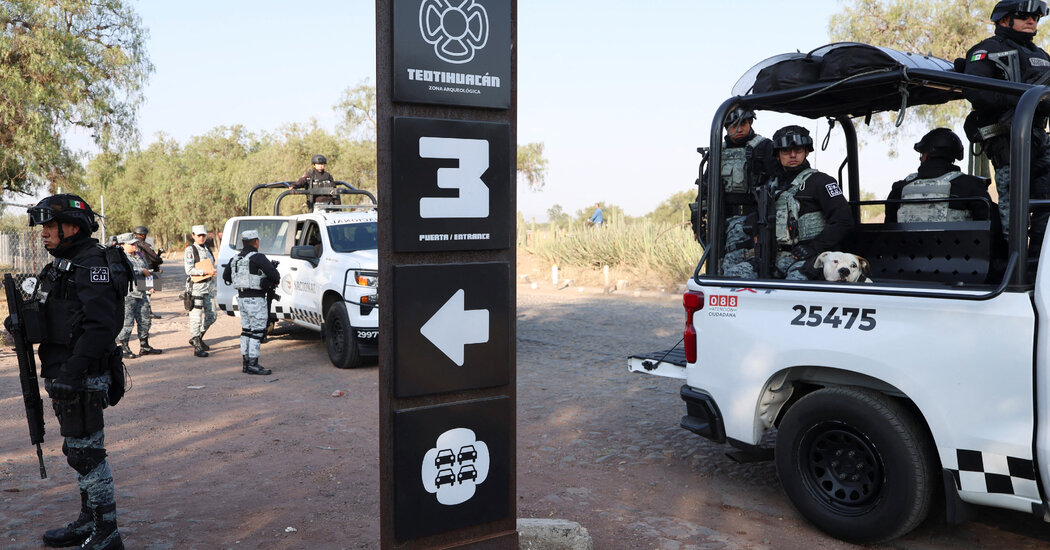
The confrontation unfolded rapidly when emergency responders rushed to the scene, establishing a perimeter around the ancient structure. From his elevated perch, Jasso rained gunfire down on security forces, forcing officers to strategize a daring ascent. National Guard commander Guillermo Briseño Lobera recounted the intensity: two guardsmen and a municipal policeman vaulted the pyramid’s sides and rear, climbing the steep, uneven stone steps with bravery under fire. As they closed in on the gunman at the second tier, he evaded upward, but a precise shot from a National Guardsman pierced his leg, halting his movement. Cornered and outgunned, Jasso, wielding a .38-caliber revolver, turned it on himself in a grim finale. This standoff, etched in the annals of the pyramid’s storied past, highlighted the ingenuity of first responders who risked everything to contain a shooter atop a site that has drawn millions for its historical allure, turning a day of exploration into a nightmare of evasion and loss.
Piecing together the puzzle in the aftermath, investigators uncovered a backpack packed with ominous clues: literature, photos, and handwritten notes hinting at dark inspirations. State Attorney General José Luis Cervantes Martínez revealed at a press conference that these materials referenced violent events from April 1999 in the United States, possibly alluding to the infamous Columbine High School massacre that claimed 13 lives exactly 27 years ago. Another U.S. incident that month, a double killing in Salt Lake City, couldn’t be ruled out. Cervantes painted a portrait of a psychopathic loner, one prone to emulating atrocities from abroad, sketching out a profile of isolation and obsession. Preliminary evidence suggested Jasso acted alone, meticulously planning the attack through multiple scouting visits to the pyramids, buying gear like weapons, knives, gloves, and even goggles to execute his twisted vision. This solo endeavor, fueled by echoes of distant tragedies, underscores the eerie power of media-influenced radicalization, where one man’s fascination with history’s darkest chapters spirals into real-world horror.
Further delving into the logistics, authorities are probing the origins of Jasso’s arsenal, uncovering over 50 unfired rounds in his bag. The cartridges, crafted by a Mexican manufacturer for exclusive military and police use, point to illicit acquisitions—likely through the black market or shadowy dealings. Cervantes emphasized the ease with which such restricted items can surface in an environment where gun regulations are stringent, yet loopholes persist. This black-market purchase, alongside the choice of a .38-caliber revolver, illustrates the underground networks that arm even non-cartel affiliated threats, raising alarms about ammunition traceability in a country grappling with smuggling routes from its northern neighbors. As inquiries intensify, the case highlights broader vulnerabilities in Mexico’s weapon control framework, where high-profile tourist sites demand tighter oversight to prevent lone actors from transforming tranquil monuments into battlegrounds.
Amid the carnage, a chilling video circulating on social media, verified by outlets like The New York Times, captures the terror in raw audio: terrified tourists huddling on the ground, sobbing as Jasso looms above, spouting threats in a clipped, Peninsular Spanish reminiscent of Spanish origins. “If you move, I will sacrifice you,” he hissed, cursing profusely and scorning the visitors for disrespecting a temple built for blood rituals, not selfies. A woman’s whisper—”Don’t turn around, don’t turn around”—echoes the paralyzing fear. He ordered one tourist to alert authorities about hostages, vowing lethal force against any approaching intervention. In total, 13 souls bore the brunt, including six Americans, with seven gunshots wounds afflicting innocents from Colombia and Brazil—victims thrust into a viral nightmare. The lone fatality, a Canadian woman, remains shielded by privacy laws, her story a poignant loss amid the site’s 1.8 million annual visitors. This unprecedented violence at a major Mexican archaeological gem not only shattered lives but also ignited debates on global threats infiltrating domestic peace, where ancient stones once witnessed rituals now replay modern atrocities.
President Claudia Sheinbaum addressed the nation Tuesday, acknowledging the perplexing motives behind such an aberration. “We’d never seen anything like this in Mexico,” she stated firmly, distinguishing it from the country’s notorious cartel skirmishes as “the act of an individual who made this decision.” Indeed, mass shootings decoupled from organized crime are rarities here, where firearms laws are among the world’s strictest, confining legal purchases to just two military-run shops. The latest brush with this grim anomaly came mere weeks prior, when a 15-year-old in Michoacán wielded an AR-15-style rifle in a school rampage, killing two educators—an echo of youthful despair that resonates nationwide. Data from security expert Víctor Sánchez reveals at least 143 firearms incidents in Mexican schools since 2000, with 12 fatalities underscoring a creeping trend. As reporters like Arijeta Lajka compile these threads, the Teotihuacán ordeal compels a reevaluation of how international influences seep into Mexico’s fabric, from U.S.-inspired ideologies to smuggled weaponry, urging stronger shields against the contagion of violence in unexpected corners of the world.
This incident, buried in the shadow of the majestic pyramids, serves as a wake-up call for Mexico’s tourism industry and security apparatus. While the archaeological wonders of Teotihuacán continue to beckon globetrotters with promises of cultural immersion, events like this expose the fragility of that allure. Experts in criminal psychology and global security are now scrutinizing how lone-wolf assailants, inspired by distant tragedies, exploit gaps in surveillance at high-traffic sites. For the grieving families and the international community, it poses questions about resilience—how to honor the past without letting its echoes dictate the present. As investigations deepen, Mexico stands at a crossroads, balancing its rich heritage with the imperatives of modern safety, ensuring that future visitors explore not just the stones, but also the stories of humanity’s resilience in the face of inexplicable malice. The Teotihuacán shooting, a singular stain on a proud legacy, may yet galvanize reforms that fortify the border between ancient wonder and contemporary peril, reminding us all that some battles are fought not with swords, but with vigilance.