





The Race Against Time: Global Rescue Teams Converge on Venezuela Amid Rising Earthquake Toll
A Nation Fractured: Devastation and the Golden Hours of Rescue
The ground beneath Venezuela had barely settled before the true scale of the cataclysm began to crystallize against a backdrop of rising dust, wailing sirens, and fractured concrete. Two successive, high-magnitude earthquakes struck the country’s northern corridor in rapid succession, reducing historic plazas, modest hillside barrios, and modern high-rises alike into perilous heaps of jagged rubble. With the official death toll climbing past 920 and hundreds more believed to be trapped deep within structural voids, a desperate countdown has begun. The critical “golden hours”—the first 72 hours following a seismic event when the probability of extracting survivors remains highest—are rapidly slipping away. Across cities like Caracas and adjacent coastal towns, the air is thick with the scent of pulverized masonry and the desperate prayers of families gathered outside safety cordons, listening intently to the rhythmic, urgent thuds of heavy machinery. For local emergency services already strained by economic and infrastructural challenges, the magnitude of this dual-disaster quickly overwhelmed domestic capacity, triggering a swift and urgent appeal to the international community for specialized aid, heavy extraction equipment, and elite rescue professionals.
A Global Coalition of Solidarity in the Face of Disaster
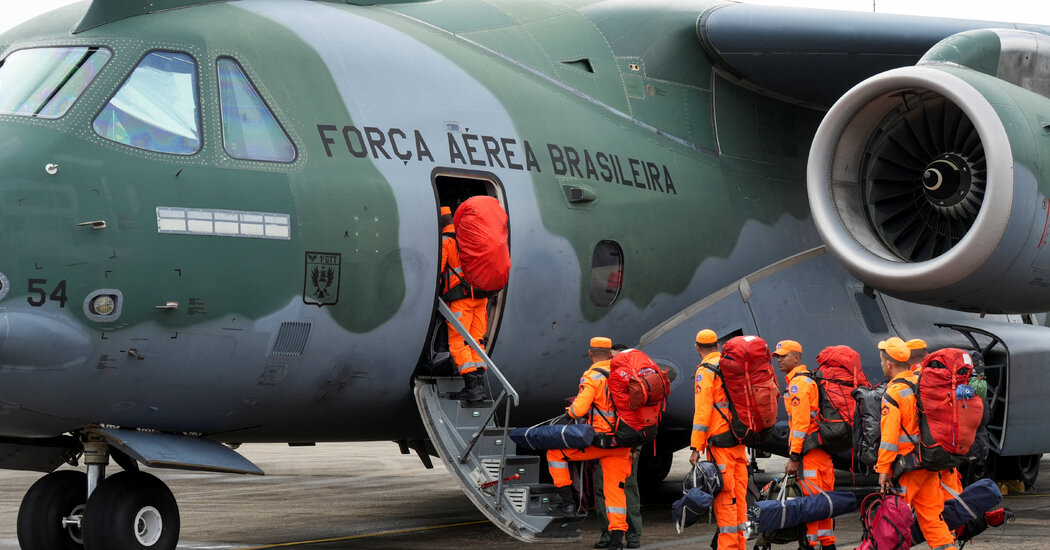
In a poignant display of humanitarian diplomacy that temporarily transcends geopolitical divisions, dozens of nations have answered Venezuela’s call, mobilizing a massive international relief apparatus to assist in the desperate search-and-rescue operations. Within forty-eight hours of the disaster, the tarmac at Simón Bolívar International Airport in Maiquetía became a bustling, multi-lingual staging ground for global solidarity. Massive cargo planes from across the Americas, Europe, and Asia have begun landing in steady succession, unloading highly trained search-and-rescue (USAR) teams, canine units, structural engineers, and field hospitals. This rapid influx of international personnel requires a monumental coordination effort, as foreign teams must quickly integrate with local civil defense forces to map out search zones, establish command chains, and deploy specialized tools where they are most critically needed. The global response underscores a fundamental truth of the modern era: when natural disasters of this magnitude strike, national sovereignty and diplomatic friction yield to the universal imperative of saving human lives, uniting former adversaries and traditional allies in a singular, focused mission of mercy.
Washington Mobilizes: Massive Financial and Tactical Aid
Among the most significant contributors to this global mobilization is the United States, which has rapidly deployed both immense financial resources and elite personnel to the heart of the crisis zone. The U.S. State Department announced an initial, sweeping allocation of $150 million earmarked exclusively for emergency relief efforts, strategically funneled through established non-governmental organizations (NGOs) and United Nations agencies to ensure rapid, transparent, and direct distribution to affected populations. Simultaneously, three of the most highly decorated urban search-and-rescue task forces in the world—originating from Virginia, Los Angeles County, and Miami-Dade County—have touched down in Venezuela to join the frontlines of the rescue operation. These American teams, renowned for their deployments to catastrophic earthquakes in Haiti, Nepal, and Turkey, bring with them decades of cumulative experience, highly trained rescue dogs, and cutting-edge subterranean detection technologies. By routing the financial aid through independent humanitarian channels while deploying tactical rescue assets directly to the rubble, the United States has engineered a dual-track response designed to maximize immediate lifesaving operations while laying the groundwork for essential humanitarian assistance in the weeks to follow.
Military Logic on the Ground: Southern Command Takes Charge
To streamline the immense logistical challenges inherent in moving tons of life-saving equipment into a disaster-stricken metropolitan area, the United States military has taken an active, coordinated role in the relief pipeline. A Marine Corps major general representing the United States Southern Command (SOUTHCOM) has officially landed in Caracas to personally oversee and direct the military’s theater-level logistics and support activities. Operating in close coordination with Venezuelan aviation and defense officials, SOUTHCOM is working to establish a seamless “air bridge” capable of delivering heavy-duty engineering machinery, clean water purification systems, tactical communications arrays, and mobile surgical units. The presence of high-ranking U.S. military leadership on the ground in Caracas is a testament to the sheer logistical complexity of the operation, where the primary barriers to success are not merely structural, but logistical—specifically, the distribution of food, medical supplies, and aviation fuel required to keep rescue helicopters and heavy machinery running around the clock. Through this military-to-civilian coordination, the United States aims to provide the robust logistical backbone necessary to sustain a prolonged, highly demanding recovery operation under incredibly challenging domestic circumstances.
The Crucible of the Rubble: The Reality of Modern Search-and-Rescue
On the ground in the hardest-hit sectors, the work of the rescue teams is a grueling, agonizingly slow test of human endurance and advanced technology. International searchers, working in twelve-hour shifts alongside exhausted local volunteers, navigate unstable, shifting mountains of concrete that threaten to collapse further with every minor aftershock. Rescuers utilize seismic acoustic sensors of incredible sensitivity, instruments capable of detecting the faint, rhythmic scratching of a fingernail or the shallow heartbeat of a survivor trapped deep beneath multiple collapsed floors. When a potential signal is identified, a tense, absolute silence falls over the entire rescue site; heavy machinery is turned off, megaphones are silenced, and workers hold their breath as fiber-optic “snake” cameras are carefully threaded through microscopic gaps in the debris. It is a modern, high-tech battle against time, waged by brave individuals who must crawl into cramped, dark, and highly volatile voids, knowing that a single misstep could bring tons of concrete down upon both the victim and the rescuer. Yet, despite the immense danger and the overwhelming smell of dust and decay, the rare, triumphant moments when a survivor—sometimes a child, sometimes an elderly resident—is pulled alive from the darkness fuel an unyielding resolve to keep digging.
Looking Beyond the Ruins: The Long Road to Rehabilitation
As the immediate emergency search-and-rescue phase inevitably transitions into a long-term recovery and rebuilding effort, Venezuela faces a daunting, multi-year journey toward physical and societal reconstruction. The physical destruction of essential infrastructure—including schools, hospitals, water treatment plants, and electrical grids—means that the humanitarian crisis will persist long after the last survivor is pulled from the rubble. The $150 million in international aid, while a crucial lifeline for immediate survival, represents only a fraction of the economic capital that will be required to rebuild fractured communities and restore a sense of normalcy to millions of displaced citizens. This tragedy must serve as a catalyst for a sustained, international commitment to Venezuela’s structural resilience, prompting global financial institutions, urban planners, and humanitarian agencies to collaborate on building safer, earthquake-resistant infrastructure. Ultimately, the global response to this disaster has revealed that while the earth may shatter, the collective human spirit and the bonds of international empathy remain unbreakable, offering a glimmer of hope that from these devastating ruins, a stronger, more resilient nation can eventually emerge.