




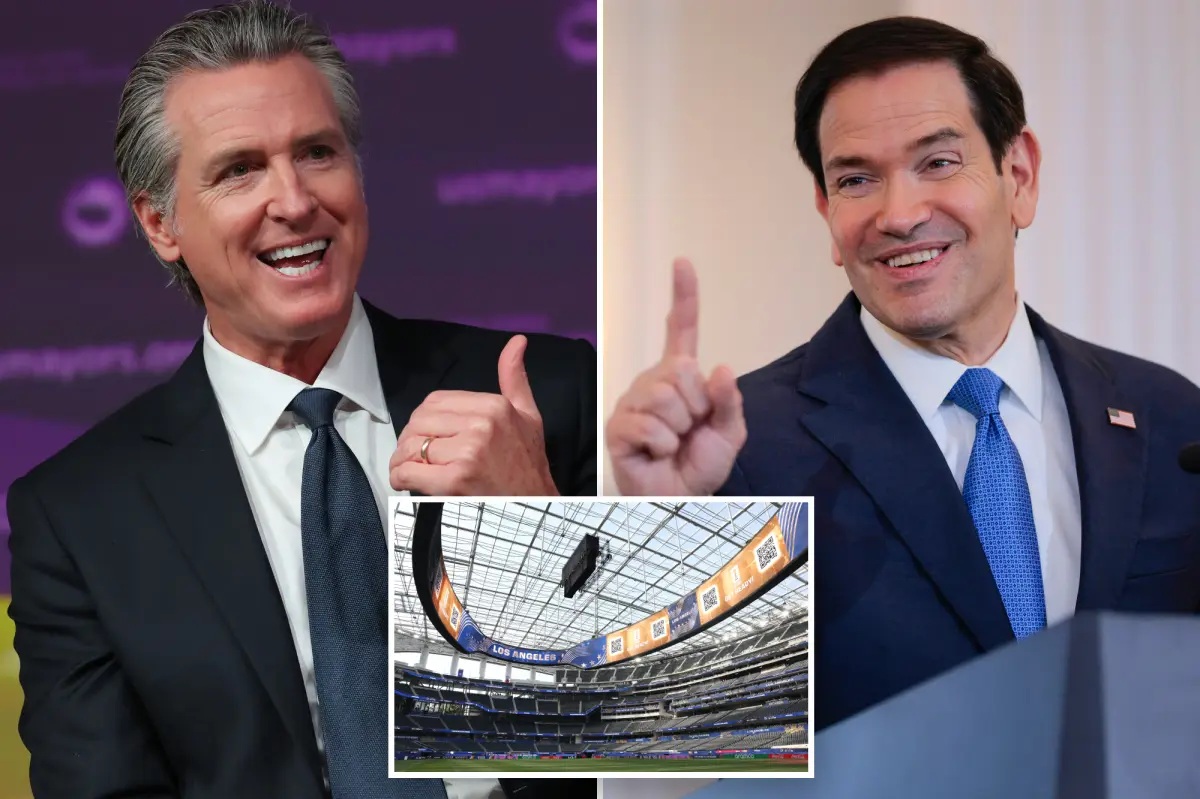
The upcoming World Cup match at SoFi Stadium in Los Angeles is setting the stage for a fascinating, highly symbolic meeting between two of the country’s most prominent political figures: California Governor Gavin Newsom and Secretary of State Marco Rubio. Ostensibly, they will be there for the simple, patriotic purpose of supporting Team USA as they kick off their campaign against Paraguay. Yet, beneath the casual smiles and the shared enthusiasm for sports, lies a deeply calculated exercise in public relations, visual branding, and political theater. The physical proximity of these two men in a single luxury suite represents a collision of diametrically opposed political worlds, bringing together the progressive standard-bearer of the West Coast and the foreign policy vanguard of the conservative populist movement. In the modern political landscape, where every public appearance is meticulously planned and every camera angle is highly analyzed, an event like this is never just about a soccer game. It is a live-action canvas where narratives are born, tested, and broadcasted to millions of viewers who are hungry for any sign of vulnerability, tension, or dominance between potential future leaders. The sheer human tension of this moment is undeniable. Two ambitious men, each bearing the hopes and ideologies of millions of Americans, must sit shoulder-to-shoulder in a confined space, maintaining their composure under the unblinking eye of the media. This encounter serves as a vivid reminder of how public life demands a constant performance, transforming a simple afternoon at a sporting event into a high-stakes arena where personal charm, physical presence, and political survival are on full display. It highlights the unique pressure of contemporary leadership, where even a momentary distraction or an awkward glance can be magnified into a national story, forcing these leaders to remain perpetually on guard while presenting an air of relaxed camaraderie.
The fascinating, almost absurd reality of this upcoming meeting is further highlighted by the bizarre, internet-born language that has managed to penetrate the highest levels of political communication. When an official close to Governor Newsom jokingly remarked that any “frame-mogging” between the governor and the Secretary of State would be “purely incidental,” they highlighted a strange new reality of the digital age. For those unfamiliar with the hyper-specific vocabulary of Gen-Z internet culture, “frame-mogging” refers to a situation where one person’s physical stature—whether through height, shoulder width, muscular build, or general posture—unintentionally makes another person in the same frame look physically diminished or less dominant. While this might sound like trivial schoolyard banter, the reality is that visual dominance has become a prized currency in the modern political arena. We live in an era dominated by rapid-fire visual media, where platforms like TikTok, Instagram, and X can turn a single, poorly framed photograph into a viral, career-defining meme within minutes. By proactively addressing this concept, Newsom’s team demonstrated a highly sophisticated, if slightly tongue-in-cheek, understanding of how modern audiences consume and interpret political imagery. They understood that the physical contrast between the towering, six-foot-three governor and the somewhat shorter Secretary of State would inevitably become fodder for online commentators looking to dissect the physical dynamics of power. This pre-emptive rhetorical strike serves as a fascinating case study in how modern campaigns must navigate the unforgiving, aesthetic-obsessed landscape of internet culture, where physical genetics can carry as much weight as policy. In a world where public perception is built upon fleeting digital snippets, the physical self becomes a crucial political instrument. By acknowledging this slang, Newsom’s team did not just make a joke; they cleverly defused a potential visual vulnerability, transforming what could have been a silent battle of postures into a shared, lighthearted cultural moment.
For Gavin Newsom, this high-profile appearance alongside a top Republican official arrives at a moment of intense, underlying speculation regarding his own long-term political trajectory, specifically pointing toward a potential presidential run in 2028. For several years, Newsom has walked a delicate tightrope, balancing his massive responsibilities as the chief executive of the nation’s most populous state with his clear, undeniable national ambitions. He has frequently been peppered with questions about his future plans, often deflecting them with practiced political poise, yet his recent commentary reveals a much more human, grounded perspective on the immense weight of such a decision. Speaking candidly with CNN earlier this year, Newsom admitted that the ultimate factor determining whether he will launch a grueling, nation-spanning campaign for the White House is not fundraising capability, institutional support, or political strategy, but rather the emotional and psychological well-being of his family. To confess that he would “be lying” if he claimed he hadn’t contemplated a run for the presidency is a moment of refreshing transparency in a world where politicians usually rely on endless platitudes. This admission humanizes Newsom, shifting the public perception from that of a polished, relentless political machine to a father and husband who is deeply aware of the heavy toll that the national spotlight takes on loved ones. By indicating that his final decision will not be made until after the upcoming midterm elections, Newsom is giving himself the space to carefully weigh the personal sacrifices against the professional opportunities, reminding us that behind every political ambition lies a complex web of personal relationships that must be navigated. The grueling nature of a presidential campaign demands a near-total loss of private life, and in sharing this internal struggle, he bridges the gap between the distant figure and the everyday citizen who knows that family comes first.
Across the stadium box, Marco Rubio represents an equally compelling and complex human narrative, having evolved from a youthful, optimistic symbol of the traditional Republican establishment into a seasoned, powerful statesman within the highly nationalistic modern GOP. Currently serving as the Secretary of State, Rubio occupies a position of immense global influence, tasked with projecting American strength abroad during an era of unprecedented geopolitical instability. His journey to this point has been marked by remarkable resilience; once a fierce primary rival of Donald Trump in 2016, Rubio has successfully adapted to the changing priorities of his party, earning the trust of a president who once mocked him, and establishing himself as a formidable figure in his own right. Indeed, Trump himself has publicly floated Rubio’s name alongside Vice President JD Vance as a natural, powerful successor to the conservative movement, even expressing a strong fondness for seeing them work together on a potential ticket. For Rubio, sitting next to a prominent progressive like Newsom at a major cultural event is a test of his own political maturity and visual branding. He must project the quiet, serious authority expected of the nation’s top diplomat while remaining fiercely loyal to the conservative base that views Newsom’s California as the antithesis of their vision for America. This dynamic creates a palpable, unspoken tension, as both men are fully aware that they are being watched as physical representations of two competing futures for the American republic. Rubio’s rise from a young Senator to a powerful diplomatic role shows a man seasoned by both failure and victory. Standing on this stage, his posture beside Newsom must communicate strength and grace, showing that he can represent a diverse nation while holding fast to his core conservative values.
The backdrop of this fascinating political encounter—and an element of immense personal pride for Governor Newsom—is the fact that California will serve as the host state for fourteen highly anticipated World Cup matches, more than any other state in the country. With eight matches scheduled to take place at the state-of-the-art SoFi Stadium in Los Angeles and another six set to unfold in the technologically vibrant San Francisco Bay Area, California is positioning itself as the epicenter of global sports and culture. For Newsom, this massive logistical and cultural achievement is not just a victory for athletic fans, but a powerful validation of his progressive governance. He has frequently used the upcoming tournaments to loudly promote California’s values on the global stage, proudly declaring that the state is ready to welcome people from every single corner of the globe while showcasing the principles that define its identity: opportunity, inclusivity, and a deep-seated respect for all cultural backgrounds. In doing so, Newsom is presenting a direct, visual counter-narrative to the persistent criticisms from political opponents who often paint California as a state plagued by economic stagnation and social decline. This pride is not just professional; it is deeply personal for a leader whose identity is intricately woven into his state’s reputation. In hosting these games, Newsom seeks to create a lasting legacy that transcends standard policy metrics. By welcoming international crowds to California’s pristine stadiums, he constructs a visual defense of his state’s vitality, positioning it as a thriving global hub rather than a struggling landscape. Ultimately, the global spotlight allows him to stand proudly on his home turf as a gracious, successful host to the entire world—including those political adversaries who have traveled to his state to watch the game.
Ultimately, when the opening whistle blows and the focus shifts to the field, the image of Gavin Newsom and Marco Rubio sitting side-by-side will offer a profound, reflective commentary on the shared human experiences that still bind us together in an increasingly divided world. Beyond the carefully crafted press releases, the strategic positioning of their respective camps, and the lighthearted internet debates about physical size, these two men are, at their core, human beings who have dedicated their lives to the grueling, often exhausting path of public service. They represent two starkly different visions for the future of the nation, yet in this specific, fleeting moment, they are united by the simple, universal joy of cheering for Team USA. In a political climate that often feels hostile and devoid of empathy, there is a quiet, powerful optimism in the sight of these two potential future presidents sharing a space, perhaps even exchanging a genuine smile or a warm handshake over a spectacular play on the field. The heavy burdens of their respective offices, the endless demands of their political bases, and the constant, critical gaze of the media will eventually return the moment they leave the stadium doors. This brief pause in hostility is essential, not just for the politicians themselves, but for a public weary of endless division. Watching these two leaders share a genuine human experience offers a glimmer of hope that unity is still possible. It serves as a gentle reminder that behind the fierce rhetoric that defines our national discourse, there exists a shared identity and a common love for country that can still occasionally bring even the fiercest rivals together under the same roof and, for a few hours, allow them to simply be fans.