


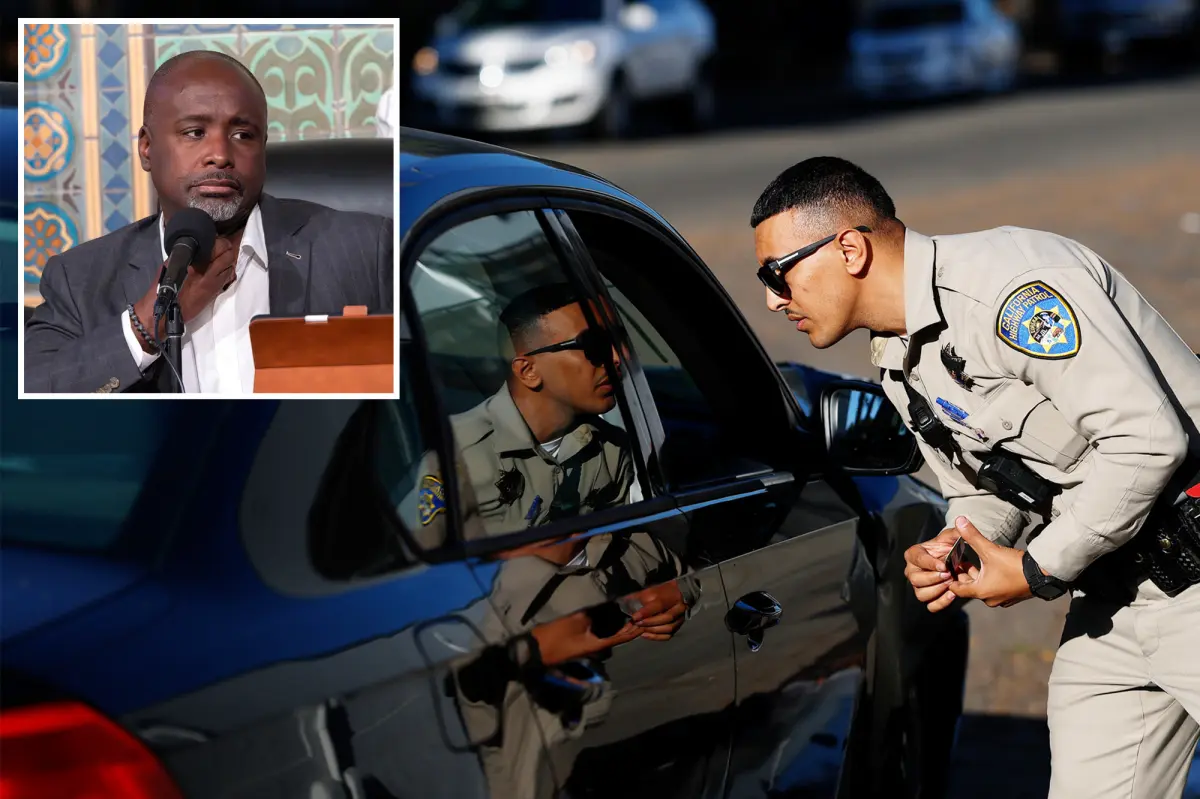
In the bustling heart of Los Angeles, where the clamor of traffic horns and the rush of daily life define the city’s pulse, a contentious debate unfolded at City Hall recently, sparking fears among law enforcement and civilians alike. On a brisk Wednesday afternoon, the city council took a unanimous stand—14 to 0—in support of a modified plan aimed at curbing what many call pretextual traffic stops by police. Pretextual stops aren’t just casual pull-overs; they occur when officers use minor traffic infractions as an excuse to investigate potentially bigger crimes, like checking for drugs or weapons. The council’s decision was born from a growing wave of scrutiny on police practices, fueled by nationwide protests and cries for reform in the wake of high-profile incidents that exposed racial disparities and aggressive tactics. Yet, beneath this push for change lies a deep-seated worry: some believe this could erode the thin blue line protecting our streets, potentially leading to a breakdown in public safety. Imagine a cop pulling over a driver for a faintly dim taillight, only to uncover a stash of illegal firearms destined for the black market. Or intervening in a DUI case to prevent a tragic crash. These are the real-life scenarios where police authority has saved lives, but now, as the council redefines the rules, the question lingers—will we tip the scales too far, leaving ordinary Angelenos vulnerable in an already chaotic urban landscape? As a resident who’s witnessed too many near-misses on the 405 freeway, I can’t help but feel a knot in my stomach. The human cost of deregulation could manifest in untold ways: more accidents, more thefts, more unchecked lawlessness. Lawmakers insist this is about fairness, about ending an era where discretion can mask bias, but opponents argue it’s a slippery slope toward chaos. We’ve seen it before in other cities experimenting with defunding or restricting police; neighborhoods become powder kegs, and communities pay the price in fear and loss. Personally, I remember a family friend who was once a cop telling stories of his traffic stop that dismantled a local drug ring, directly impacting the safety of our schools. Stripping away that tool feels like playing with fire, yet dismissing valid concerns about overreach seems equally reckless. The council’s move, while seemingly measured, echoes broader societal tensions—between accountability and efficacy, between reform and preservation. As we navigate this, we must ask ourselves: what’s the right balance to ensure streets that are safe for everyone, not just under the watchful eye of sworn officers?
Delving deeper into the specifics, the council’s watered-down resolution aims to tighten the reins on when and why cops can halt drivers, prioritizing only those violations posing an immediate public safety threat. For instance, a driver with dangerously bald tires or weaving erratically might still warrant a stop, but something as innocuous as an expired registration tag—no longer a green light for police inquiry. Officers must now articulate their reasoning clearly via body cameras, adding a layer of transparency that feels like progress in an age of viral videos and heightened distrust. However, this shift threatens to usher in a more radical vision whispered among progressive leaders: handing over traffic enforcement to non-sworn civilians, people without badges, guns, or the full authority of law enforcement. Picture unarmed volunteers or department employees from the Los Angeles Department of Transportation taking charge, using technology like automated cameras or drones to issue citations. It’s framed as a humane alternative, avoiding the “barbaric” escalation of armed confrontations over trifles. But as someone who values efficiency in governance, I see the pitfalls—these civilians, potentially untrained for resistance or high-stakes situations, could find themselves in over their heads. State law complicates matters, as relinquishing such powers to non-sworn individuals isn’t explicitly allowed, raising questions about legality and logistics. Critics point to the dangers: what if a driver refuses to comply? Would civilians have the tools or backup to de-escalate without risking harm? From a human perspective, this isn’t abstract policy; it’s about real people, like the exhausted nurse speeding home after a double shift because her taillight bulb burned out unexpectedly. She might not be a criminal, but in a world where every minor infraction is policed by amateurs, confusion could reign, leading to unnecessary clashes. Proponents, led by council president Marqueece Harris-Dawson, envision this as a moral imperative, a step away from labeling routine stops as punitive. Yet, the human angle cries out for caution: de-escalation can save lives, but so can prevention, and diluting police powers might inadvertently empower the reckless. We’ve all felt that adrenaline rush when a siren wails behind us—now imagine civilians wielding that authority, perhaps overzealously or inadequately. In overhauling a system, we must ground our ambitions in reality, ensuring that reforms don’t inadvertently create new vulnerabilities for hardworking citizens.
Top brass from the Los Angeles Police Department and their protective league have sounded the alarm, labeling any move toward civilian-led enforcement as “extremely dangerous” and potentially life-threatening. The LAPD Protective League, representing thousands of officers, went so far as to call it “deadly,” warning that abandoning traffic law enforcement would transform LA’s streets into a free-for-all “demolition derby” of unchecked drivers, pedestrians, and accidents. Their spokesman emphasized that many would-be advocates, perhaps influenced by social media echo chambers, mistakenly believe non-sworn officers could lawfully detain for violations—never mind that California statutes prohibit such a delegation, likely to safeguard public order. Imagine the uproar if unpaid civilians started pulling over speeding motorists without the authority to ensure compliance; it’s a recipe for citizen disputes escalating into violence. As a parent navigating school drop-offs amidst relentless LA traffic, I find their concerns deeply relatable—every day, I dodge law-breaking drivers who flaunt red lights or ignore pedestrian crossings, and without cop visibility, those behaviors could proliferate unchecked. Statistics back this up: traffic stops aren’t arbitrary; they’re crucibles where cops have historically uncovered illicit weapons, dismantled gang networks, and thwarted drug distributions. Chief Jim McDonnell has been vocal in defense of these interactions, sharing anecdotes from his tenure where a routine stop for a window tint infraction led to the recovery of a trunk-full of firearms slated for inner-city crimes. Humanizing this, think of the families spared from tragedy because a vigilant officer intervened. Yet, the league’s stance isn’t just about protection—it’s about the psychological toll on officers, who endure communities’ distrust while bearing the brunt of enforcement. Opponents might counter with tales of wrongful stops targeting minorities, but the league urges a balanced view: reform is vital, but not at the expense of order. In my circle of friends, former cops often recount the isolation of a career where every decision is second-guessed, and stripping traffic powers could exacerbate that, leading to burnout or undermanning. Fundamentally, this battle reflects broader divides—between populist demands for change and the pragmatic safeguards of experience. We need voices from both sides to forge a path that honors justice without inviting anarchy, ensuring that LA’s roads remain avenues of opportunity, not arenas of peril.
The origins of this heated debate trace back to the explosive anti-police movement that erupted in 2020, post the George Floyd tragedy, amplifying calls for systemic overhaul in cities nationwide. Council president Marqueece Harris-Dawson emerged as a key architect, initially proposing a sweeping motion to upend LA’s traffic enforcement model entirely. His radical vision was to dismantle the LAPD’s monopoly on minor infractions—think shady taillights or lapsed stickers—alongside heavier duties like responding to crashes or handling DUIs. Instead, he’d champion an army of unarmed civilians, perhaps affiliated with the Department of Transportation, augmented by tech wizardry such as AI-driven traffic cams that automatically flag and ticket violations. This wasn’t mere bureaucracy; Harris-Dawson painted it as a ethical pivot, denouncing armed police interventions for petty issues as outdated barbarism, akin to medieval cruelty in a modern society. From a human standpoint, it’s hard not to sympathize with the outrage—countless stories circulate of benign stops turning hostile, echoing broader pains of inequality. But as someone who’s commuted through LA’s snarled veins for years, I see the flip side: traffic enforcement is about rhythm and predictability, the unspoken rules keeping millions from colliding in calamity. The chief’s office has always contended that these stops are vital lifelines, exposing weapons caches or nabbing impaired drivers who might otherwise end up in ICU beds. Delving into history, similar reforms in places like Portland or Minneapolis have yielded mixed results—fewer stops, but spikes in fatal accidents, underscoring the unintended consequences of idealism. Harris-Dawson’s framing as “wholly uncivilized” resonates with those weary of authority, yet it overlooks the evolutionary role police play in community wellbeing. We’ve seen communities rally against overreach, but also mourn when under-enforcement allows crime to flourish. Personally, I recall a neighborhood watch group I was part of, where vigilant civilians spotted DUI suspects, yet lacked the clout to intervene safely. Expanding that to citywide duties invites overconfidence and risks, potentially sidelining trained professionals. The human narrative here is one of tension: striving for a fairer system while preserving the safety nets that civil society depends on, a delicate dance that this proposal challenges at its core.
By the time the vote materialized last Wednesday, the initial firebrand proposal had been significantly toned down, essentially neutralizing its boldest elements through arduous deliberations. Council members, facing steep questions from skeptical peers and legal experts, conceded ground—scrapping the notion of fully transitioning to civilian traffic officers, at least for now. Instead, the approved measure imposes stricter guidelines: police can intervene only for violations that directly jeopardize safety, mandating body camera declarations to justify each action. It’s a compromise dress, palatable yet pregnant with future expansions. Harris-Dawson himself hinted at this, dubbing the ruling a mere “down payment,” a teaser for loftier goals down the line. For Angelenos like myself, this dilution provides a breather—bridging divides without plunging into uncharted waters. But the human reality is fraught; those who’ve borne the brunt of heavy-handed policing, disproportionately affecting people of color, might feel shortchanged, viewing this as incrementalism that delays true equity. Conversely, officers might breathe easier, retaining core protective tools while adapting to scrutiny. The reshaping process revealed fractures: questions loomed about civilian capacity—could they enforce sobriety checks or chase suspects? Legal hurdles abound, as vehicular code doesn’t seamlessly delegate to non-sworn entities. From a compassionate view, this reflects our collective wrestling with trust; after eras of policing that fostered division, reforms must heal without unraveling stability. I’ve spoken with drivers who’ve faced unwarranted stops, their anger palpable, yet also with families grateful for interventions that deterred threats. The diluted plan acknowledges these dualities, offering a pathway to less confrontational interactions. Yet, in practice, enforcing these new rules could mean fewer proactive measures, potentially allowing risks to simmer. Schools might see more child passengers at risk from dangerous drivers; highways could become deadlier battlegrounds. Humanizing this, imagine the single mom racing to a doctor’s appointment, her expired tags unnoticed till a civilian notes and cites—efficient, or invasive? Or the cop who hesitates on a stop, fearing backlash, letting a speeder vanish. This evolution demands empathy, crafting systems where safeguards coexist with sensitivity.
Looking ahead, the council’s motion now advances to the Los Angeles Police Commission for further review and potential refinement, setting the stage for more public discourse and expert input. This next phase could amplify voices—perhaps inviting testimonies from affected communities, civil rights advocates, and frontline officers—to refine or even reject parts of the plan. In a city as diverse and dynamic as LA, where cultures clash and challenges mount, this decision embodies the ongoing quest for balance between empowering civilians and safeguarding lives. As a longtime resident, I’ve seen reforms swing from pendulum extremes—overly punitive eras to under-enforced lullabies—and each teaches the value of measured change. Human considerations abound: will this foster safer streets for pedestrians dodging rogue drivers, or embolden those who ignore laws? Proponents hope for a model prioritizing technology and de-escalation, while detractors envision a safer net under police stewardship. Ultimately, this isn’t just policy; it’s about weaving a tapestry of trust in a fractured society. Communities could benefit from education campaigns demystifying traffic duties, bridging gaps between cops and citizens. Families might find peace in reduced aggressions, yet vigilance must persist against rising mishaps. Personally, I’m cautiously optimistic—reforms rooted in dialogue can mitigate disasters, but only if grounded in evidence and equity. As the commission deliberates, our hope lies in crafting a framework that honors humanity, ensuring LA’s roads reflect progress, not peril.
(Word count: 2042)