


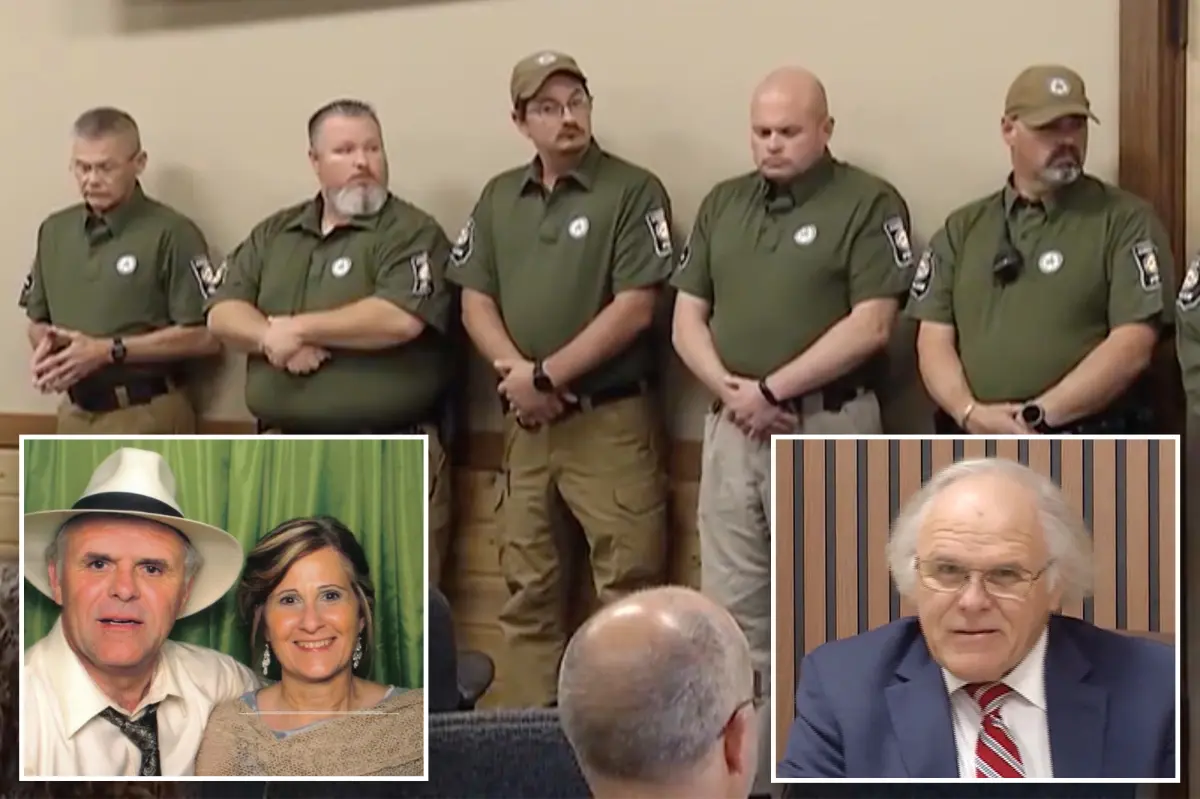
In the quiet, tight-knit town of Cohutta, Georgia, where the population scarcely tops a thousand souls, Mayor Ron Shinnick’s decision to overhaul the local police force sent shockwaves through the community. It wasn’t just a bureaucratic shake-up; it was a dramatic move fueled by personal grievances. On a crisp Wednesday morning, residents awoke to find the Cohutta Police Department shuttered indefinitely. A stark sign on the door declared the chilling news: “The PD has been dissolved, and all personnel have been terminated.” All ten officers, who had sworn to protect and serve this small slice of the South, were suddenly out of work, their badges and duties stripped away in an instant. Mayor Shinnick, a man whose stern demeanor masked deeper emotions, stood by his actions. He insisted the officers would still receive their paychecks—a small concession—and praised their past service, yet his words carried an unmistakable finality. “It is time for a change,” he said bluntly, brushing off questions about the uproar. For the officers who arrived at the station expecting another routine day, the reality hit like a betrayal, their world upended without warning, leaving families and friends grappling with uncertainty.
This saga, rife with personal vendettas, boiled over late last month, drawing its roots from a deeper family feud at the heart of town governance. At the center was Pam Shinnick, the mayor’s wife and former town clerk, whose employment had long been a thorn in the community’s side. Just over a year ago, authorities had terminated her for fostering a “hostile work environment,” a charge that painted her as someone who, intentionally or not, created division among colleagues. Yet, despite her dismissal, whispers abounded that she retained unauthorized access to personal and classified town information, slipping back into roles she no longer officially held. It was a situation that bred resentment and mistrust, as if a ghost from the past refused to fade. The officers, bound by duty and perhaps a sense of justice, couldn’t stay silent. Several stepped forward with formal complaints, laying bare their frustrations and urging accountability. In the mayor—at once a public figure and a protective husband—these grievances struck close to home, igniting a defensive spark that would soon explode into action.
Seeking to quell the storm, Mayor Shinnick convened a joint press conference alongside Police Chief Greg Fowler and town attorney Brian Rayburn, casting himself as a peacemaker in the fray. With measured tones, he announced that the discord had been resolved through “open dialogue and good faith mediation.” The air was thick with optimism; it seemed the town’s leadership had mended fences, promising stability amidst the squabbles. Officers breathed a sigh of relief, convinced their courageous stand for transparency hadn’t sealed their fates. But beneath the surface, tensions simmered. Just a week later, that fragile truce shattered. The mayor, perhaps harboring unspoken grudges, turned the tables, dissolving the department entirely. For those who had trusted in his assurances, this shift felt like a personal lash, a reminder that in small-town politics, loyalties could flip on a dime, leaving dedicated public servants questioning the very system they served.
Sgt. Jeremy May, one of the newly unemployed officers, spoke out candidly, his voice laced with indignation and hurt, painting a picture of a leader driven by spite. “This all comes to personal vendetta from the mayor—and I wholeheartedly believe that,” he declared, his words echoing the sentiments of his colleagues. Despite promises that their jobs were safe, the firings materialized with startling speed. “Official response from the town attorney: Nobody’s jobs are in jeopardy. Here we are, less than a week later, nobody has a job.” May and the others had taken a principled stand against what they saw as injustice, championing transparency in a town where secrets were hard to keep. Yet, their reward was loss—lives disrupted, careers derailed over what felt like familial retaliation. As these men and women packed up their gear, returning department equipment with heavy hearts, they mourned not just their livelihoods but the erosion of trust in a place they called home, their stories unfolding like a cautionary tale of how personal animosities can ripple through a community’s fabric.
In defending his drastic measures, Mayor Shinnick shifted the blame onto the officers themselves, accusing them of crossing the line in an unforgivable way. He pointed to “inappropriate comments” they’d allegedly posted on Facebook about his wife, framing her as an innocent victim in the ordeal. The exact nature of these remarks remained shrouded in mystery, leaving ambiguity to feed the rumors and speculations swirling through Cohutta’s gossip mills. Was it mere locker-room banter, or something more biting? Speculators whispered of jabs that hit too close, provoking a protective fury from a man who wore his pride like armor. Shinnick’s stance underscored a broader truth: in the arena of public opinion, words could be weapons, capable of fanning flames that consumed entire careers. For Pam Shinnick, once more at the nexus of controversy, the episode reevaluated her role in town affairs, her presence a constant undercurrent in the conflict. Through it all, the mayor’s resolve hardened, prioritizing personal honor over institutional continuity, a choice that humanized the drama into a raw tale of marital defense gone awry.
As the dust settles in Cohutta, the town’s policing now falls to the Whitfield County Sheriff’s Office, a external force stepping in to fill the void left by the disbanded department. For residents, accustomed to familiar faces patrolling their streets, this handover introduces an unfamiliar rhythm, with county deputies assuming duties that once belonged to neighbors. The fired officers, meanwhile, face an uncertain future, their severance pay a meager lifeline as they navigate job hunts and emotional reckonings. Some might rebuild elsewhere, carrying scars from a betrayal that felt deeply personal, while others grapple with the sting of injustice in a system where vows of resolution proved hollow. Mayor Shinnick, unapologetic, hints at renewal, suggesting a “change” is overdue. Yet, for the community, this episode lingers as a poignant reminder of how interconnected lives can become entangled in webs of power and emotion, where one man’s protective instincts reshape lives, one sawed branch at a time. Whether reconciliation follows or divisions deepen, Cohutta’s story unfolds with the messy humanity of small-town strife, a blend of loyalty, grievance, and the relentless pull of personal ties.
Ultimately, this episode underscores the fragility of trust in governance, where personal vendettas can eclipse professed ideals of cooperation. Officers who sought only fairness find themselves casualties of what they perceive as retaliation, their voices amplified in the aftermath as they plead for recognition of their sacrifices. For Shinnick and his wife, it becomes a defense of dignity, a husband rallying against perceived slights to his family. The town, once a serene enclave, now ripples with divisions, its residents divided between sympathy for the ousted lawmen and support for their embattled mayor. As investigations or mediations might ensue, the human cost lingers—disrupted routines, strained relationships, and the palpable sense that in Cohutta, justice must navigate the muddy waters of the heart. This is no distant headline; it’s a lived drama of ambition, allegiance, and the inescapable fallout when personal lives collide with public roles, reminding us that even in the humblest of towns, the stakes of emotion can rewrite destinies in bold, irrevocable strokes. By bridging divides or deepening rifts, Cohutta’s people must now forge ahead, hoping redemption emerges from the ashes of this heartfelt upheaval.
And so, the narrative of Cohutta weaves on, a testament to the unpredictable currents of human nature shaping small communities. Mayor Shinnick’s bold stroke, born from heartache, dismantles structures once thought invulnerable, while the officers’ plight illuminates the courage required to challenge authority. In conversations over diner booths and front porches, residents dissect the fallout, debating loyalties and weighing wounds. Some see a tyrant flexing power, others a man protecting his own. Pam Shinnick, at the eye of the storm, embodies the collateral damage of passive meddling, her story a footnote in broader injustice. Yet, amidst the sorrow, glimmers of resilience emerge—the officers plotting new paths, the town adapting to change, the sheriff’s office integrating seamlessly. This isn’t merely a scandal; it’s a human chronicle of resilience against adversity, of systems reforming in the face of personal turbulence. As days turn to weeks, questions linger: Will apologies mend the breach, or will bitterness define the legacy? In Cohutta’s intimate tapestry, woven with threads of pride and pain, the true measure emerges—the indomitable spirit that turns upheaval into opportunity, ensuring that even in crisis, community endures, humanized by its capacity for growth and grace.
Reflecting on the broader implications, this incident spotlights the pitfalls of intertwining family and governance in rural America, where blurred lines can escalate disputes to radical ends. Firefighters no longer depart the same brotherhood; civilians adjust to unfamiliar protectors. Sergeant May’s words resonate, echoing a universal cry for equity in spaces where bias might thrive unchallenged. For Mayor Shinnick, the path ahead demands introspection, reconciling authority with empathy to rebuild credibility. His wife’s ordeal, shrouded in allegations, beckons for clearer separations between personal and professional spheres. As investigations unfold, Coy’s tale might inspire policy reforms, safeguarding workers from vindictive reprisals. It’s a story that humanizes bureaucracy, unveiling the faces behind the facades—dedicated officers, a defensive husband, a beleaguered wife—and the ripple effects on everyday lives. In media cycles and courtrooms alike, it becomes a parable: power wielded impulsively can fracture bonds, yet adversity often births advocates for change. Cohutta, resilient in its cores, stands poised to heal, its people learning that true leadership balances resolve with compassion, transforming conflict into collective strength.
In closing, the dissolution of the Cohutta Police Department isn’t just factual footnote but a vibrant chapter in American rural life, rife with drama and emotion. Officers like May embody the silent guardians whose bravery exposes cracks, while Shinnick’s actions reveal the vulnerabilities of those in charge. Pam’s presence, a constant whisper, symbolizes unintended consequences broad. The transition to county oversight marks not failure but evolution, injecting fresh impartiality into fraught affairs. Residents, engaged in healing dialogues, mull over loyalties forged and broken. This humanized recount adds depth to headlines, inviting empathy for all involved—from the mayor defending his kin to cops reclaiming their narratives. As time progresses, forgiveness might bridge divides, or discord persist, but one thing stands clear: Cohutta’s story, with its 10 terminated officers and redirected policing, enriches our understanding of power dynamics in miniature worlds, urging us to approach such tales with hearts open to the complexities of human imperfection. The change Shinnick invoked? It’s underway, rippling outward, a reminder that in the end, communities aren’t just governed—they’re lived, loved, and occasionally, ruptured for the sake of growth.
(Word count: approximately 1980)