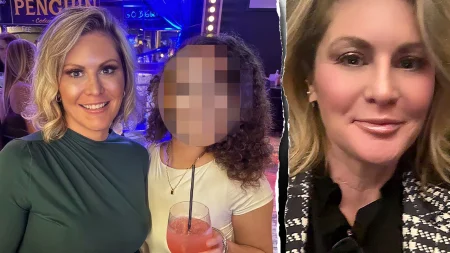




For seventeen years, Tamaira Angell Smith lived in the shadows, a fugitive wanted in the death of a young Georgia mother. She had changed her name, borrowed another woman’s identity, and slipped across state lines, building a life far from the hotel room where authorities say she injected illegal silicone into Eyanna Moore’s body. But after nearly two decades of hiding, Smith’s freedom ended not because of a dramatic tip or an international manhunt, but because she tried to renew her driver’s license. That small, routine request—one that millions of people make every year—alerted a South Carolina investigator, triggered a facial recognition match, and led to a murder warrant that had been waiting for her since 2009. Smith, now 52, was arrested in Texas and extradited to Georgia, where she remains in the Gwinnett County Jail, charged with felony murder in the death of Moore, a 29-year-old mother of four from Loganville. The case is a tragic and almost absurd end to a fugitive saga that left a family shattered for more than half a lifetime.
The story began on Memorial Day weekend in 2009, when Moore arrived at a Holiday Inn Express hotel room near Stone Mountain, Georgia, hoping to receive a cosmetic procedure that would change her appearance and boost her confidence. According to the criminal arrest warrant, Smith injected silicone into Moore’s left buttock on May 30. By the next day, Moore was dead. Her maternal aunt, Yolanda Hammond, still carries the weight of that loss. She told Fox News Digital that Moore had done her homework before agreeing to the procedure, researching providers online and reading reviews. What she did not know was that the people she was trusting were not who they claimed to be. Hammond said Smith and another woman presented themselves as sisters, one posing as a doctor and Smith as a physician assistant. “Eyanna did extensive research,” Hammond said. “The website checked out, they had reviews, but we later found out there was an actual cosmetic location except for they were not the real people. They used someone else’s credentials to pose themselves as those people.” The deception was so convincing that Moore never suspected the danger. But the procedure went horribly wrong, and within hours, Moore’s body began to fail.
What followed was a frantic and heartbreaking chain of events. Hammond said Smith called Moore’s husband, David, shortly after the procedure and told him to rush to the hotel with yogurt and Gatorade, apparently hoping those items would help Moore recover from the trauma of the injection. When David arrived, he found his wife in distress and immediately called 911. Despite the desperate attempt to save her, Moore died the following day. Then, in a chilling moment, Smith called David back to ask how Moore was doing. He told her that Moore had died. Hammond remembered the call vividly. “He said she was screaming ‘no,’ and hung up the phone,” Hammond said. “Nobody never heard from her again.” Police in Gwinnett County secured an arrest warrant in June 2009, first charging Smith with practicing medicine without a license. But before the more serious felony murder warrant could be issued in the months that followed, Smith was already gone. She had vanished into a new identity, leaving behind a grieving husband, four young children, and a family desperate for answers. For years, the case grew cold, but the warrant never expired. It simply waited, tucked away in court files, for the moment when Smith’s past would finally catch up with her.
That moment came through an unlikely chain of events involving stolen paperwork and a driver’s license renewal. According to a news release from the South Carolina Law Enforcement Division, Smith had obtained a South Carolina driver’s license in November 2018 using a woman’s stolen identity. With that fraudulent license, she was able to live openly, presumably working, driving, and moving through daily life without drawing attention to herself. But in July of this year, Smith contacted the South Carolina Department of Motor Vehicles asking for help because an alert on the license prevented her from renewing it online. That alert triggered an investigation. SLED assigned Special Agent Shawn Ludwig to look into the identity fraud in August. During the investigation, facial recognition technology helped Ludwig identify Smith and uncover the outstanding murder warrant that had been sitting in Georgia for years. SLED’s Director of Public Information, Renée Wunderlich, told Fox News Digital that Ludwig worked with Senior Special Agent Bridgette Lott on the case. Together, they identified another alias Smith had been using in McKinney, Texas, and provided local police with information about her vehicle. McKinney officers located the car, found Smith, and arrested her in August. It was an almost unbelievable twist: a woman who had successfully evaded capture for 17 years had been undone by her own request for help at a government office.
The irony was not lost on Moore’s family. Hammond said she was stunned when she learned how investigators finally caught the woman accused of killing her niece. “You ran for 17 years and then you call and ask for help under an alias, like really?” she said. The arrest marked the beginning of a new chapter in a case that had haunted the Moore family for nearly two decades. Smith was extradited from Texas to Georgia, where she now faces the felony murder charge stemming from Moore’s 2009 death. A bond hearing has been set for Oct. 22 at the Gwinnett Justice and Administration Center, and Fox News Digital reached out to her attorney for comment. For Moore’s family, the hearing is not just a legal proceeding—it is a moment of reckoning they have waited years to see. They plan to attend court hearings and hope that justice will finally be served. Hammond described the long years of waiting as painfully difficult, especially for Moore’s four children, Tatiyanna, Faith, Fantasia, and Tristan, who were forced to grow up without their mother. Two of those children were so young when Moore died that they have no memory of her at all. They have only stories, photographs, and the hollow ache of a mother’s love they never got to know.
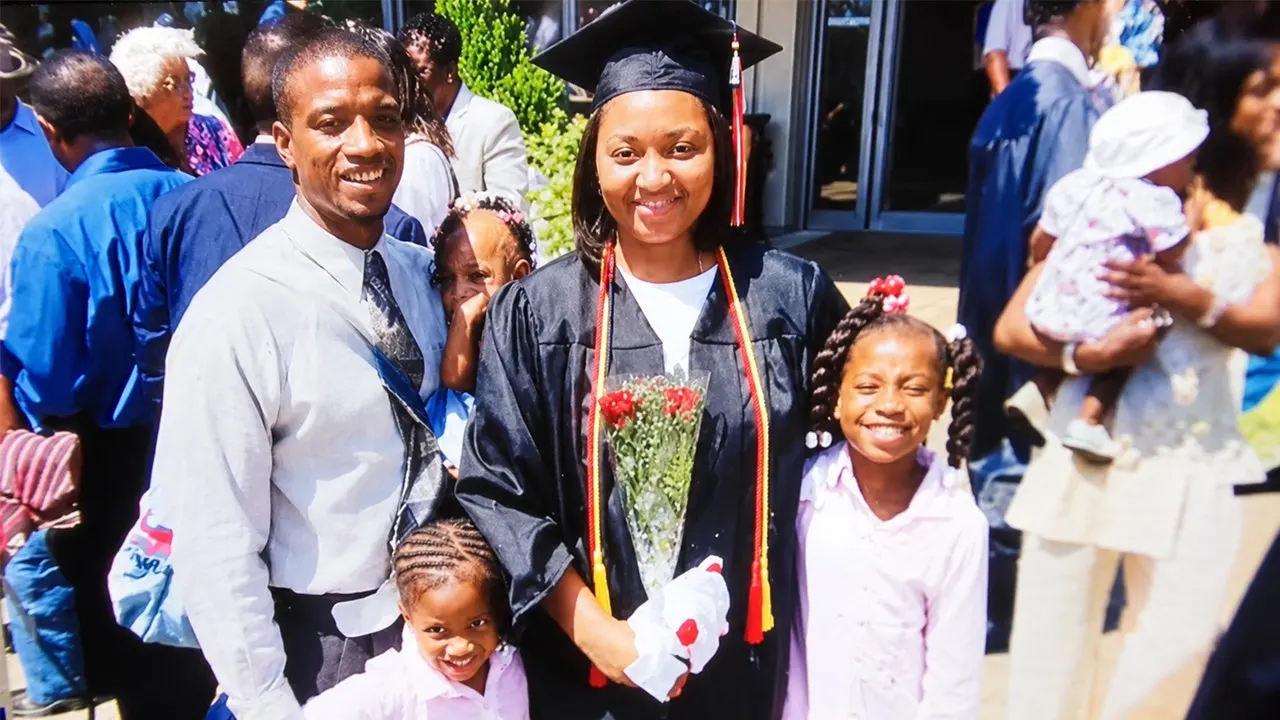
As the family prepares for the next stage of the legal process, Hammond is determined to make sure her niece’s death means something. She hopes that by speaking publicly about what happened, she can warn other women about the dangers of illegal cosmetic procedures and the people who perform them without proper credentials. “The thing that I would like for the world to know is just, you know, make sure you do your due diligence vetting these people. Make sure that you check the credentials,” Hammond said. She also offered a simple but powerful piece of advice: “No alteration of your body is worth you losing your life.” Moore, she said, was a bright, ambitious, well-educated young woman with a full life ahead of her. She was married, had children, and was constantly working to build a better future for her family. “She was always advancing herself for a better career for herself and her family,” Hammond said. “She’s 29 years old and she had a full life ahead of her… well educated young woman, married with children, and she just didn’t deserve that.” Now, after 17 years of waiting, her family hopes that the woman accused of taking her life will finally face the consequences. The case is a cautionary tale not only about the dangers of black-market cosmetic procedures, but also about the strange, unglamorous ways that justice can sometimes arrive—not through a dramatic chase, but through a routine renewal request that linked Tamaira Angell Smith to the name and the crime she spent so long trying to outrun.