




Imagine coming home after an exhausting, stressful day of work, seeking nothing more than the comforting warmth, safety, and light of your living room, only to be struck with a sudden, terrifying threat that your electricity and gas are about to be cut off within the hour. For thousands of hard-working Californians, this nightmare has rapidly transformed into a harsh, agonizing reality—not because they forgot to settle their monthly accounts, but because they fell victim to highly sophisticated, ruthless scammers who prey on our most fundamental human needs. Pacific Gas and Electric Company (PG&E) has issued an urgent, widespread warning to its customers following a massive, unprecedented surge in fraudulent activities that has left families financially devastated and emotionally traumatized. In just the first half of this year, heartless criminals managed to siphon more than $211,000 directly from the pockets of innocent utility customers, exploiting the natural fear of being left in the cold and dark. As modern technology advances, so too do the tactics of these fraudsters, who are now using incredibly convincing digital toolkits, including fake QR codes and highly realistic employee impersonations, to deceive even the most vigilant consumers. Shockingly, the utility giant projects that if these current trends continue, customers are on pace to lose roughly 30% more of their hard-earned money to these predatory operations over the coming year than they did in the previous year. This alarming escalation showcases a highly organized, relentless network of criminals who are continuously refining their scripts, altering their digital footprints, and capitalizing on the growing complexity of modern utility billing to construct lies that are nearly impossible to detect at first glance.
The anatomy of these deceptive schemes is specifically engineered to bypass our rational minds and trigger an immediate, panic-induced fight-or-flight response that leaves little room for second-guessing. Typically, the predatory assault begins with a sudden phone call, an urgent text message, or an official-looking email claiming that a customer’s utility bill is dangerously past due and that a field technician is already on the way to physically lock out their meters. Scammers deliberately choose highly stressful times of day—such as during active dinner preparation, school pickups, or the chaotic middle of a frantic workday—to catch people off guard and minimize their opportunity to think clearly, verify their statements, or consult with family members. During these high-pressure, emotionally charged calls, the fraudster will often send a fake, custom-generated digital QR code directly to the victim’s smartphone, claiming it is a new, expedited payment portal designed to stop the active disconnection order instantaneously. The unsuspecting customer, desperate to keep the lights on for their children, keep their medical equipment running, or preserve hundreds of dollars of food in their refrigerator, is instructed to rush to a local retail store, pharmacy, or authorized cashier to scan the code and make an immediate cash deposit. Tragically, instead of resolving a lingering balance on their PG&E account, this transaction funnels the hard-earned money directly into the untrustraceable offshore bank accounts or digital wallets of criminals, leaving the victim empty-handed, deeply distressed, still fully responsible for their actual utility obligations, and wondering how they could have been so easily misled.
When we look past the cold, hard numbers of the financial losses reported so far, we find deeply personal stories of struggle, vulnerability, and broken trust that paint a much more devastating picture of this quiet crisis. The average victim of these utility scams is now losing approximately $969 per incident—a massive and highly concerning leap from the average loss of $590 reported in 2025. For an ordinary, working-class household already trying to survive in an era of relentless inflation, losing nearly a thousand dollars in an instant is not just an inconvenience; it represents the loss of grocery money, rent payments, car insurance, or vital medical prescriptions. This sharp rise in the average stolen amount highlights how emboldened these criminals have become, aggressively squeezing every possible dollar from their victims by taking advantage of their compliance, confusion, and sheer desperation. While these predatory tactics have been reported throughout PG&E’s expansive Northern and Central California service territories, localized data reveals that no community, regardless of its geographic isolation or wealth, is entirely safe from their reach. For instance, in the scenic coastal areas of Santa Barbara County, at least nine heartbreaking cases have been officially documented this year, while San Luis Obispo County has recorded at least three severe instances of customers being swindled out of their savings, proving that scammers are actively targeting both busy suburban neighborhoods and close-knit rural communities alike with equal malice.
To fight back against this predatory wave, Matt Foley, PG&E’s lead scam investigator, is working tirelessly to pull back the curtain on these operations and arm the public with the crucial psychological tools needed to resist. Foley emphasizes that these criminals do not rely on complex hacking software or technological exploits; instead, they rely on basic human psychology, weaponizing fear, artificial urgency, and our natural respect for authority to override our common sense. He strongly advises that the moment a caller demands immediate payment under the threat of cutting off electricity or gas, customers must instantly hang up the phone, ignore the text, or close the email without interacting with any links or downloading attachments. Verification is the ultimate shield against fraud; customers should independently log into their secure online portal at PG&E’s official website or dial the trusted customer service number printed directly on their physical billing statements. Furthermore, PG&E warns that consumers should instantly become suspicious of any demands for non-traditional payment methods—such as prepaid debit cards, cryptocurrency, or digital peer-to-peer payment apps like Zelle or Venmo—as legitimate utilities will never require these volatile, unsecured forms of payment. Consumers must also stay highly alert to door-to-door salespersons who show up unexpectedly at their homes asking to inspect their bills, claiming to offer unexpected rebates, or promising miraculous refunds, as these are often physical tactics designed to harvest sensitive personal data or pressure residents in the safety of their own doorsteps.
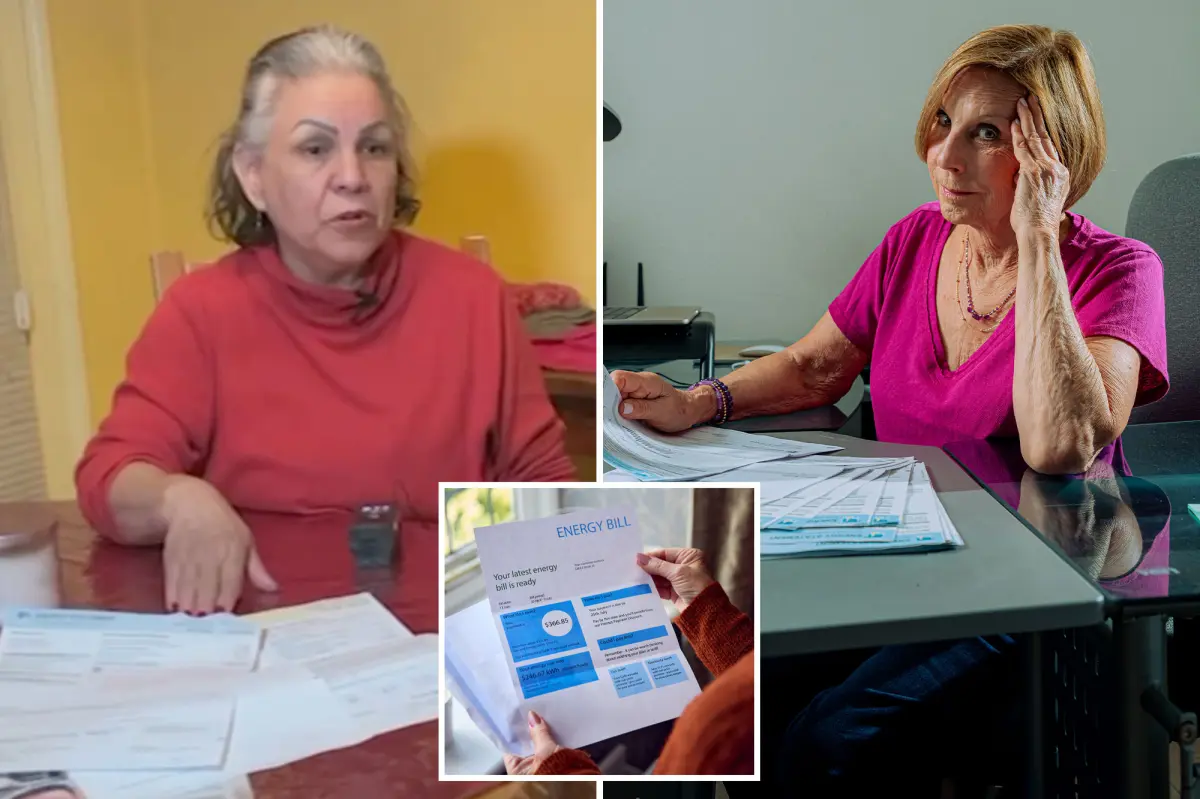
This disturbing surge in criminal exploitation is happening against a background of deep, widespread economic anxiety for millions of Californians who are already suffocating under the weight of skyrocketing energy costs. The simple act of keeping a home heated in the freezing winter or cooled during intense summer heatwaves has become a luxury for some, as utility bills have ballooned by a staggering 84% since 2016. Adding fuel to this fire of public frustration, a prominent watchdog group with the California Public Utilities Commission recently released a grim projection estimating that the typical household could face another massive 24.5% rate hike over the next four years alone. If these projections hold true, PG&E customers could find themselves paying as much as $840 more annually for their gas and electricity by the year 2030, a cost increase that many families simply cannot absorb. This forecast has sparked deep-seated outrage, exhaustion, and despair among communities across the state, with many residents expressing to local journalists that they feel utterly helpless as they watch their monthly bills soar into the hundreds of dollars despite their best, most conscious efforts to sacrifice comfort, turn off appliances, and constantly reduce their energy use. It is precisely this climate of fear, confusion, and despair regarding skyrocketing utility rates that scammers are so skillfully and maliciously weaponizing to orchestrate their high-stakes financial thefts, knowing that people are already primed to believe their bills are spiraling out of control.
In response to the troubling forecasts and public outcry, PG&E has actively disputed the watchdog’s extreme long-term projections, arguing that the analysis fails to paint a complete, realistic picture of the state’s financial future. The utility giant asserts that the watchdog’s calculations do not account for major expiring wildfire-related mitigation costs and the company’s extensive internal restructuring efforts, which are aimed at driving down operational costs and keeping future rate adjustments far lower than predicted. However, regardless of which side is correct in this complex regulatory debate, the atmospheric noise, public arguments, and constant media coverage regarding rising costs inadvertently create the perfect smokescreen for clever scammers to thrive. Knowing that customers are already hyper-vigilant, stressed, and highly distressed about their rising bills, fraudsters find it incredibly easy to convince people that an unexpected, massive charge has suddenly slipped through the cracks or gone unpaid. To protect yourself and your loved ones from falling victim to these heartless schemes, it is vital to remember that knowledge, patience, and a healthy dose of skepticism are your best lines of defense in an increasingly digital world. If you ever receive a suspicious message or a demanding call, take a deep breath, refuse to act in a panic, and remember that you always have the right to hang up, pause, step back, and verify your actual account standing directly with the utility company through official, secure channels.