





Ryan Kelly, once a prominent figure of South Carolina’s law enforcement elite, recently experienced a dramatic fall from grace that has sent shockwaves through the state’s legal community. On June 8, the Charleston County Sheriff’s Office confirmed that Kelly had been abruptly fired from his high-profile position as the chief inspector of the Office of Professional Standards. In a cruel twist of irony, the very man tasked with overseeing internal affairs, investigating allegations of misconduct, and maintaining the ethical integrity of the sheriff’s deputies was himself brought down by allegations of harassment and improper conduct. This sudden termination marks a stunning decline for a man who, until recently, was considered one of the state’s most reliable and seasoned investigators. Before stepping into his role in Charleston, Kelly was a distinguished senior special agent with the South Carolina Law Enforcement Division (SLED), a premier state agency where he was entrusted with some of the most sensitive and high-stakes investigations in modern Southern history. Most notably, Kelly was a key figure in the sprawling, multi-layered criminal investigation into Alex Murdaugh, the fallen legal scion whose crimes captivated the nation. For years, Kelly was seen as a vanguard of truth in a region plagued by systemic corruption, standing before juries to piece together the fractured timelines of the Murdaugh dynasty’s collapse. His sudden dismissal from public service not only tarnishes his personal professional legacy but also introduces a volatile new variable into an already combustible legal situation. As the state prepares to retry Murdaugh for the brutal murders of his wife and son, the disgrace of one of the prosecution’s premier investigative voices threatens to reopen old wounds, casting a long, doubt-filled shadow over the integrity of the evidence gathered during the initial, highly scrutinized investigation.
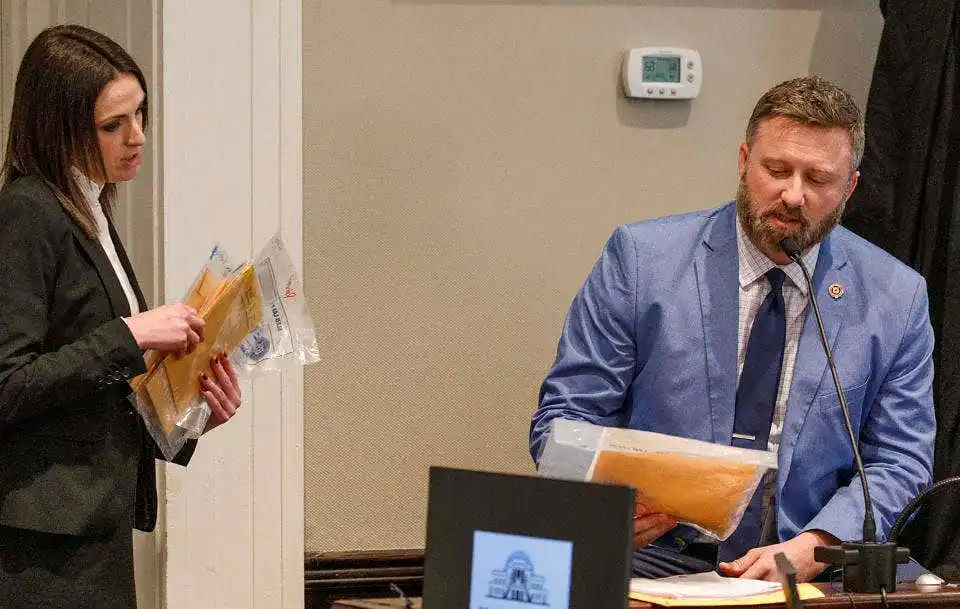
To understand the profound implications of Kelly’s firing, one must look back to the pivotal and highly theatrical role he played in the initial 2023 trial of Alex Murdaugh. Kelly was not merely a background figure in the case; he was the lead SLED investigator who untangled one of the most bizarre chapters of the entire Murdaugh saga: the infamous September 2021 roadside shooting. It was a warm afternoon when Murdaugh claimed he had been shot in the head by an unidentified stranger while attempting to change a flat tire on a lonely country road. As the lead agent on the scene, Kelly meticulously scrutinized the physical evidence, quickly realizing that the story did not align with the reality of the crime scene. Under the weight of Kelly’s investigation, Murdaugh’s narrative crumbled, leading to the shocking confession that he had actually staged the entire incident. Murdaugh admitted he had hired his distant cousin and former client, Curtis “Eddie” Smith, to shoot him in a desperate, drug-fueled scheme to secure a $10 million life insurance payout for his sole surviving son, Buster. When Kelly took the witness stand during the double-murder trial, his testimony was a devastating blow to the defense. Although the roadside shooting occurred months after the murders of Maggie and Paul, the state successfully used Kelly’s detailed investigation to expose Murdaugh’s profound capacity for deception, manipulation, and self-preservation. Kelly’s calm, methodical delivery on the stand painted Murdaugh as a man who would go to extreme lengths—even orchestrating his own death—to escape the consequences of his actions, a portrait that deeply resonated with the jury and helped secure a conviction.
Now, with Kelly’s professional reputation deeply compromised by his firing over harassment allegations, the legal chess board has been decisively rearranged. In the high-stakes arena of capital murder trials, a witness’s credibility is everything, and the defense team is already smelling blood in the water. When asked about how Kelly’s sudden dismissal might impact the upcoming retrial, Murdaugh’s lead defense attorney, the veteran and sharp-tongued Dick Harpootlian, chose to keep his strategy close to his chest, offering a calculated “not at this time” to eager inquiries. Behind this public silence lies a calculated calculation; defense attorneys are undoubtedly dissecting the details of Kelly’s firing, looking for any leverage to argue that the SLED investigations were handled by individuals with questionable ethics and compromised judgment. This development comes at an incredibly delicate time for the prosecution, as the South Carolina Supreme Court recently took the extraordinary step of sending the case back to the circuit court, effectively erasing Murdaugh’s prior murder convictions. The state must now prepare to present its entire case all over again, but this time, they will do so without the armor of a seemingly untarnished investigative team. If the defense can successfully argue that the key SLED agent who proved Murdaugh’s deception was himself a dishonest or abusive actor, they can plant a critical seed of reasonable doubt in the minds of a new jury, potentially turning the tide of the entire trial.
Yet, beneath the aggressive legal posturing, the media frenzy, and the professional downfalls of the investigators, lies a deeply human tragedy that remains the mournful heart of this entire saga. In June 2021, the sprawling, moss-draped silence of Moselle—the Murdaugh family’s historic 1,700-acre estate in South Carolina’s Lowcountry—was shattered by unimaginable violence. Fifty-two-year-old Maggie Murdaugh, a beloved mother known for her warm laugh and dedication to her family, and her twenty-two-year-old son, Paul, a young college student with his whole life ahead of him, were brutally executed near the property’s dog kennels. The state’s prosecution painted a grim, chilling picture of a father and husband who, cornered by decades of financial thefts, drug addiction, and the imminent exposure of his crumbling legal empire, committed the ultimate act of betrayal to buy himself time and sympathy. Conversely, the defense painted a picture of a tight-knit, deeply loving family, arguing that Alex Murdaugh was a grieving patriarch who had been wrongfully targeted by desperate, tunnel-visioned investigators eager to pin the blame on a prominent local figure. As the details of the murders are prepared to be laid bare once more in a courtroom, the human cost of the crime hangs heavy over the region. For the surviving family members, particularly Murdaugh’s son Buster, the upcoming retrial means reliving the most horrific night of their lives in the glare of the global spotlight, proving that in the search for justice, the pain of the victims’ loved ones is often weaponized and prolonged.
The road to this unprecedented retrial has been paved with institutional failures that have deeply shaken the public’s trust in the integrity of the Southern legal system. Following Murdaugh’s initial conviction in March 2023, what seemed like a closed chapter quickly erupted into a fresh scandal that threatened the very foundations of the state’s courtroom procedures. Murdaugh’s defense team launched a ferocious appeal, presenting explosive allegations of systemic jury tampering against Colleton County Clerk of Court Rebecca Hill. It was alleged that Hill, driven by the seductive promise of media fame and a lucrative book deal, had abused her position of trust to influence the jurors, advising them not to be “fooled” by Murdaugh’s emotional defense and pressuring them into delivering a hasty guilty verdict. This shocking revelation shifted the public narrative from the crimes of a single corrupt lawyer to a systemic corruption that penetrated the very halls of justice. The South Carolina Supreme Court’s decisive ruling to send the case back for a new trial was a sobering acknowledgment that the constitutional guarantee of an impartial jury had been severely compromised. Now, as the state prepares to try Murdaugh for a second time, the credibility of the entire judicial apparatus is on trial. With both the court clerk and a key SLED investigator now thoroughly discredited by their own actions, the prosecution faces the monumental task of proving that they can conduct a fair, objective trial in a system that appears increasingly fractured and self-serving.
Despite the chaotic legal theater and the genuine hope of his defense team, Alex Murdaugh is far from a free man, and his ultimate fate remains bound to his own admitted misdeeds. Even if a future jury acquits him of the double murder of his wife and son, the disgraced attorney will likely spend the remainder of his life behind bars on separate, massive financial convictions. Murdaugh has already pleaded guilty to stealing millions of dollars from his law firm, his childhood friends, and vulnerable clients who trusted him to protect their interests during moments of unspeakable tragedy. This extensive financial trail of destruction has left a legacy of betrayal that no future acquittal can erase. Yet, the determination of the state to press forward with a second murder trial highlights the deep, unresolved need for cultural closure in a region that was dominated by the Murdaugh dynasty for over a century. The upcoming trial will be an exhausting, bitterly fought confrontation, serving as a stark reminder of how quickly wealth, power, and unchecked privilege can disintegrate into absolute ruin. As the world prepares to watch the Lowcountry courtroom battle once more, the ongoing saga of Alex Murdaugh, the fall of Ryan Kelly, and the empty, blood-stained kennels of Moselle stand as a haunting, cautionary tale about the fragile nature of justice, the high price of systemic corruption, and the long, painful search for truth in a world built on lies.