

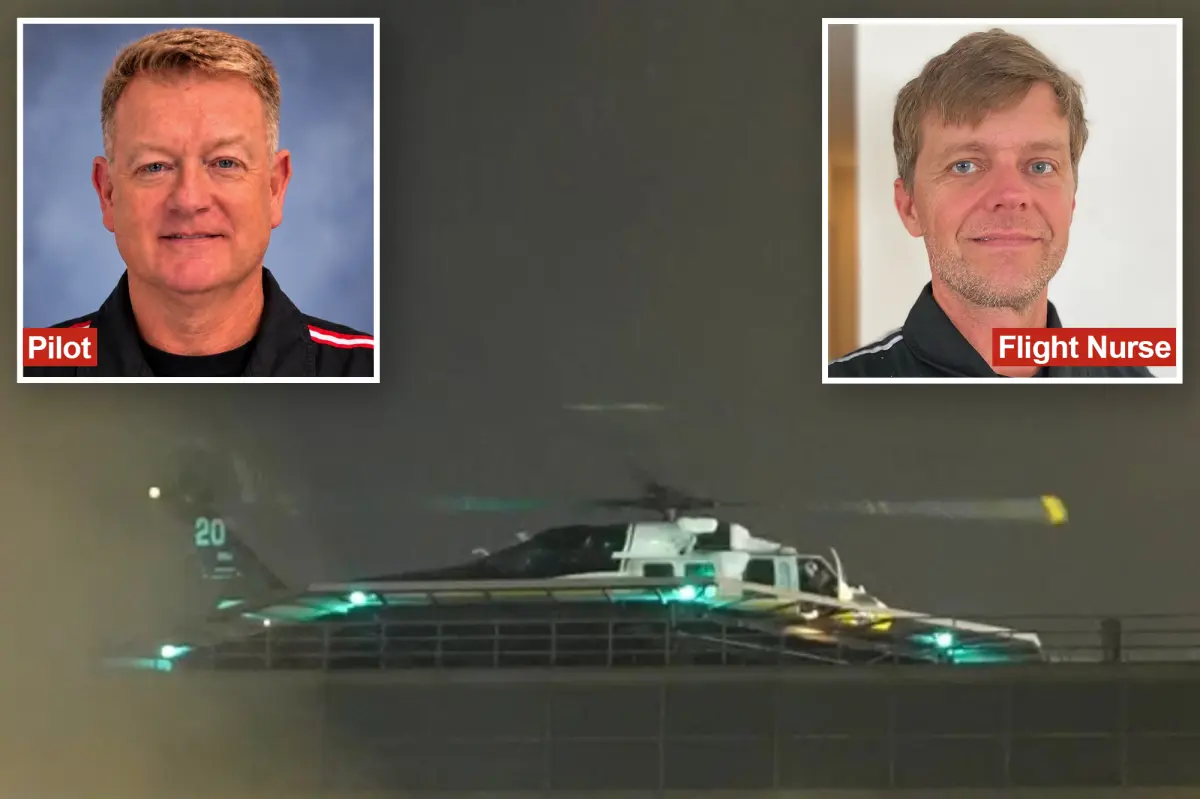
On a quiet Wednesday evening, off the rugged coast of Catalina Island, a helicopter lifted into the sky on what should have been a routine medical rescue. The aircraft belonged to REACH Air Medical Services and was carrying a patient named Catalina Hernandez, who had suffered a severe allergic reaction after eating something, along with her 20-year-old son and a crew of medical professionals determined to get her to safety. Their destination was the mainland, where Hernandez could receive more advanced care, and the urgency was real but, for the crew, this was the kind of mission they had flown many times before. Every flight, however, carries risk, and on this night that risk became a devastating reality. Shortly after takeoff, the helicopter plunged into the cold Pacific waters near Catalina Island, and what had begun with a sense of purpose quickly turned into a search for survivors. The final victim of that terrifying crash has now been identified as Steven Robinson, the helicopter’s 59-year-old pilot. Robinson died alongside flight nurse Jessica deVries and the patient, Catalina Hernandez. Only two people aboard survived: Hernandez’s 20-year-old son and flight nurse Brad Sparks, both of whom were hospitalized, with Sparks already recovering while the young man’s condition remained unclear. It was a heartbreaking outcome that sent shockwaves through the island community, the aviation world, and the families left behind. In the days since, investigators have combed through wreckage and mystery, but no explanation can soften the loss of people whose entire professional lives were devoted to keeping strangers alive.
Steven Robinson was not merely a pilot; he was a man whose entire career had been built around service and sacrifice. Before joining REACH Air Medical Services, Robinson had served as a Marine Corps helicopter pilot, and he later flew Marine One in support of a former president. That distinction placed him in some of the most sensitive and important aviation missions imaginable, flying the commander in chief and proving himself under immense pressure. It was precisely that background that made him such an asset in the world of critical care transport, where every second and every decision can mean the difference between life and death. REACH described Robinson as having “an illustrious aviation career,” but those who knew him emphasized more than his resume. He was, they said, a devoted husband, father, family member and friend who made those around him feel valued, supported and cared for. The company noted that “every stage of his career was dedicated to serving others with skill, courage, and humility.” That quiet courage is what made his loss so particularly painful. Robinson had spent decades learning to stay calm in crisis, to trust his training, and to bring people home safely. On that Wednesday night, he was doing what he had always done: using his skills to help a stranger in her most vulnerable moment. His family, through REACH, expressed gratitude for the example he set and the extraordinary impact he had on so many people. Those words carry the weight of a loss that cannot be measured, but they also honor a life that meant something far beyond the ranks and titles and uniforms. He was a husband to a wife who now faces life without him, a father, and a friend to many who believed he would always be there.
The second crew member lost in the crash was Jessica deVries, a flight nurse described by her family as a true hero, a devoted mother, and an extraordinary woman. Her family’s words paint a vivid picture of someone who lived with strength, compassion, and kindness that touched everyone who had the privilege of knowing her. deVries was not just doing a job; she was following a calling. She loved her work and was passionate about helping others during their greatest need. Flight nursing is one of the most demanding roles in emergency medicine. It requires medical expertise, quick judgment, physical endurance, and emotional steadiness in the air. deVries had made that difficult path her life’s work, and she was a woman whose “unwavering spirit,” as her family put it, would live on in the countless lives she impacted. Her death leaves a hole in her family, her community, and the teams of first responders who rely on people like her to be there in the worst moments of their lives. The patient she was caring for, Catalina Hernandez, was also a mother. She had boarded the helicopter not expecting to die, but hoping to get treatment and return to her family. She had eaten something that triggered a dangerous allergic reaction, a sudden and frightening medical emergency that required rapid transport. Hernandez was survived by her son, the 20-year-old who had stayed beside her through the terror of that evening. That young man did not lose only a patient or a stranger; he lost his mother. And in that small, confined helicopter cabin, both deVries and Hernandez were part of the same fragile human story, women whose lives were suddenly cut short while trying to hold onto hope.
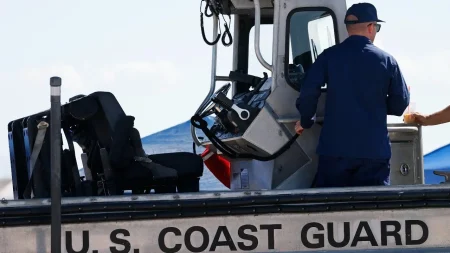
The fact that anyone survived this disaster is remarkable, and the two who did now carry the burden of that night forever. Hernandez’s 20-year-old son was on the helicopter because he loved his mother and refused to leave her side. He had watched her react badly to the food she ate, had seen her condition quickly become serious enough to require a medical flight, and had climbed aboard, likely expecting that within the hour everything would be okay. Instead, he saw the helicopter fall from the sky and disappear into the ocean. He was found alive, but the physical and emotional wounds he carries will take a long time to heal, and his condition was still not publicly known in the days after the crash. Brad Sparks, the flight nurse who survived, was also hospitalized and was described as recovering. Like deVries, Sparks was a professional whose job was to care for others. He will now have to live with the memory of losing his colleague and his patient, and with the reality that he came close to death himself. The rescue and recovery efforts were immense. The waters around Catalina are deep, dark, and unforgiving, and the crash site made the search for the victims heartbreakingly slow. Hernandez’s body was the last to be recovered from the deep Pacific waters, meaning her family had to wait even longer to begin the grieving process. Throughout those agonizing hours, first responders worked without pause, and REACH Air Medical Services later expressed deep gratitude to them for their assistance. On the island itself, a memorial service was held to honor the victims, a gathering that brought together a community still trying to make sense of what happened.
The cause of the crash remains unknown, and that uncertainty only deepens the sorrow for the families and crewmates left behind. Investigators from the National Transportation Safety Board are examining every aspect of the flight, including maintenance records, weather conditions, the weight of the aircraft, and the pilot’s qualifications. Robinson’s experience, including his time flying Marine One, makes mechanical or environmental failure seem more likely than crew error, but no conclusions have been released yet. What makes the loss even more painful is that these kinds of tragedies are not entirely isolated. The Catalina crash came just weeks after another helicopter went down in Chatsworth while a news crew was covering a bus collision. That accident also took the lives of three people: a pilot, a reporter, and an innocent bystander. In both cases, helicopters that are meant to serve the public, to rescue, to inform, to connect, ended up becoming the center of their own grief. For REACH Air Medical Services, the crash is a devastating blow to an organization built around helping others. The company has promised to honor the victims and stand beside their families through the difficult days ahead. But there is no way to replace a pilot like Robinson or a nurse like deVries, and no way to bring back a mother like Hernandez. The investigation will eventually answer some questions, but it will not answer the deepest one: why do good people, doing good things, sometimes become the victims of tragedy?
In the aftermath, what remains is a profound sense of loss mixed with gratitude for the lives that were lived. Steven Robinson served his country, protected a president, and then chose to spend the later years of his career carrying strangers through the air to safety. Jessica deVries gave her life to medicine and to the belief that no person should face their worst moments alone. Catalina Hernandez was a patient, a mother, and a woman whose ordinary day turned into an emergency through no fault of her own. Their stories, tragic as they are, are also stories of devotion and love. The memorial service held on Catalina Island was not just a ceremony; it was a way for a grieving community to say that these people mattered, and that their deaths would not be forgotten. For the survivors, especially Hernandez’s son and Brad Sparks, the road ahead will not be easy. They must navigate the physical pain of their injuries and the emotional trauma of being inside a helicopter as it fell. They must also live with the strange weight of being the ones who made it out. In the end, the only way to make any sense of a loss like this is to hold onto the good these people represented. They were the kind of human beings who run toward danger, who arrive when someone calls for help, who give comfort in the middle of chaos. That is the legacy of Steven Robinson and Jessica deVries, and it is the story of Catalina Hernandez, a mother who was rushing toward care when her life was taken away. Their loss leaves a stillness in the air, but their example leaves something far more lasting: a reminder that even in the face of death, there are people who will spend their lives trying to save others.