




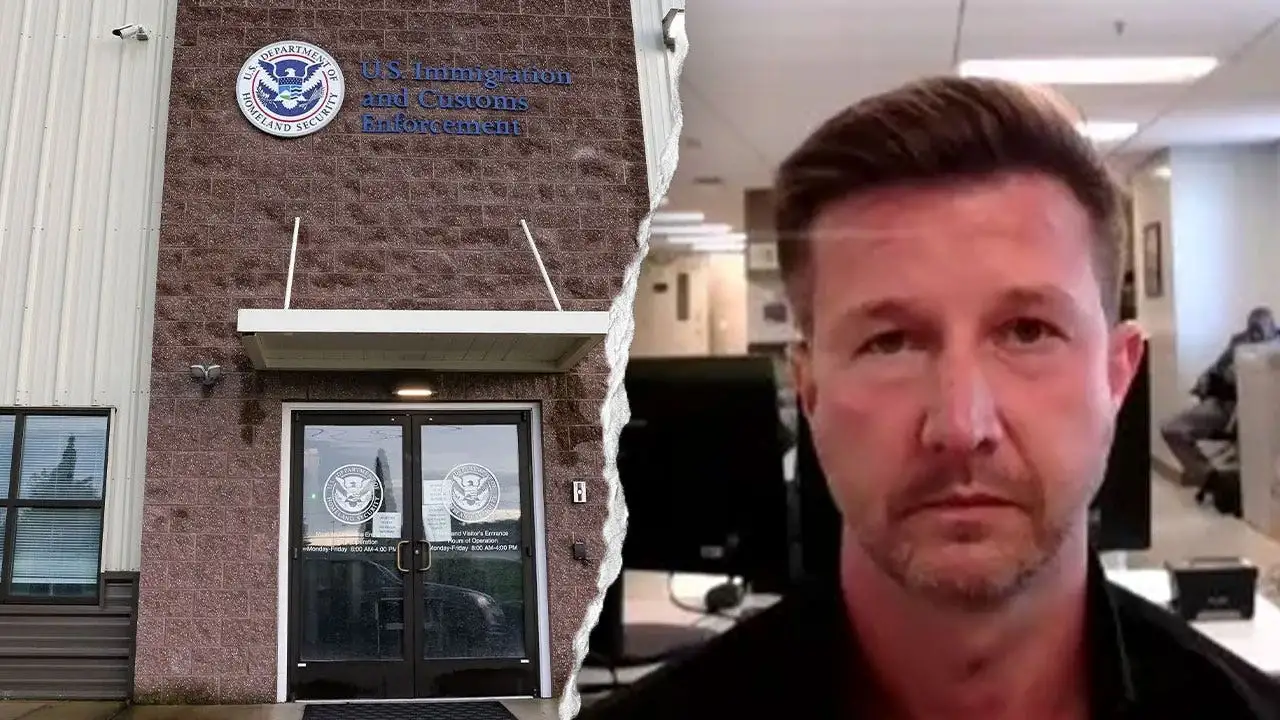
The glittering, high-energy world of reality television, characterized by blinding spotlights, elaborate costumes, and the synchronized rhythm of competitive dance, stands in stark and somber contrast to the cold, clinical reality of a federal holding facility. For Roberts Nemiro, a Latvian national who once captured his home nation’s heart as a professional dancer on Dejo ar zvaigzni!—the Baltic country’s beloved adaptation of the British television phenomenon Strictly Come Dancing, known to American audiences as Dancing with the Stars—the rhythm of life has taken an incredibly dark and tragic detour. Once celebrated for his physical grace, artistic expression, and magnetic television presence, Nemiro now finds himself at the center of a sobering American narrative about fame lost, legal boundaries ignored, and a long-delayed reckoning with federal immigration authorities. His journey to the United States began in October 2011, fueled by the same optimism, ambition, and pursuit of opportunity that draws countless artists, performers, and dreamers to American shores every year. Carrying a temporary visa that was legally set to expire just ten months later in August 2012, Nemiro stepped into a new country with his talents in hand, perhaps dreaming of translating his European television success into a thriving, sustainable career in the United States. However, when the music stopped and his legal authorization to remain in the country expired, he made the fateful decision to step into the shadows of undocumented life, beginning a decade-long spiral that would ultimately replace his dancing shoes with handcuffs and trade the warm applause of adoring audiences for the sterile, unforgiving environment of an immigration detention center. This dramatic shift highlights the profound vulnerability inherent in the pursuit of the American dream, where the line between a life of glamorous public adoration and one of marginalized, undocumented survival can be incredibly thin, especially when one’s legal status begins to slip away.
Living as an undocumented immigrant in a vast, complex country presents a unique set of psychological, emotional, and economic challenges, but for Nemiro, his time in the United States quickly devolved from a quiet struggle for survival into a serious, violent, and deeply troubling criminal trajectory. Far from the highly disciplined, structured, and focused lifestyle required of a competitive ballroom dancer, his years in America became increasingly defined by a series of hostile and dangerous encounters with local law enforcement, revealing a pattern of behavior that shattered any illusion of a peaceful, law-abiding life. According to official reports released by the Department of Homeland Security (DHS), Nemiro’s criminal history in the U.S. grew to include serious convictions for the aggravated assault of a non-family member with a firearm, alongside charges of disorderly conduct. The escalation of his offenses did not stop with these violent outbursts; his arrest record also documented charges of battery, sexual battery, possession of a controlled substance, and possession of drug paraphernalia. These offenses paint a grim, heartbreaking picture of a life spinning completely out of control, marked by physical violence, substance abuse, and a flagrant disregard for the physical safety and bodily autonomy of others. Each arrest represented not just a violation of federal immigration law, but a direct threat to the unsuspecting communities that had hosted him, illustrating how the discipline of his artistic past was entirely consumed by a chaotic cycle of self-destruction and harm to others. The human cost of these crimes is substantial, leaving behind unnamed victims whose lives were disrupted by his actions, and transforming a former cultural ambassador into a symbol of public safety failure. This descent underscores the tragic reality that talent and past success provide no immunity against the destructive forces of personal crisis and criminal behavior.
The quiet, tension-filled culmination of Nemiro’s decade-long evasion of federal immigration authorities occurred on a Tuesday in San Francisco, when special agents from U.S. Immigration and Customs Enforcement (ICE) apprehended him following a crucial referral from U.S. Citizenship and Immigration Services (USCIS). This arrest did not occur in a vacuum; rather, it took place in one of the nation’s most politically charged geographic landscapes, as San Francisco is a prominent and fierce defender of “sanctuary city” policies within California. These progressive policies are designed to limit local law enforcement’s cooperation with federal immigration officials, with the humanitarian intent of fostering trust between undocumented immigrant communities and local police. The underlying philosophy suggests that if undocumented individuals do not fear deportation, they will be more willing to report crimes, cooperate with investigations, and seek medical help, thereby making the entire community safer. However, high-profile cases involving individuals with extensive violent criminal records, like Nemiro, thrust these local protections into the crosshairs of intense national debate. Critics of sanctuary laws argue that they inadvertently create safe havens for dangerous, repeat offenders, preventing federal authorities from quickly removing individuals who pose genuine physical threats to the public. Conversely, advocates argue that the sanctuary framework protects civil liberties and that federal agencies still possess the necessary tools, intelligence, and authority to track down and arrest high-priority targets without compromising local community trust. Nemiro’s arrest in the heart of San Francisco perfectly illustrates this ongoing ideological battle, highlighting the friction that occurs when local sanctuary philosophies collide with the federal government’s mandate to deport noncitizens deemed to be active threats to society. For the residents of San Francisco, the arrest of a former television star turned armed assailant in their neighborhood serves as a complex reminder of the delicate balance between compassion for the undocumented and the paramount necessity of community safety.
In the immediate aftermath of the arrest, federal officials did not hesitate to leverage Nemiro’s public profile and extensive criminal history to make a broader, highly publicized political point about the dangers of undocumented immigration and the critical need for aggressive federal enforcement. DHS Assistant Secretary Lauren Bis delivered a pointed, highly critical statement that deliberately utilized theatrical metaphors to contrast Nemiro’s former life of glamour with his current status as a public safety threat. “This illegal alien from Latvia may have once had a career as a professional dancer on TV, but has turned into a career criminal with a rap sheet that includes aggravated assault with a gun, sexual battery, and drug possession,” Bis stated, ensuring that the public fully understood the severity of his transition from artist to offender. She went on to address California’s political and legal landscape directly, emphasizing that despite the state’s protective sanctuary policies, ICE succeeded in tracking down, arresting, and removing a dangerous individual from the streets. By declaring that ICE was “bringing the curtain down on his illegal stay and crime spree here in the U.S.,” Bis framed the arrest not merely as a routine law enforcement action, but as a symbolic triumph of federal authority over state-level resistance. This sharp, high-profile rhetoric reflects a deliberate administrative strategy to humanize—and heavily politicize—the abstract statistics of immigration enforcement by focusing on specific, shocking personal histories that resonate with the public’s fears. By turning Nemiro’s case into a public warning, federal agencies seek to validate their controversial methods and demonstrate to a skeptical public that their primary focus remains on the extraction of violent elements from society, even when operating in hostile political jurisdictions. This public relations battle highlights how individual lives, once lived in the spotlight of entertainment, can easily become powerful pawns in the national debate over sovereignty, law, and order.
Nemiro’s arrest is far from an isolated incident; instead, it represents a highly visible and carefully coordinated piece of a much larger, ongoing push by federal immigration enforcement to target, apprehend, and deport noncitizens accused or convicted of violent offenses. This aggressive enforcement drive has become a cornerstone of federal domestic policy, which consistently seeks to highlight the societal risks associated with undocumented immigration and the perceived failures of state-level resistance to federal law. Just prior to Nemiro’s capture, ICE publicized the arrests of fifteen other undocumented individuals across the nation, all of whom carried serious convictions for heinous offenses such as homicide, rape, and child sexual abuse. By strategically publicizing these extreme cases, federal agencies aim to build broad public support for their operations, presenting their work as a necessary shield protecting American neighborhoods from dangerous predators. However, this intense focus on criminal elements also exacerbates the deep-seated anxieties and fears felt by the millions of peaceful, law-abiding undocumented immigrants who live quietly in the United States, fearing that the actions of a violent minority will be used to demonize an entire population. The national dialogue surrounding immigration is thus profoundly polarized, caught in a delicate tension between the urgent, undeniable duty of the state to protect its citizens from violent crime and the humanitarian imperative to treat all human beings, regardless of their legal status, with basic dignity and due process. In neighborhoods across California, the visibility of ICE operations creates a palpable atmosphere of dread, where families worry about separation, even as they simultaneously desire safe streets free from violent offenders. This complex emotional landscape defines the modern immigrant experience, where the actions of one individual can cast a long, dark shadow over the hopes of many.
Ultimately, the fall of Roberts Nemiro is a deeply sobering, multi-layered modern tragedy that transcends simplistic political talking points and sensationalist news headlines, offering a profound reflection on the fragile nature of human aspiration and the heavy, unyielding consequences of personal choices. It serves as a stark, cautionary tale about how easily the “American Dream”—the universal, powerful promise of reinvention, prosperity, and a fresh start in a land of endless opportunity—can collapse into a nightmare when coupled with legal evasion and a descent into criminal behavior. For Nemiro, the journey that began with artistic passion, physical discipline, and the bright allure of American success has reached its final chapter in the sterile, legalistic reality of federal deportation proceedings, where his past achievements on the television screen carry absolutely no weight under the law. The transition from the warm, enthusiastic embrace of television fans in Latvia to the cold, bureaucratic process of federal removal is a powerful testament to the absolute finality of the justice system. As he awaits the inevitable conclusion of his legal proceedings and his subsequent return to Latvia, his story leaves behind a trail of unanswered questions about how a talented, celebrated artist could stray so far from his path, leaving victimized individuals in his wake and permanently destroying his own legacy. In the end, the physical curtain has indeed fallen on his American journey, leaving behind a complex, tragic narrative about the intersections of talent, human frailty, public safety, and the unyielding machinery of the law.