


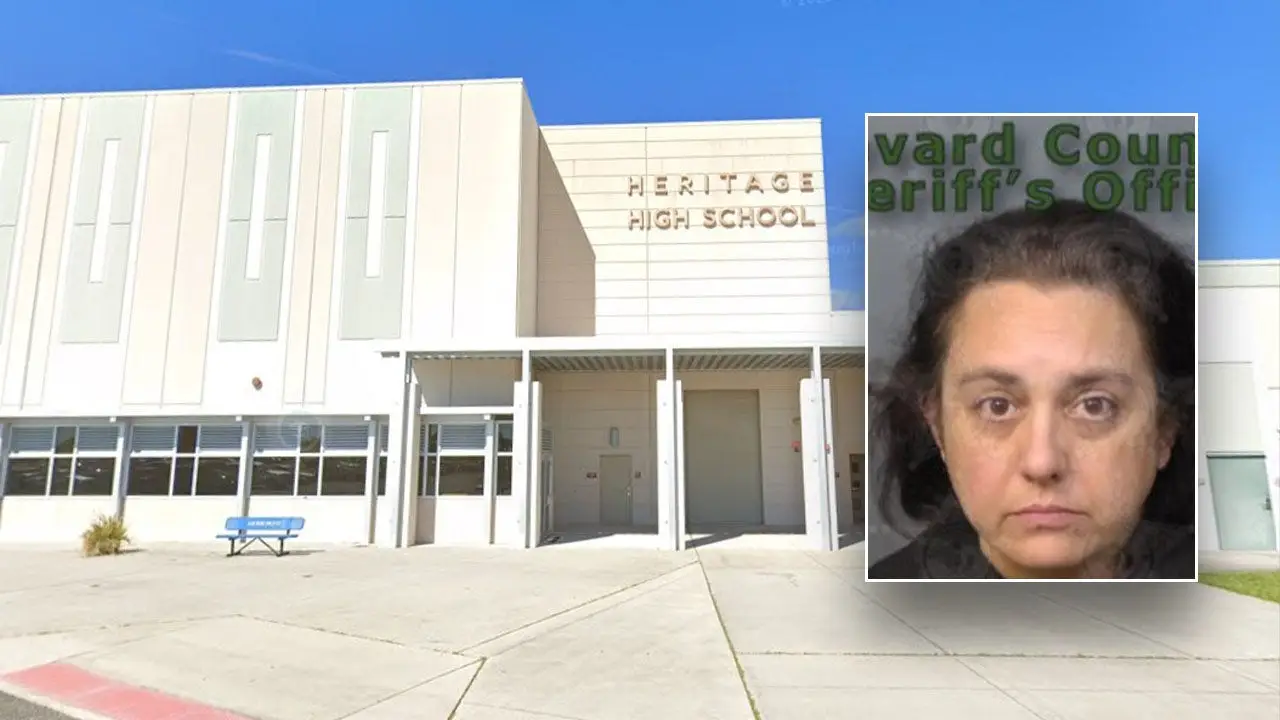
The quiet suburbs of Palm Bay, Florida, were recently shaken by a deeply unsettling event that shattered the essential trust holding a school community together. Michelle Lynn Hancock, a forty-one-year-old former special education teacher at Heritage High School, was arrested on severe charges involving illegal sexual conduct with a seventeen-year-old boy. This case, which began to unfold under the dim lights of a roadside investigation, has brought painful scrutiny to the boundaries of educator-student relationships and the vulnerability of young people. On a Wednesday evening, Palm Bay police officers responded to a report of a suspicious pickup truck parked along the side of a local road. Upon approaching the vehicle, they discovered Hancock and the teenager inside, an encounter that quickly escalated from a routine welfare check to a major criminal investigation as both individuals allegedly admitted to officers that they had been engaging in sexual activity. The immediate shock of the arrest reverberated far beyond the physical confines of that roadside encounter, striking at the heart of Brevard County’s educational system. For parents and community members, the arrest represents a terrifying violation of the sacred social contract that exists between families and the public school system, where teachers are expected to serve as guardians, mentors, and protectors of the youth placed in their care, rather than as predators exploiting their positions of authority.
The narrative of how this relationship developed reveals a deeply troubling pattern of behavior that began within the walls of Heritage High School, where Hancock had previously been employed to guide and support students with special educational needs. The young man at the center of this case had a personal connection to Hancock before their physical relationship began; his older brother had previously been a student in Hancock’s special education classroom, establishing a long-standing familiarity and a baseline of familial trust that she allegedly went on to exploit. Although the seventeen-year-old had recently withdrawn from traditional physical classes at the high school to enroll in virtual learning, he continued to return to the campus specifically to visit Hancock. According to detailed affidavits obtained by investigators, these on-campus visits escalated from friendly conversations to intimate physical contact, with the teenager admitting to authorities that they had shared physical embraces and kissed inside of Hancock’s own classroom. This dynamic highlights the insidious nature of grooming behaviors in educational settings, where perpetrators often utilize the privacy and authority of their professional workspaces to gradually break down a minor’s personal boundaries, normalizing inappropriate behaviors under the guise of mentorship and academic guidance.
As the relationship progressed, the boundaries of the digital world became the primary medium through which Hancock allegedly maintained her influence over the teenager, illustrating the complex role that modern technology plays in facilitating child exploration and grooming. After a brief period of separation, the two re-established contact through their mobile devices, a development that catalyzed a rapid escalation in their physical and digital communication. Investigators discovered that