

The Shocking Double Tragedy That Shattered a Quiet Day
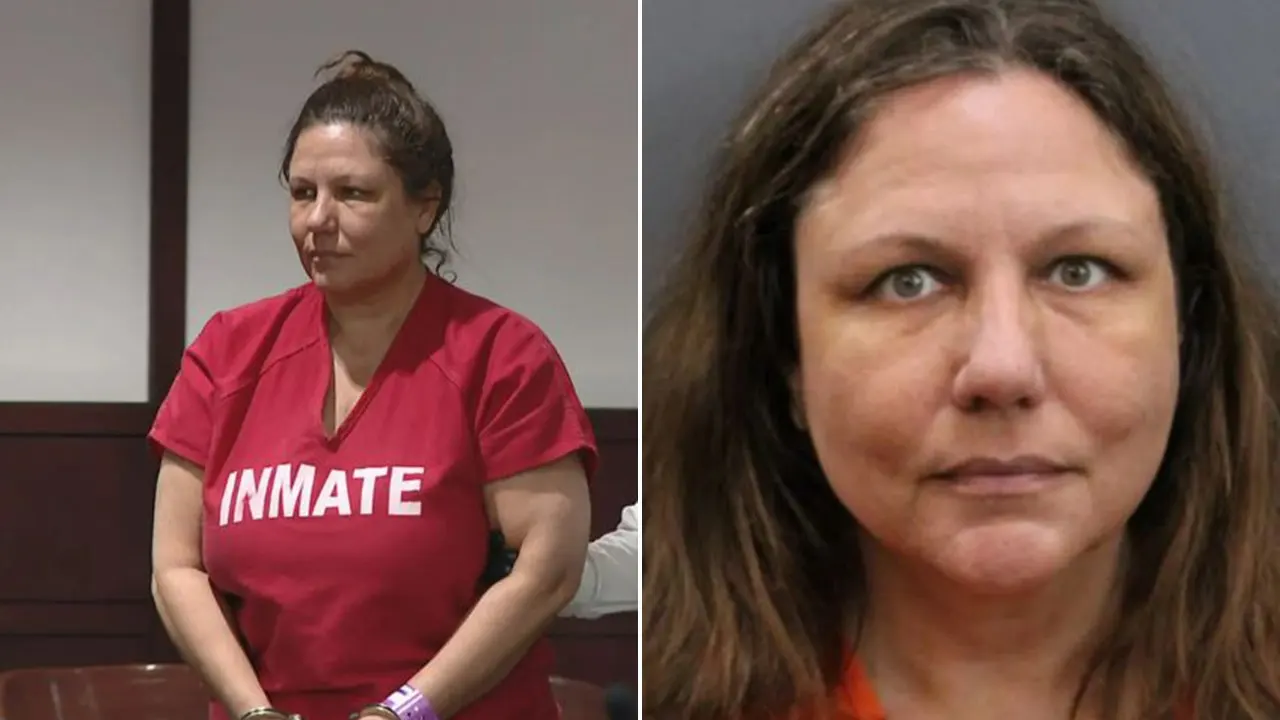
In the heart of Florida, where palm trees sway gently against a backdrop of suburban tranquility, a tale of heartbreak and vengeance unfolded on a seemingly ordinary December day. Susan Avalon, a 51-year-old woman whose life had been marked by tumultuous relationships, stood accused of orchestrating a harrowing sequence of events that would claim the lives of two men she once called her ex-husbands. David Scott, 54, and Timothy Flecher, 55, were both found with gunshot wounds, their homes in Bradenton and Tampa transformed overnight into crime scenes stained by betrayal and cold retribution. As the sun dipped below the horizon on December 17, what began as a routine welfare check spiraled into a community reeling from disbelief. We often hear about passion igniting from old flames, but in this case, it seemed to have twisted into something darker—a premeditated act where love’s embers turned to lethal ash. Avalon, with her unassuming appearance and middle-age burdens, might have seemed like any other Floridian navigating life’s regrets, but the evidence painted a picture of someone driven by unseen grudges. The question lingers: What demons from past marriages could propel a person to such calculated violence? Prosecutors, firm in their resolve, described the killings as not just murders, but executions woven into a single day of reckoning. As families mourned in the aftermath, the wider community grappled with the fragility of trust, wondering how two lives could extinguish simultaneously in a place known for its laid-back retirement havens. Avalon’s actions shattered the illusion of safety, reminding us that behind closed doors, personal histories can erupt into public nightmares.
The first chapter of this grim saga centered on Timothy Flecher, a man whose quiet existence in Tampa ended in a burst of shattered glass and silenced dreams. Police arrived at his home following a welfare check, prompted by suspicions raised after questioning Avalon about her exes. The scene was bisected by a rear door with a busted pane, a clear sign of forced entry that screamed burglary gone deadly. Flecher lay lifeless, a single gunshot wound betraying a killer who had invaded his sanctuary under the cover of daylight. Witnesses nearby recounted seeing Avalon’s vehicle loitering in the driveway, a tin can on wheels etched into the memory of those who thought nothing of it at the time. Flecher, in his fifties, was piecing together a life perhaps marred by the echoes of his previous union—a relationship that had soured into divorce, leaving scars of emotional turmoil. What had begun as youthful romance, full of promises and shared laughter, likely devolved into bitter disputes over custody, finances, and lingering resentments that many divorcees know all too well. For Flecher, that fateful afternoon might have started with routine chores or a cup of coffee, never imagining his past bride standing on the other side of the glass. Prosecutors believe Avalon targeted him first, her plan unfolding with a burglar’s stealth before moving on to the next phase of her agenda. In Flaubert’s sense of human ennui, Flecher’s end was abrupt, denying him the chance to reflect or reconcile, leaving friends and family to imagine the “what ifs” of a life cut short. The community, often bustling with retiree socials and beach outings, now faced the stark reminder that violence doesn’t discriminate—it arrives uninvited, stealing moments of normalcy from its victims.
Hours later, as afternoon waned into evening, the tragedy struck again, this time at David Scott’s doorstep in Bradenton. Still clinging to life when officers arrived, Scott gasped out his suspicions, his words a final testament amid the chaos. “Possibly my ex-wife, Susan,” he uttered, his chest pierced by a bullet that mirrored the fate of Flecher. Unlike the broken door in Tampa, Scott’s killing bore the hallmarks of a direct confrontation, a face-to-face reckoning that spoke volumes about Avalon’s state of mind. Emergency responders found him alive but fading, the gunshot wound a cruel punctuation to what might have been a day of mundane errands or weekend plans. Scott, also in his fifties, embodied the archetype of the average American—perhaps a father, a worker, a hobbyist with model cars or fishing rods gathering dust in the garage. His marriage to Avalon, now a distant memory, had likely unraveled in arguments over child support or shattered anniversaries, leaving him to rebuild amidst the ruins. The pain of unrequited love or festering anger can fester for years, manifesting in ways that defy logic, and Avalon’s choice to strike Scott second suggests a crescendo of rage, perhaps saving him for last as punishment. Neighbors might have heard nothing unusual, the suburbs’ veneer of calm masking the tempest within. In the wake of his passing, loved ones painted a portrait of a man who deserved better—a quiet soul whose life story was abruptly curtailed, forcing survivors to grapple with unfinished conversations and unrealized futures. The duality of Avalon’s spree, spanning cities and hours, highlighted the chilling efficiency of premeditation, turning personal vendettas into societal horror.
As investigators pieced together the puzzle, evidence mounted like a damning mosaic, painting Avalon’s guilt in vivid strokes. Police discovered her at home the day after the shootings, her initial confusion over “which one” transforming into a red flag that unraveled her alibi. Inside her vehicle, bleach residue hinted at a frantic cleanup, a desperate bid to erase the scent of smoke and sin. Witnesses corroborated sightings connecting her to both scenes, while digital footprints and physical traces intertwined her fate with theirs. Her boyfriend, Jeffrey Wescoat, added layers with his revelations—those “unusual” texts throughout the day, followed by a cryptic call professing love “in case anything happened to her.” Upon returning home, she reportedly vented, muttering curses against David and Tim, then showering fully clothed—a bizarre ritual that screamed of a conscience stained by blood. Humanizing this, one can imagine Avalon as a woman ensnared by jealousy or regret, her middle years a turbulent sea of “what could have been” amplified by isolation. Perhaps years of therapy avoided or relationships rekindled wrongly fueled a fire she couldn’t contain. Prosecutors emphasized the heinous nature of her acts, especially heinous for occurring during burglaries and extending to contemporaneous felonies, underscoring a brutality devoid of mercy. In the court of public opinion, we empathize fleetingly with the turmoil that drives people to extremes, yet condemn actions that snuff out lives. Avalon’s story serves as a cautionary echo, reminding us how personal demons, if left unchecked, can spill into the lives of innocents, transforming quiet streets into echo chambers of grief.
Now facing the full weight of justice, Avalon sat in custody, her court date looming in July with no bail—a symbol of a system unwilling to gamble on freedom for someone accused of such atrocities. Charged with first-degree murder in Flecher’s case and second-degree in Scott’s, she confronted the specter of capital punishment, a rare fate in Florida’s legal landscape but deemed appropriate for crimes described as “cold, calculated, and premeditated.” State Attorney Suzy Lopez voiced solidarity with the grieving, acknowledging the ripple effects on families and communities struck by this “senseless violence.” Two households now navigated the abyss of loss, their holidays forever shadowed, while others reflected on the randomness of evil. In a nation grappling with rising gun violence, Avalon’s case illuminated vulnerabilities in domestic aftermaths, urging dialogues on mental health support post-divorce. We, as observers, find solace in hearing victims’ stories, humanizing Scott and Flecher as more than statistics—fathers with stories untold, dreams deferred. Yet, justice’s pursuit restores some order, holding accountable those who cross into irredeemable territory. Avalon’s pathway, from ex-wife to accused killer, challenges our faith in redemption, pondering if her actions stemmed from a singular lapse or a pattern long brewing. Ultimately, this tragedy underscores the human capacity for destruction, urging vigilance in relationships and empathy in healing.
Broader societal ripples from Avalon’s alleged spree continue to resonate, prompting reflections on love’s darker facets and the fragility of post-marital peace. In Florida’s sprawling suburbs, where divorces are as common as hurricanes, her actions served as a stark warning about unresolved anger morphing into lethal intent. Victims like Scott and Flecher, ordinary men with forgivable flaws, became footnotes in a narrative of vengeance, their legacies preserved through family tributes and community vigils. Friends shared anecdotes of their warmth—Scott’s jokes at barbecues, Flecher’s quiet kindness to neighbors—contrasting sharply with the violence that claimed them. Avalon, too, warrants a nuanced lens; beneath the prosecutor’s labels lay a backstory of failed unions, perhaps colored by abuse, financial woes, or unmet needs that pushed her toward the brink. While accountability remains paramount, humane discussions on preventive measures—like counseling for volatile breakups—emerge as beacons. The death penalty debate intensifies here, with advocates citing deterrence and critics lamenting its irreversibility in cases shrouded by motive. As the legal saga unfolds, public discourse humanizes the proceedings, weaving in elements of compassion for survivors. In end, Avalon’s story, though horrific, teaches us about passion’s peril, encouraging stronger support systems to avert such calamities. May justice prevail, and may Scott and Flecher’s memories inspire healing in a world yearning for peace.