



Venice Biennale Shuns Awards for Artists from Nations Under War Crimes Scrutiny
In a bold move that intertwines art with global politics, the Venice Biennale’s jury has declared that artists from countries whose leaders are currently facing charges of crimes against humanity from the International Criminal Court will be ineligible for the prestigious Golden Lion and Silver Lion awards. Announced amid growing international tensions, this decision marks a significant shift for the iconic art fair, set to open on May 9. The statement, released on Thursday, pointedly avoids naming nations but is widely interpreted as targeting Israel and Russia—two countries embroiled in protracted conflicts that have drawn sharp condemnation worldwide.
While the affected artists can still exhibit their works in the Biennale’s sprawling pavilions along the canals of Venice, they won’t compete for the accolades that have crowned visionaries like Yayoi Kusama and Anselm Kiefer in past years. This caveat underscores the jury’s nuanced stance: participation remains open, fostering dialogue through art, yet the highest honors will bypass those from regimes under the ICC’s gaze. The five-member jury, in their carefully worded declaration, acknowledged the “complex relationship between artistic practice and nation-state representation” that forms the backbone of the Biennale’s structure. They emphasized their duty to uphold the event’s historical legacy as a conduit between creative expression and contemporary crises, particularly in the wake of curator Koyo Kouoh’s untimely death in October. Kouoh, known for her commitment to socially conscious curation, championed themes of human rights and urgency, a spirit the jury vows to honor. This decision isn’t merely administrative; it’s a deliberate ethical pivot, compelling the art world to confront the shadows cast by geopolitical strife on the canvas of creativity.
The International Criminal Court, headquartered in The Hague, stands as a pivotal force in this narrative, pursuing justice for atrocities that shock the conscience of humanity. In 2023, it issued arrest warrants for Russian President Vladimir Putin over alleged war crimes in Ukraine, from the bombing of civilians to the deportation of children—acts that the court deems part of a campaign to dismantle national identity. A year later, similar warrants followed for Israeli Prime Minister Benjamin Netanyahu and Defense Minister Yoav Gallant, accusing them of orchestrating genocide in Gaza through the blockade of essentials like food and electricity, alongside targeted killings. The Biennale jury, while tactfully silent on specifics, weaves its ruling into this fabric of accountability. By linking the event’s awards to ICC indictments, the jury signals a refusal to reward art from nations where leadership stands accused of such gravities. It’s a stance that reverberates beyond Venice, questioning how cultural institutions can responsibly engage with the art of disputed territories. Yet, the jury’s approach isn’t punitive toward artists themselves; it targets the systemic representation, allowing individual creators to share their voices without the allure of victory.
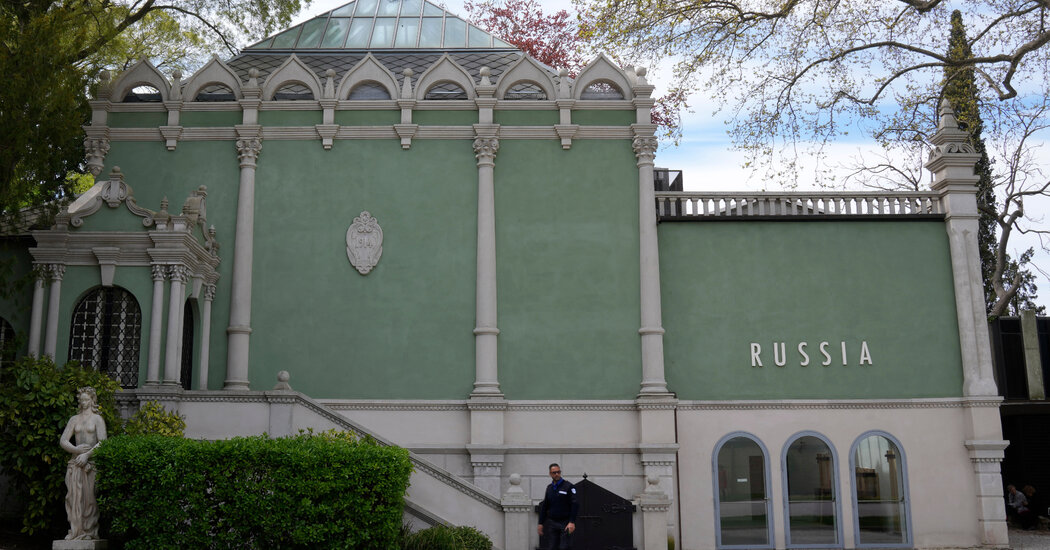
Delving into the Biennale’s recent history reveals a tapestry of withdrawals and returns that mirrors broader diplomatic ebbs. Russia, absent since 2022 when its artists pulled out amid the invasion of Ukraine, is gearing up for a comeback this year. Their pavilion, previously lent to Bolivia, will now house “The Tree Is Rooted in the Sky,” an exhibit spotlighting 38 artists and musicians blending tradition with modernity. Mikhail Shvydkoy, Putin’s envoy for cultural ties, framed this return as a defiant affirmation of Russian heritage against attempts at isolation. Meanwhile, Israel’s trajectory has been fraught: their pavilion shuttered in 2024 by artist Ruth Patir, who demanded a Gaza ceasefire before unveiling her work. This year’s representative, Belu-Simion Fainaru, faces the new jury rule with indignation, decrying it as discriminatory and arguing it grieves over selective outrage while other violations persist unchecked. His piece, “Rose of Nothingness”—a reflective pool of darkened water—serves as a poignant mirror to these tensions. The curator, Kouoh, had selected 110 artists globally to represent their homelands, a move that amplifies the Biennale’s role as a melting pot of voices. As Russia prepares to showcase resilience and Israel navigates boycott pressures, the fair embodies both unity and division, where art becomes a battleground for ethics.
Critics have amplified the clash, with Italy’s culture minister Alessandro Giuli rebuking the inclusion of Russia in no uncertain terms. “I won’t attend,” he stated firmly on Friday, calling it an affront to values amid Moscow’s bombardment of Ukrainian sites of cultural significance. On a European scale, EU foreign policy chief Kaja Kallas echoed this sentiment, pledging to withdraw $2 million in funding over three years. “As Russia obliterates museums and erases identities,” she told reporters, “granting them display space feels morally bankrupt.” Activists, drawing parallels to the 1960s expulsion of South Africa during apartheid, have urged bans on Israeli participation, citing the Gaza conflict’s human toll. Ukraine, in contrast, mounts a subdued yet resilient exhibit titled “Security Guarantees,” featuring a deer sculpture relocated from a war-torn park—a silent testament to preservation amid destruction. These voices amplify the Biennale’s paradox: a celebration of creativity that, this year, risks alienating viewers through its exclusions. The jury’s resolve to withhold awards aims to align art with conscience, but it invites friction, forcing attendees to discern where idealism ends and geopolitics begins.
In the heart of Venice, where gondolas glide past historic bridges, the 2025 Biennale promises drama beyond the canvas. The jury’s policy, exclusionary yet inclusive in participation, might catalyze deeper reflections on art’s societal role. Fainaru’s rejection of the ruling as arbitrary prompts questions about fairness—why spotlight certain indictments while others languish? Shvydkoy’s triumphant rhetoric highlights Russia’s unyielding cultural sway, even as boycotts persist. As the festival inaugurates, one wonders if this stand will inspire global repercussions or fade into the lagoon’s mists. Art, after all, thrives on controversy, and Venice has long been its stage. With the curator’s legacy guiding the way, the event could emerge as a fulcrum for dialogue, bridging divides or deepening them. Either way, the Biennale’s decision etches a new chapter in the interplay between creation and conscience, reminding us that in the world of premier art fairs, awards aren’t just trophies—they’re statements. This year’s edition, with its bold wager on ethics, may redefine how we view the intersection of aesthetics and accountability, long after the crowds depart the Giardini. The trial begins with the announcement, but the verdict lies in the eyes of history.
Reflections on Art, Justice, and the Blue Horizon
As Venice awakens to the buzz of an art season fraught with implications, the Biennale’s ruling hints at broader transformations in how international festivals navigate moral quandaries. The exclusion of awards for artists from ICC-targeted nations isn’t isolationism; it’s a calibrated response to ensure the Biennale remains a beacon, not a bystander, in our fractured world. Kouoh’s vision, infused with calls for solidarity, finds resonance in this approach, urging participants to engage with the “urgencies of the time.” Yet, the path ahead is riddled with questions: Will this foster introspection among creators, or will it stifle voices in the name of principle? Observers note parallels to past censures—from bans on apartheid-era entries to debates over cultural boycotts—revealing a pattern where art becomes political currency. For Russia, the thaw of isolation signals resilience, as Shvydkoy asserts. For Israel, Fainaru’s defiant critique frames it as prejudice, amplifying debates on equitable scrutiny. Critics like Kallas and Giuli propel the narrative forward, wielding funding as leverage, while activists push for more radical exclusions. Amid these currents, Ukraine’s poignant display stands as a reminder of art’s power to endure and indict. The Biennale, ever the grand tapestry, now interweaves threads of protest and participation, challenging attendees to ponder: Can an award truly taint creativity, or does it merely heighten its demand for truth? As the festival unfolds under the iconic dome of the Arsenale, its legacy may hinge on whether it inspires empathy or enmity, proving that in Venice, the art of diplomacy isn’t just painted—it’s lived. With over a century of history behind it, the Biennale evolves not in isolation, but in response to the roaring tides of justice and expression.