



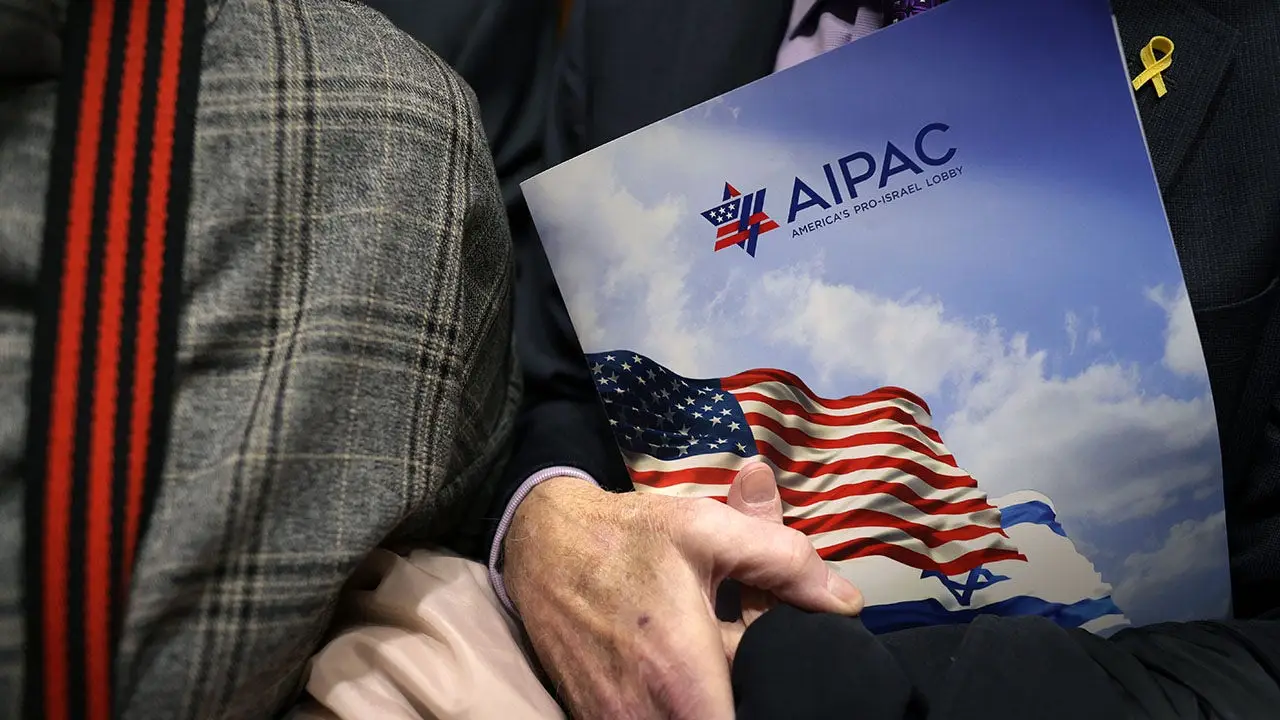
The quiet warmth of the holiday season in Florida was shattered by a shocking federal indictment, exposing a chilling plot that highlights the deeply disturbing intersection of political radicalization, personal alienation, and targeted violence. Forrest Kendall Pemberton, a twenty-seven-year-old resident of Gainesville, Florida, now stands at the center of a profound legal and humanitarian crisis after being indicted by the United States Department of Justice for an allegedly meticulous plot to execute a mass shooting. His intended target was not an abstract political entity, but the living, breathing human beings employed at a South Florida office of the American Israel Public Affairs Committee (AIPAC) in the city of Plantation. According to federal prosecutors, Pemberton’s alleged violent intent culminated on December 23, 2024, when he attempted to infiltrate the organization’s workspace while heavily armed with an AR-15-style rifle, equipped with a professional silencer designed to mask the sounds of murder. The legal ramifications he now faces are staggeringly severe, reflecting the horrific potential outcome of his plan: he is charged with an attempted hate crime targeting Jewish employees, using and carrying a firearm during a crime of violence, and the illegal possession of an unregistered short-barreled rifle. If convicted on all counts, this young man faces the grim prospect of spending the remainder of his life in federal prison, including a mandatory consecutive sentence of up to thirty years on the firearms charge alone. Beyond the cold lexicon of legal filings, the indictment reveals how a quiet suburban life can secretly mutate into an engine of hate, bringing a global conflict straight to the doorstep of unsuspecting professionals whose daily lives are spent advocating for their community’s political interests.
What makes Pemberton’s alleged plot particularly terrifying is the deliberate, calculated nature of his preparation, which stood in stark contrast to the impulsive outbursts often associated with acts of public violence. He did not simply choose a target at random; instead, federal investigators reveal that he devised a deceptive strategy to volunteer for the pro-Israel lobbying group as a cover to gain access to their secure offices and maximize casualties. On December 22, 2024, Pemberton packed his vehicle with a devastating arsenal, including two high-powered rifles, a handgun, and ammunition, before embarking on the long drive south toward Plantation. When he arrived at the suburban office building the following day, he was fully prepared to unleash an armed assault that would have devastated countless families. However, in a profound turn of events that prevented a horrific tragedy, the building was completely empty when he arrived. The Palm Beach Post later reported that because of this unexpected vacancy, Pemberton’s deadly intentions were thwarted by the simple, mundane reality of an empty office during the holidays. This narrow escape highlights the agonizingly thin margin between a routine winter afternoon and a historic, nationwide tragedy, leaving the employees of the nonprofit to reckon with the terrifying knowledge that their lives were spared only by a fortunate twist of scheduling and timing, even as a weaponized predator stood just outside their locked doors.
Behind the headlines of thwarted terrorism lies the intimate portrait of a family thrown into sudden, unbearable chaos. The machinery of law enforcement was first set in motion not by a high-tech surveillance grid, but by a frantic, heartbroken phone call from Pemberton’s father to the Gainesville Police Department. Terrified by his son’s sudden disappearance, the father explained that the young man had vanished, leaving behind a deeply troubling farewell letter that exposed his deteriorating psychological state and growing disconnect from society. In this note, Pemberton apologized to his family for his actions while detailing a profound, existential despair, complaining of his “adversity to authority” and what he perceived as the terminal “flaws of modern day.” His words painted a bleak picture of an individual consumed by a toxic mixture of political disillusionment and personal hopelessness, writing, “Living in a flawed system haunts me in ways I cannot describe. I am breaking the loop.” This raw, emotional confession reveals how a young man’s internal struggles with societal pressures and political anxieties can become dangerously externalized. Instead of seeking help or navigating his frustrations through constructive discourse, Pemberton reached a state of isolation where mass violence became his chosen method of escape, leaving his family to grapple with the agonizing realization that the boy they raised had been quietly planning to commit an act of unspeakable horror against innocent strangers.
As federal and local authorities mobilized to track Pemberton’s movements, they deployed cellphone geolocation technology to map his frantic path across the state. In a bizarre sequence of events, his pickup truck was eventually found abandoned on the side of a highway, while Pemberton himself was intercepted by law enforcement on Christmas Day in Tallahassee, operating a rideshare vehicle. When questioned by officers during this initial traffic stop, Pemberton claimed he was merely traveling to Alabama to deliver one of his firearms to an acquaintance. Shockingly, because the full scope of his plotting at the AIPAC office had not yet been fully pieced together by investigators, no arrest was made during this encounter. Instead, his desperate father was contacted, traveling all the way to Tallahassee to retrieve his son and bring him safely back home to Gainesville. This moment captures a deeply tragic, human irony: a father rushing to the aid of his son, harboring a desperate hope to salvage the young man’s life, while completely unaware of the terrifying mission that had failed just days prior. It illustrates the agonizing reality faced by families of troubled individuals, caught in a desperate race against time to intervene before a loved one crosses a threshold from which there is no return.
The temporary safety of his return home was short-lived, as the heavy hand of justice quickly caught up with Pemberton. On December 26, 2024, realizing the net was tightening around him, Pemberton agreed to undergo a voluntary interview with law enforcement investigators who were working rapidly to piece together his coordinates and motivations. When pressed by detectives about whether his heavily armed trip to South Florida had been a mission of violence, Pemberton delivered a chillingly candid response that exposed the sheer depth of his indifference toward both his own survival and the lives of others. “Um, I really don’t know if I was gonna end it with my life or not,” he admitted, detailing his dark mental state. “I hadn’t gotten that far yet. It entirely depended if I ended up getting caught. If caught, that was the way out.” This chilling statement revealed that he had fully integrated a suicidal ideation into his mass-murder plot, viewing a deadly confrontation with law enforcement or a self-inflicted wound as an acceptable escape route. Armed with this damning admission and the growing pile of physical evidence, authorities arrested Pemberton the very next day, on December 27, permanently removing him from the public sphere before he could attempt another assault.
The arrest of Forrest Kendall Pemberton leaves behind a sobered community and a nation forced to confront the ongoing, volatile realities of targeted ideological violence. AIPAC, the targeted organization, continues to operate in an environment fraught with intense scrutiny, where geopolitical tensions over Middle Eastern conflicts often boil over into domestic threats. The case serves as an urgent reminder of the rise in hate crimes targeting Jewish institutions and employees, highlighting the vulnerability of everyday workers who become proxies for global struggles. For the families of the prospective victims, the relief of a missed catastrophe is tempered by the chilling knowledge of how easily their lives could have been cut short. For Pemberton’s family, they must now navigate the agonizing process of watching their son face a potential lifetime behind bars, grieving the loss of his future while carrying the heavy burden of what almost occurred. Ultimately, this narrow avoidance of tragedy underscores the critical importance of mental health support, early intervention by loved ones, and vigilant law enforcement. It raises an urgent warning about how quickly isolated individuals can succumb to dark online spaces and radical philosophies, turning their personal pain into a destructive weapon aimed at the heart of our shared humanity.