






In the suffocating, sweltering heat of a late Florida July, a quiet neighborhood in Stuart became the epicenter of one of the most heartbreaking and overwhelming animal rescue operations the region had ever witnessed. When Martin County Sheriff John Budensiek and his team approached the modest home of Gail Giustino, a seventy-seven-year-old local mail carrier, they anticipated a challenging but relatively standard animal control intervention, expecting to find perhaps fifteen or twenty neglected cats. Instead, they were met with a wall of intense, toxic air that practically paralyzed them the moment they cracked open the front door. Inside, the residence had become a windowless, unventilated furnace, with temperatures soaring to a lethal one hundred and ten degrees Fahrenheit. The atmosphere was thick with a choking haze of ammonia, animal urine, and decaying biological waste, presenting an immediate health hazard so severe that first responders had to don full-body white hazmat suits and respirators just to cross the threshold. Navigating the home was almost impossible due to mountains of hoarded debris and a literal foot of compacted animal feces covering the floors, creating a grim, mazelike prison for dozens of helpless creatures. It quickly became clear that this was not merely a localized nuisance but what Sheriff Budensiek would later describe as the single worst animal hoarding case he had ever seen in his entire career, revealing a deep, hidden tragedy of neglect that had been festering in the dark for years while neighbors remained largely unaware of the silent suffering occurring just yards away from their own pristine lawns.
The depth of the cruelty and neglect uncovered inside the home was nothing short of horrific, leaving seasoned rescue workers and animal welfare advocates deeply traumatized by the sheer scale of the suffering. Among the more than one hundred animals recovered from the toxic residence, many of the cats had been confined to filthy cages for so long that their bodies had literally become fused to the environment; their limbs were trapped in animal feces that had dried and hardened to the density of solid concrete over months of confinement. Staff members from the Humane Society of the Treasure Coast had to painstakingly break and smash these heavy bricks of hardened waste away from the delicate legs of the terrified felines just to free them from their cages, a delicate and heart-wrenching process that underscored the profound level of physical neglect these animals had endured. The air inside the house was so thick with ammonia that it burned the eyes and lungs of the rescuers, while the animals themselves were found huddled in the pitch black, having never been walked, groomed, or allowed to experience natural sunlight or fresh air. In total, rescue teams retrieved over one hundred cats and a dozen small, fragile dogs—mostly Yorkshire terriers—who had lived their entire lives in what Sheriff Budensiek aptly described as an “animal jail.” Many of these creatures had completely shut down emotionally, exhibiting catatonic behaviors, refusing to lift their heads, or showing any signs of life beyond the shallow rising and falling of their chest walls, while others bore the physical scars of their imprisonment in the form of severe hair loss, painful skin infections, advanced dental disease, and extreme emaciation.
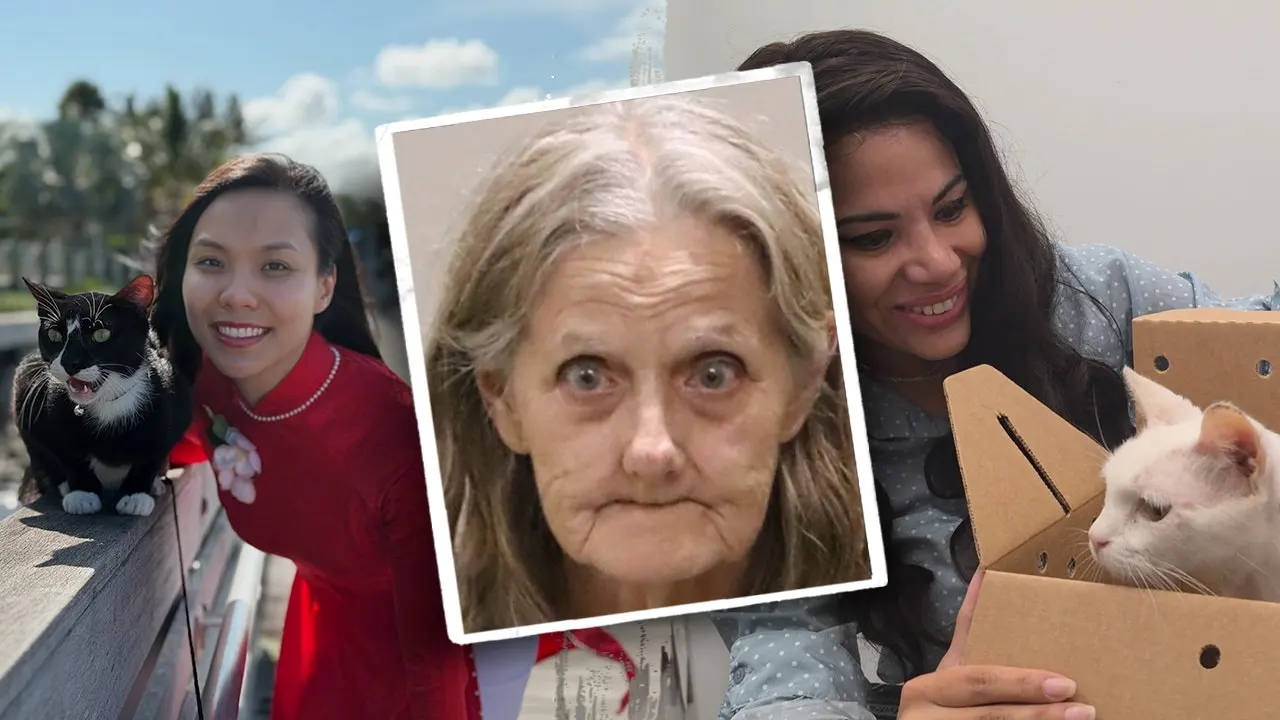
The woman behind this tragic assembly of suffering, Gail Giustino, had been a seemingly ordinary fixture in the community, working diligently as a carrier for the United States Postal Service since 1997. Over her decades-long mail route, she had developed a habit of rescuing stray cats and lost animals she encountered along her daily path, driven by a deeply misguided and pathological desire to save them that ultimately devolved into a nightmare of hoarding. Despite her ostensibly good intentions, local animal control had been tracking her activities for years, issuing as many as sixty-five civil citations since 2014, and code enforcement officers had even gone so far as to help her install air conditioning units in her home in an attempt to improve the environment—units that investigators later discovered were completely non-functional. Following her arrest on July 20, Giustino was charged with misdemeanor counts of animal cruelty and confinement of animals without sufficient exercise, and she was subsequently released on a fifty-thousand-dollar bond. Sheriff Budensiek emphasized that the primary goal of the arrest was not punitive but rather a necessary legal intervention to seize the animals before they succumbed to the stifling heat, while also serving as a mechanism to mandate essential mental health treatment for Giustino herself. The community struggled to reconcile the image of the elderly, hard-working mail carrier with the grim reality of the biological hazard zone she had created, highlighting the complex, tragic nature of animal hoarding as a profound psychological struggle rather than a simple act of malice, wherein the hoarder genuinely believes they are rescuing animals while remaining entirely blind to the agonizing reality of the torture they are inflicting.
As the rescued animals began to flood the facilities of the Humane Society of the Treasure Coast, the physical and emotional toll of the crisis shifted squarely onto the shoulders of the shelter staff and volunteers, who worked tirelessly around the clock to triage, clean, and comfort the traumatized influx of new arrivals. Sarah Fisher, a spokeswoman for the shelter, described the initial days as an emotional roller coaster, with staff members weeping openly at the broken states of the animals, many of whom were so profoundly traumatized that they refused to interact with humans or even acknowledge their new, clean surroundings. However, as the days progressed, a beautiful transformation began to unfold within the shelter walls as the animals slowly realized they were finally safe, dry, and loved. The tiny dogs, despite suffering from painful flea infestations, severe hair loss, and rotten teeth, were the first to show signs of resilience, wagging their tails and seeking affection from their caretakers with a joyous, forgiving spirit that brought tears of hope to the exhausted shelter staff. Soon, even the most catatonic cats began to lift their heads, testing their long-unused vocal cords with soft, tentative meows and rubbing their faces against the hands of the volunteers who offered them gentle strokes and nutritious food. This dramatic healing process was bolstered by an overwhelming wave of support from the local community, which rallied behind the shelter by flooding them with inquiries about adoption, donating thousands of dollars in medical supplies, and sending warm pizzas, fresh pastries, and treats to keep the spirits of the weary staff high during their darkest hours.
While the shelter focused on the physical rehabilitation of the animals, they also faced the monumental and deeply emotional task of identifying which of the rescued pets might actually belong to heartbroken local families who had lost their companions months or even years prior. On the Friday morning following the raid, a massive crowd of anxious, hopeful pet owners gathered outside the shelter doors, queuing up in the blistering Florida sun long before the facility opened its doors at ten o’clock. The atmosphere was thick with tension, hope, and vulnerability as more than fifty families waited patiently for their turn to walk through the holding areas, praying that they might spot a familiar face among the sea of rescued cats and dogs. For many, the day ended in devastating disappointment, as grown men, women, and young children walked out of the building in tears when they realized their beloved missing pets were not among those recovered from Giustino’s home. The emotional weight of these failed reunions was heavy for the shelter staff, who had desperately hoped to deliver happy endings to everyone, but the necessity of meticulously cataloging and holding the animals was paramount to ensure that no rightfully owned pet was accidentally put up for adoption to a stranger. Yet, despite the widespread grief, the shelter’s meticulous efforts paid off as several families experienced the profound, unexpected joy of being reunited with their long-lost companions, turning the shelter into a theater of tearful embraces and miraculous homecomings that validated every single hour of grueling rescue work.
Among these extraordinary stories of hope and restoration was the deeply moving reunion of Linh Nguyen and her six-year-old cat, Patchy, a beloved companion who had mysteriously vanished from her yard seven long months prior. Nguyen had spent nearly a year in a state of constant grief, plastering the neighborhood with flyers offering a staggering five-thousand-dollar reward, riding her bicycle through the streets late into the night calling his name until her voice was hoarse, and turning to her faith to plead for his safe return. When she saw the breaking news reports about the massive animal hoarding bust in Stuart, an overwhelming intuition guided her to the Humane Society, where her persistent prayers were answered in the most cinematic way imaginable. The moment she stepped into the cat room, she was greeted by a series of increasingly loud, frantic meows, and though she could not immediately see him through the cages, she instantly recognized the unique, familiar voice of her long-lost friend. Their reunion was a tearful, joyous validation of love and persistence, and today, Patchy is once again thriving in the comfort of his true home, enjoying peaceful walks on a leash and sleeping soundly in a safe environment free from the horrors of the hoarding house. For Nguyen and the countless others touched by this massive rescue effort, the survival of these animals and their journey back into the light represents a pure, undeniable miracle—a testament to the resilience of the animal spirit, the dedication of a compassionate community, and the healing power of love in the wake of unimaginable darkness.