





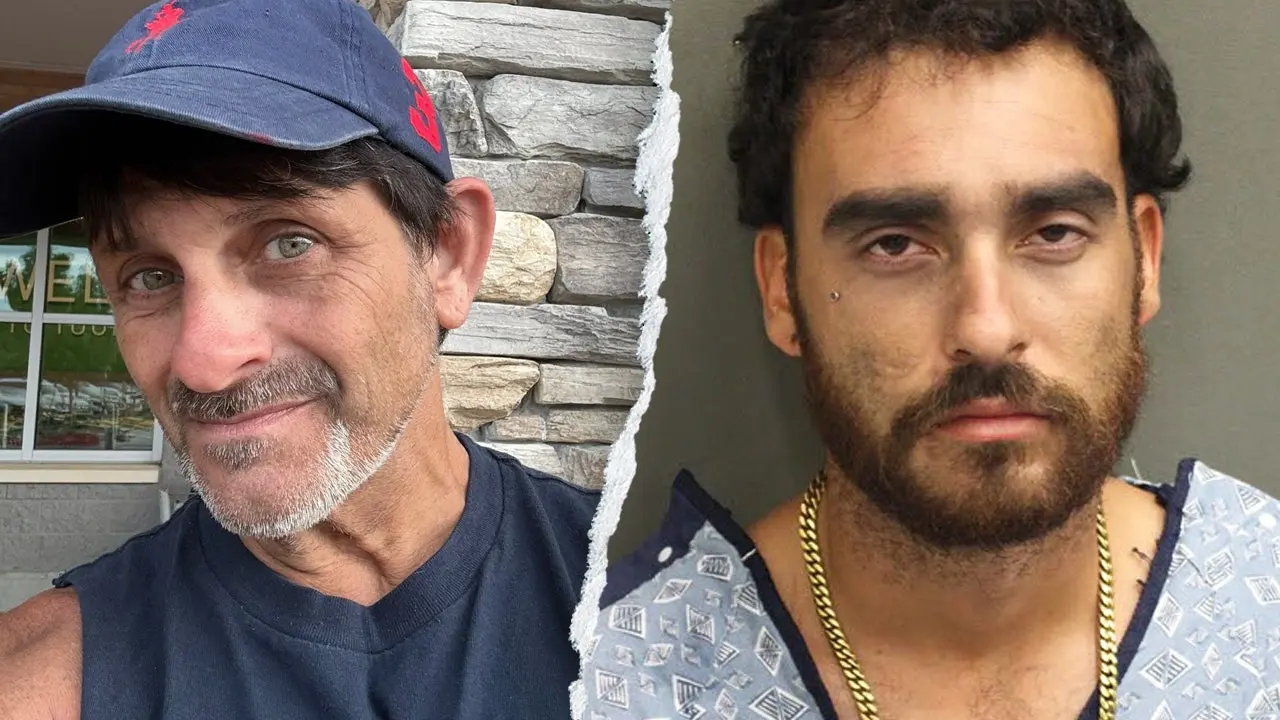
The morning sun cast a soft, golden light over the quiet streets of Apopka, Florida, a suburban community nestled just outside Orlando, known for its sleepy neighborhoods and friendly, familiar faces. For one family, that morning was meant to be a milestone of pure joy, as a proud father prepared his ten-year-old daughter for her very first day of elementary school. That father, Daryl Hill, a man of fifty-six years, was likely a bundle of nerves and paternal affection, adjusting her backpack, reassuring her that everything would be alright, and perhaps snapping a few last-minute photographs to immortalize the moment. After seeing her safely into the care of her teachers, he could have easily gone about his daily routine, content on a day of new beginnings. But fate had written a vastly different story. Just a short drive away, at the intersection of Plymouth Sorrento Road and West Ponkan Road—a path just down the street from the school—a mundane commute was about to erupt into horrific violence. What Daryl witnessed was a scene of domestic chaos that would trigger his deeply ingrained instinct to protect. He was not a police officer, nor a trained security guard; he was a simple civilian, a Good Samaritan. Yet, when he saw a man and a woman fighting violently inside a moving vehicle, he could not simply look away. He had just delivered his child into the world of education, a symbol of hope and future, only to stumble into a moment of raw, senseless rage that would cost him his life, transforming a day of celebration into one of unthinkable tragedy.
According to the Orange County Sheriff’s Office, the sequence of events that sealed Daryl Hill’s fate began when witnesses observed a white Chevy Silverado pickup truck careening erratically down the road, with a man and a woman visibly struggling and fighting inside the cab. The altercation escalated to the point that the driver lost control, and the heavy truck slammed violently into a parked black Lexus, sending a thunderous crash echoing through the quiet morning. The impact did nothing to quell the argument. Instead, both occupants—the man, later identified as 26-year-old Raul Lionel Vazquez, and the woman, Kaidy Honaker—spilled out onto the sidewalk, continuing their heated, physical altercation in plain sight of passing motorists. It was in this chaotic moment that Daryl, who happened to be riding his bicycle nearby, came upon the scene. Perhaps he saw a woman being overpowered, or perhaps he simply believed he could reason with a couple and de-escalate the situation. He approached and attempted to intervene. What followed was a violent blur. Vazquez, who was described as shirtless and wearing no shoes, shifted his aggression from Honaker to Hill, and the two men began to tussle, tackling each other into the nearby bushes in a desperate struggle for dominance. Honaker joined the fray, later claiming through investigators that she attempted to pull Hill off of Vazquez. For a brief moment, it seemed like the scuffle might end with scrapes and bruises. However, Vazquez managed to break free from the tangle. Instead of walking away, he made a chilling decision; he retreated to his pickup truck and retrieved a shotgun. Hill, sensing the sudden shift to mortal danger, turned and fled, his hands raised in the air, screaming for help. His plea was met with a single, devastating shotgun blast that struck him in the back, causing him to collapse onto the pavement just mere minutes away from the elementary school where his daughter was inside a classroom, unaware that her father was fighting for his life.
To fully grasp the magnitude of this loss, one must understand who Daryl Hill was as a person. By every account from his grieving family, he was the very embodiment of selfless devotion and boundless compassion. His son, Damon Hill, speaking through his grief to Fox 35 Orlando, poignantly described him: “He’s got the biggest heart in the entire world. He loved everybody… He just loved his fellow person, and he was very non-judgmental.” These are not empty eulogy platitudes, but a testament to a life lived with open arms and a willingness to see the good in others, even when it wasn’t deserved. His wife, Suzanne Hill, echoed those sentiments in an interview with Spectrum News 13, articulating the tragic irony of his heroism: “He cared for everybody and helped everybody and always stepped in, which I think is ultimately what took his life.” Suzanne perfectly captured the pain of witnessing her husband’s defining trait become his fatal flaw. Daryl was a husband, a father to two adult children, and a new father to a 10-year-old girl. The image of him dropping that little girl off for her first day of school is heartbreakingly poignant. He was there for that milestone, a portrait of a doting parent, celebrating her gaining of independence. Yet, within a short span of time, he was gone. His daughter will forever associate that date not with making new friends or learning the alphabet, but with the day her entire world upended. At 56, Daryl was not a young man with reckless bravado; he was likely someone who had witnessed enough of life to know the value of community and the imperative of standing up for those who cannot defend themselves. He saw a woman in distress and his moral compass dictated that he could not simply ride by. In a world that often encourages apathy and turning a blind eye, Daryl chose to act, and that choice made him a real-life hero, albeit one whose story ended with devastating tragedy.
While the community mourned a hero, the legal system immediately turned its sights on the accused, Raul Lionel Vazquez, a man whose past now serves as a glaring indicator of a pattern of violence. Vazquez, just 26 years old, was swiftly taken into custody and charged with Second-Degree Murder. The charge is fitting given the circumstances: Vazquez deliberately retrieved a firearm from his vehicle, pursued an unarmed man who was actively fleeing, and shot him in the back. This was not an impulsive act in the heat of a brawl; it was a calculated execution carried out with malice. What makes the case particularly infuriating to the public is the revelation that Vazquez was out on bond at the time of this incident. He was previously arrested and charged with Aggravated Assault with a Deadly Weapon, a serious felony indicating a propensity for violence. The fact that he was free to roam the streets, free to engage in another violent altercation, and free to take a life has reignited a furious national debate about the flaws in the bail system and the recurrent failure to keep dangerous individuals behind bars. The judge in this case acted quickly to revoke his bond, ordering him held without bail, but that justice is essentially procedural and fails to bring Daryl Hill back. The details surrounding his prior charge paint a clear picture of a dangerous man who had already crossed the line into deadly force. The woman involved, Kaidy Honaker, was not charged in the shooting, though her role in the initial physical confrontation added confusion to the witness accounts. However, the responsibility for the murder lies squarely with Vazquez. The arrest affidavit notes that he provided “many different accounts” of the events, but he ultimately admitted that Hill was “getting the better of him” in their fight. That admission suggests a fragile ego, a man who lost a physical confrontation and resorted to a firearm to reclaim dominance. His cowardice, shooting an unarmed man as he fled, stands in stark contrast to the selfless bravery of his victim.
The aftermath of this tragedy has left the town of Apopka in a state of collective shock, reeling from violence that felt impossibly foreign to their peaceful streets. Deputies from the Orange County Sheriff’s Office have launched a comprehensive investigation, meticulously gathering witness statements, reviewing surveillance footage from nearby homes and businesses, and piecing together the chaotic sequence of events that led to the murder. Residents near the intersection recounted the jarring sound of the crash and the subsequent gunshot, initially mistaking the blast for a car backfiring until the sirens and police tape revealed the horrifying truth. The elementary school down the road, a sanctuary of learning, was placed on increased security, and grief counselors were likely brought in to speak with parents and children alike, as the news of the shooting spread like wildfire. But for the Hill family, the pain is profoundly personal and insurmountable. Suzanne Hill now faces the impossible challenge of explaining to her 10-year-old daughter why her father—who had just celebrated her first day of school with a hug—will never walk through their front door again. Instead of hearing stories about recess and new friends, the child will hear about a hero who died saving a stranger. The adult children, including Damon, are now navigating a grief that is compounded by the senselessness of the act. In the days following, a makeshift memorial likely began to grow at the site, adorned with flowers, flickering candles, and handwritten notes from neighbors who knew Daryl as a kind soul, or from complete strangers who were profoundly moved by his sacrifice. As the family prepares to lay him to rest, they are joined by a community that has rallied together, organizing fundraisers and offering meals, all while grappling with the fragility of life. The shooting serves as a grim reminder that violence can strike anywhere, even in a quiet neighborhood on a bright Tuesday morning, forever altering the lives of those who remain.
In the end, Daryl Hill’s story is a powerful, tragic testament to the enduring power of human compassion. He saw a wrong and attempted to right it; he saw suffering and attempted to alleviate it. In doing so, he gallantly joined a long legacy of Good Samaritans who have willingly risked their safety for the sake of others. Yet, his sacrifice also illuminates the dark underbelly of a world where a man with a prior violent charge can still access a deadly weapon, where domestic disputes can escalate to fatal shootings, and where a routine bike ride can turn into a death march. His death will almost certainly be cited in ongoing debates about gun control and criminal justice reform—a stark example of the consequences of lax laws and missed warning signs. But beyond the policy debates, this is a human story of immeasurable loss. A father is gone. A wife is a widow. Children are orphaned of his presence. The community that should have been celebrating a young girl’s academic future is instead mourning a life that was extinguished in a flash of gunfire. We often lavish praise on heroes, yet we rarely consider the price they pay, and Daryl paid the ultimate price. As his young daughter grows up without him, she will be told endless stories of his bravery, and she will learn that her father was a man who chose to stand up when the world is so often content to sit down. His memory challenges all of us to be braver, kinder, and more willing to step into the fray, but it also challenges society to answer a crucial question: why do we so often fail to protect those who protect us? Daryl Hill died because he cared too much. The least the world can do is learn from his death, honor his memory by changing the systems that allowed his killer to be armed and free, and strive to live up to the standard of love and selflessness that he embodied so effortlessly. His light was extinguished far too soon, but for the brief time it shone, it illuminated the very best of what it means to be human.