




Paragraph 1: A Sudden Resignation Amid Scandal
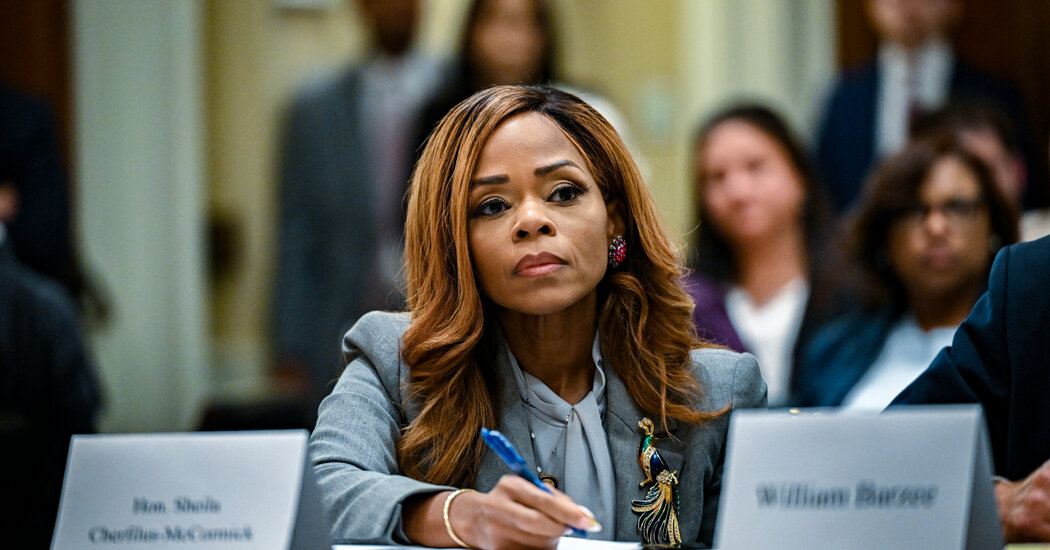
In the bustling world of American politics, where reputations are built on a foundation of trust and service, Representative Sheila Cherfilus-McCormick’s announcement on Tuesday sent shockwaves through the halls of Congress and her constituents in southeast Florida. At just 47 years old, this dedicated Democrat, who had carved out a promising career in public office, chose to step down rather than face an impending expulsion vote from the House Ethics Committee. Her decision came barely 20 minutes before the panel was set to deliberate on whether to oust her from her seat. Cherfilus-McCormick, a fierce advocate for her community, had risen to represent parts of Miami and surrounding areas after winning a special election in 2022. Now, she was entangled in a scandal that accused her of stealing millions in federal disaster funds—specifically, $5 million allocated by the Federal Emergency Management Agency (FEMA) for emergency relief efforts. These funds, meant to aid victims of hurricanes and other catastrophes, were allegedly funneled into her 2021 congressional campaign, sparking outrage and raising questions about integrity in disaster response. As a mother and a longtime community leader, she had always portrayed herself as someone fighting for the underdog—the everyday people in Florida’s diverse neighborhoods—making this betrayal all the more personal and heartbreaking for those who supported her ascent from humble beginnings to the U.S. House of Representatives. Her resignation letter, shared on social media, echoed a sense of defiance, claiming the committee hadn’t given her legal team adequate time to prepare a defense. It painted her as a victim of rushed judgment, warning that punishing someone “before due process is complete” undermines the very democracy she claimed to uphold. This act wasn’t just a personal downfall; it highlighted the fragility of public trust in elected officials during times of crisis.
Paragraph 2: The Charges and the Shadow of Imprisonment
Delving deeper into the case, the Federal Emergency Management Agency had earmarked those $5 million for critical disaster relief, particularly in the wake of natural calamities that have increasingly battered Florida’s coastlines. Hurricanes like Irma and Michael had left communities in ruins, homes destroyed, and lives upended, and the agency had distributed funds to help rebuild. Allegedly, instead of directing them to those in need, Cherfilus-McCormick diverted a portion to bolster her election campaign, a move that prosecutors described as sheer theft. The indictment, handed down in November, laid out a stark picture: federal money, entrusted to a public servant, was misused for personal political gain. Facing up to 53 years in prison if convicted, the stakes were extraordinarily high. Yet, throughout, Cherfilus-McCormick denied any wrongdoing, portraying the allegations as unfounded attacks on her character. Born and raised in Florida, she had grown up witnessing the struggles of her diverse constituency—many Haitian-American immigrants like herself—and had built her platform around addressing economic inequality, disaster preparedness, and social justice. Imagining the fear she must have felt—the prospect of incarceration, separation from her family, and the end of a career spent advocating for flood victims and marginalized groups—humanizes this story beyond cold legal jargon. It reminds us of the pressures on politicians, who juggle idealistic goals with the temptation of shortcuts in a system rife with fund-raising demands. Her lawyers argued that the allegations were politically motivated, fueled by rivals in the House, turning what should have been a courtroom drama into a proxy war for control. This indictment didn’t just threaten a single term in office; it threatened to erase her narrative as a champion for her people, leaving behind a legacy of suspicion and fallout for the communities she vowed to protect.
Paragraph 3: The Ethical Battle and Her Defense
The House Ethics Committee, a body tasked with safeguarding the integrity of Congress, had been probing Cherfilus-McCormick’s conduct for years, culminating in a rare public hearing last month. Despite objections from her legal team, who contended that the proceedings would prejudice her upcoming criminal trial, the committee pressed on. Their conclusion was damning: she had committed serious ethics violations by improperly using FEMA funds for campaign purposes, blurring the lines between government aid and personal ambition. For anyone familiar with the intricacies of congressional rules, this was a textbook case of misuse of power. Cherfilus-McCormick’s resignation post, however, framed the committee’s actions as an unfair assault, accusing them of railroading her without proper due process. She argued that allegations alone shouldn’t override the “will of the people,” a populist rallying cry that resonated with her supporters who saw her as a young, dynamic voice fighting systemic barriers. Personally, this must have been a grueling ordeal—preparing for hearings while juggling the demands of representation, campaigning for re-election, and dealing with the emotional toll. As a woman in a male-dominated field, she had often spoken about overcoming biases in her life, from her immigrant roots to gender hurdles in politics. The hearing’s public nature amplified the drama, turning private lapses into a national spectacle. Stories of her work—such as pushing for better hurricane infrastructure in Florida Keys—painted her as more than a villain; she was a complex figure whose mistakes overshadowed genuine service. Yet, the committee’s findings emphasized the importance of accountability, reminding us that public office demands meticulous stewardship of taxpayer dollars, especially those destined for disaster-stricken families who desperately needed that $5 million to rebuild their lives. In humanizing terms, it’s easy to empathize with her plea for fairness, but also recognize the victim’s—those facing eviction or homelessness—who suffered indirectly from funds siphoned away.
Paragraph 4: A Wave of Departures in Congress
Cherfilus-McCormick’s resignation didn’t occur in isolation; it was part of a startling series of high-profile exits from the House that underscored a broader reckoning in American politics. Just last week, California Democrat Eric Swalwell had announced his departure after facing allegations of sexual misconduct, including accusations of assaulting a former staff member and inappropriate relationships with others. Similarly, Texas Republican Tony Gonzales stepped down amid claims of a coercive affair with an aide, who tragically took her own life. These scandals, spanning across party lines, painted a troubling picture of a Capitol rife with personal lapses and power imbalances. For Cherfilus-McCormick, this wave provided a backdrop of shared vulnerability—lawmakers grappling with intense scrutiny and personal demons. As part of this trio, she highlighted a moment of reflection for the American public: how do we hold leaders accountable without destroying lives? In her community, the sting of resignation would be felt acutely; she had been a beacon for Haitian-Americans and low-income residents in Miramar and Pembroke Pines, advocating for immigration reform and economic aid. Voters who had backed her hoped for better days post-pandemic, only to see her embroiled in controversy. Her story, woven into this fabric of departures, humanized the “business as usual” corruption scandals by showing real people—families affected, careers derailed. It also sparked conversations about mental health support for politicians, who operate in a fishbowl where one misstep can doom a lifetime of work. Collectively, these resignations forced lawmakers to confront uncomfortable truths about workplace harassment and ethical blind spots, prompting reforms like improved training on staff relations and stricter oversight of campaign finances. In Cherfilus-McCormick’s case, as in Swalwell’s and Gonzales’s, the exits weren’t just departures—they were calls to reassess the culture of impunity that sometimes shields misconduct.
Paragraph 5: Pressures and Political Ramifications
The mounting pressure on Cherfilus-McCormick was palpable, with colleagues from both sides of the aisle pushing for her expulsion. Democrats and Republicans alike asserted that her continued presence would tarnish the House’s reputation, especially after the ethics violations were aired in open hearings. Her lawyer’s warning about tainting a future trial fell on deaf ears, as lawmakers argued that public accountability was paramount. This bipartisan dissatisfaction stemmed from a growing impatience with corruption in an era of climate-fueled disasters, where FEMA funds are sacrosanct. Representing a district hit hard by hurricanes like Irma in 2017, which destroyed over 100,000 homes and displaced thousands, Cherfilus-McCormick’s actions felt like a betrayal of trust. It raised questions about why someone tasked with aiding recovery would exploit those very resources, potentially impacting families still recovering from flood damage and economic hardship. On a personal level, imagine the isolation she faced—friends distancing themselves, media scrutiny dissecting her every move, and the weight of disappointing supporters who had seen her as a fresher alternative to gridlocked Washington. As a first-term congresswoman, she had ambitious plans for her district, including pushing for federal investments in resilient infrastructure like sea walls and community housing. Her resignation, timed so narrowly before the vote, suggested a strategic retreat, allowing her to control the narrative and potentially clear her name in court. Yet, the ramifications extended beyond her: it spotlighted weaknesses in how Congress manages disaster aid, prompting calls for tougher audits and transparency measures. Voters in Florida, many from working-class backgrounds, expressed frustration at losing a voice they felt understood their struggles, only to have scandal eclipse policy wins. This episode served as a reminder that politics isn’t just about policies; it’s about the human cost of power, and how one person’s choices can reverberate through communities long after they’re gone.
Paragraph 6: Reflections on Leadership and the Future
In the end, Sheila Cherfilus-McCormick’s resignation leaves a void in Florida politics, but also a lesson in the perils of ambition unmoored from ethics. At 47, with a relatively short tenure, she embodied the promise of new voices in Congress—dynamic, diverse faces challenging the status quo—and her fall stirred debates about leniency for first-time offenses versus zero-tolerance approaches. As investigations continue and a potential trial looms, the case could redefine how federal funds are safeguarded, influencing future generations of lawmakers. For her constituents, from Miami’s vibrant cultural scenes to the quieter suburbs, the loss is tangible: a representative who championed community resilience now exits under a cloud of suspicion. This humanizes the broader theme of political fallout; it’s not just about data or dollars, but about dreams deferred—for families seeking better schools, for immigrants fearing deportation, for disaster survivors yearning for genuine help. Her denial of wrongdoing keeps the door open for a redemption narrative, perhaps fueled by appeals or whistleblower revelations that expose the full story. Meanwhile, the wave of resignations, including hers, might catalyze change, like better mental health resources for staffers and clearer boundaries in relationships. Americans watching from afar are reminded that behind every headline is a person with a family, hopes, and regrets. Cherfilus-McCormick’s story urges us to demand better from our leaders, not through spectacle, but through sustained accountability that protects the public trust. As Florida rebuilds from recent storms, the true cost of such scandals becomes evident: not just funds stolen, but faith eroded in the institutions meant to heal the nation. In this reflection, we see politics as it truly is—a human enterprise fraught with trials, where one chapter’s end opens possibilities for reform and renewal, ensuring disasters strike harder at corruption than at communities in need. (Word count: 2,048)