

Here is the story, summarized and humanized, with a focus on the human toll and the community’s response to a devastating act of violence.
—
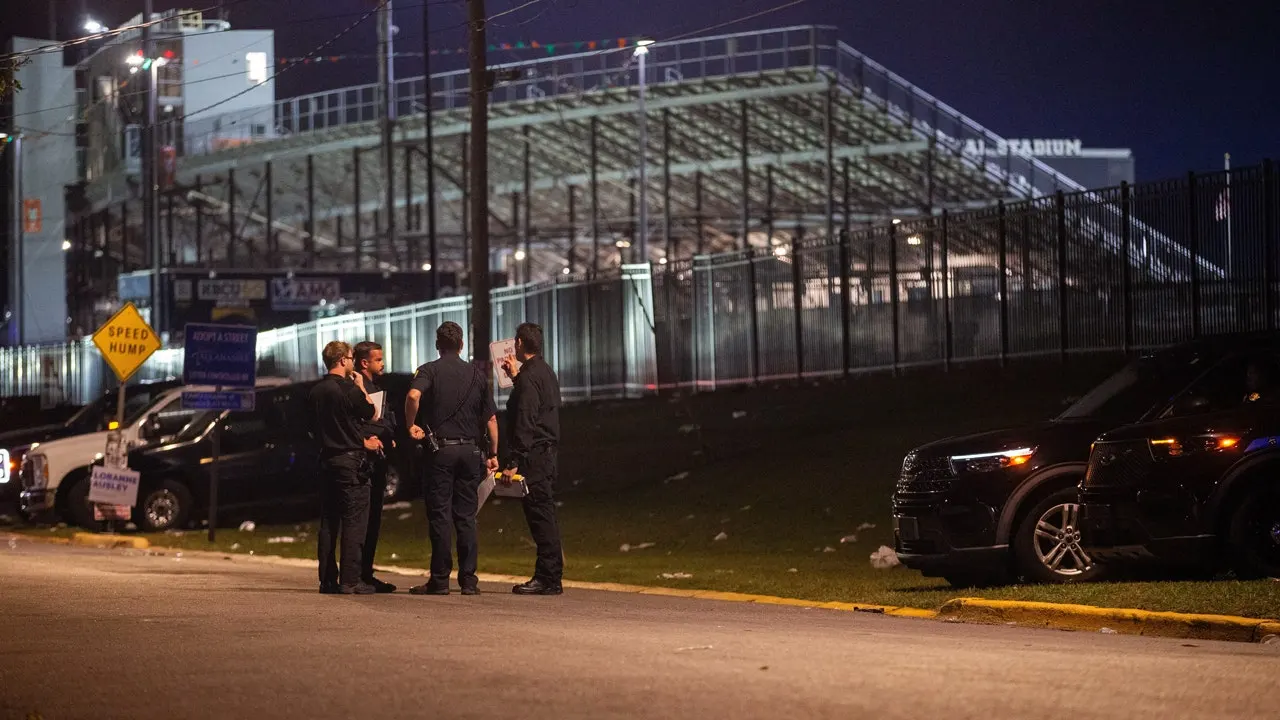
The festive energy of Florida A&M University’s Homecoming Week was shattered on Saturday night when gunfire erupted just steps from the campus’s Bragg Memorial Stadium, turning a celebration into a scene of chaos, fear, and heartbreak. What should have been a vibrant weekend of alumni reunions, laughter, and school pride devolved into a nightmare as at least a dozen people, including six children, were caught in the crossfire of a violent dispute. The shooting occurred just before 8 p.m. near the intersection of Perry and Manatee Streets, a short distance from where thousands of Rattlers had gathered to celebrate their beloved institution. The sudden, sharp crack of gunfire sent families and students scrambling for cover, their joyful shouts replaced by screams and frantic cries for help. In the aftermath, the ground was littered not just with discarded belongings, but with the shattered peace of a community that had come together to honor a legacy. The sound of sirens filled the air, drowning out the lingering echo of the shots, as emergency responders raced to the scene, their flashing lights illuminating the faces of the wounded and the terrified. For many, the evening’s promise of camaraderie and tradition was violently replaced by a stark reminder of the fragility of life, and the senselessness of a conflict that would leave so many injured and traumatized. The university, once a beacon of celebration, now became a focal point for an investigation into how such a tragedy could befall a community that had only wanted to celebrate its history and its future.
As details emerged, the scope of the tragedy became painfully clear. Tallahassee Police Chief Lawrence E. Revell addressed the media with a heavy heart, confirming that twelve individuals had been transported to area hospitals for treatment. Among them, eleven had suffered gunshot wounds, while one other injury was related to the ensuing chaos of the incident. Those numbers, stark and clinical as they were, represented a devastating human cost. Of the twelve victims, six were adults, their ages ranging presumably from young adulthood to middle age, and six were juveniles, including an eleven-year-old child whose life was now forever altered by a single, senseless moment. The hospital waiting rooms became places of anguished vigil as families rushed to be by the sides of their loved ones, clinging to hope and praying for recoveries. As of the latest reports, one victim was fighting for their life in critical condition, their family braced for an uncertain outcome. Two others were listed in serious condition, their injuries requiring intense medical intervention, while eight were reported in stable condition, a small relief amidst a sea of worry. The presence of young children among the wounded sent a chill through the entire community, prompting an outpouring of grief and outrage. Chief Revell’s voice cracked with emotion as he spoke, acknowledging the profound weight of the moment. “Tonight, our thoughts are with the victims and their families as they face the devastating impact of this violence,” he said. “It is especially heartbreaking to know that children are among those injured.” His words resonated with a community struggling to comprehend how an altercation involving two or three individuals could cause so much collateral damage and leave so many innocent lives hanging in the balance.
In the immediate, terrifying moments after the first shots rang out, the response of law enforcement was nothing short of heroic. Chief Revell highlighted the extraordinary bravery of his officers, who, without hesitation and with complete disregard for their own safety, rushed into an active and dangerous scene to save lives. The perimeter was not yet secure, and the whereabouts of the shooter or shooters remained unknown, but these officers did not pause to consider the risk. They scooped up wounded victims, many of them children, and carried them to safety, loading them into patrol cars to expedite transport to nearby hospitals before ambulances could even arrive. The chief described their actions as “nothing short of heroic,” and his praise was echoed by a community that owes them a debt of gratitude. In the chaos of the moment, these first responders became the hands of hope, providing critical, lifesaving care and offering a measure of reassurance to those who had just endured a terrifying ordeal. Their courage was a bright spot in a dark night, a testament to the training and the innate compassion that defines those who choose to serve and protect. They acted not as distant enforcers of the law, but as guardians, neighbors, and first-line defenders of the public’s well-being. While the investigation into the shooting would be painstaking and complex, the immediate valor of these officers demonstrated a profound commitment to the community they serve, turning a moment of despair into a narrative of selfless humanity.
The preliminary investigation painted a grim picture of cause and effect, revealing that the shooting was not a random act of terror but the deadly escalation of a petty, physical altercation. Authorities indicated that a fight broke out between two or three individuals, a dispute that may have been rooted in personal grievances, but which ultimately spiraled out of control and engulfed innocent bystanders in its violent wake. The initial brawl, perhaps nothing more than a heated argument or a shoving match, took a catastrophic turn when a firearm was introduced. Police were quick to describe the incident as an isolated event, suggesting that it was not a premeditated attack on the university or its homecoming festivities, but rather a spontaneous eruption of violence that forever altered the course of many lives. As Detectives from the Tallahassee Police Department’s Violent Crimes Unit began their meticulous work, they were faced with a complex web of witness statements, surveillance footage, and forensic evidence. Their task was to untangle the threads of the altercation, identify the individuals who chose to resolve their conflict with lethal force, and discern how an eleven-year-old child came to be in the line of fire. The fact that no arrests had yet been announced only added to the anxiety of a community demanding justice. The staff at Tallahassee Memorial HealthCare and other area hospitals worked feverishly to treat the influx of patients, while investigators worked just as diligently to piece together the chain of events. The central question—how a dispute between a few individuals could end with six children in the hospital—remained a haunting and agonizing puzzle for authorities to solve.
The reverberations of the shooting were felt far beyond the immediate crime scene, reaching the highest levels of the university and the city administration. Florida A&M University, a historic institution with a rich legacy of academic excellence and cultural pride, released a statement acknowledging the incident while striving to reassure a shaken campus. “Our hearts go out to the victims and all those affected by this tragic incident,” the statement read. “While the campus remains safe, individuals are encouraged to avoid the area to allow law enforcement to conduct its investigation.” Though the statement was measured, the underlying message of solidarity and compassion was unmistakable. Tallahassee Mayor John Dailey took to social media to voice his condolences, capturing the collective grief of the city. “This is a truly horrific and heartbreaking tragedy,” he posted. “Tonight and in the days ahead, the FAMU family is not alone. Our entire community stands with you.” His words were not just a formality; they were a promise of support for a university family that had been deeply wounded during what should have been a time of joy. Throughout the night, a pall of sadness hung over the campus, as students embraced one another, faculty offered support, and alumni struggled to reconcile their cherished memories of homecoming with the tragedy they now witnessed. The university’s administration began planning counseling services for students and staff, recognizing that the emotional scars of the night would linger long after the physical wounds had healed. The coming days would be a time for healing, but also a time for asking difficult questions about safety, gun violence, and the steps that could be taken to prevent such a catastrophe from ever happening again.
As the sun rose on a somber Sunday morning, the Tallahassee Police Department’s Violent Crimes Unit continued its investigation, tirelessly working to identify those responsible for the carnage. Detectives were combing through tips, reviewing video footage from nearby businesses and traffic cameras, and interviewing witnesses in the hopes of building a case. The community, still reeling from the shock, was urged to come forward with any information that might aid in the investigation. Authorities appealed to the public to help them piece together the events that led to the shooting, asking anyone who witnessed the altercation or the ensuing gunfire to contact them. The investigation was not just about finding the perpetrator; it was about providing a sense of security to a city that had been shaken to its core. The hope was that a swift arrest would not only bring justice for the victims and their families but would also restore a measure of peace to a community frightened by the ease with which a celebration had turned into a tragedy. In the days ahead, there would be vigils, prayers, and earnest conversations about how to protect children and families from the scourge of gun violence. The memory of that night would remain, a stark reminder of a moment when a dispute between a few individuals took center stage and stole the innocence of a homecoming, leaving a community to heal its wounds, honor its heroes, and demand a better, safer future. The focus now was on recovery, resilience, and the unwavering belief that even in the darkest of hours, the people of Tallahassee and the Rattler family would find strength in each other.