







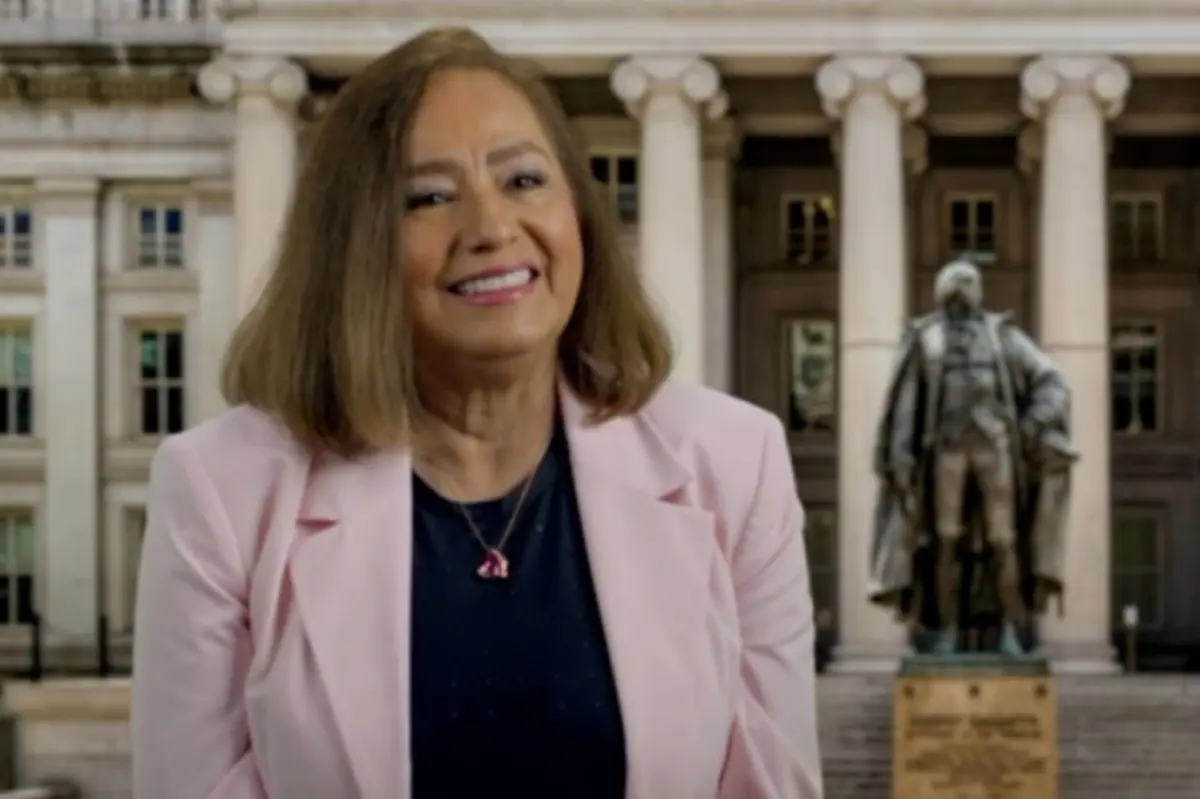
The American Dream has long been debated as either a foundational truth or a beautiful illusion, but for Rosario Marin, it is an empirical reality written into her very identity. Born in the vibrant heart of Mexico City, Marin spent her early years wrapped in the comforting warmth of her family, entirely unaware of their socioeconomic limitations. In her childhood eyes, life was stable, complete, and perfectly fine. It was only after her family made the life-altering transition to the United States that the veil of childhood innocence was lifted, revealing a stark and humbling truth: they were, by American standards, deeply impoverished. This migration was not merely a change of geographic coordinates; it was a desperate leap of faith fueled by the universal human desire to escape economic stagnation and secure a future of dignity and upward mobility. Confronting this newly realized poverty in a strange land did not defeat the young Marin; instead, it served as a catalyst, igniting an internal drive to dismantle the barriers of her circumstances and prove that destiny is not dictated by one’s starting point.
For a fourteen-year-old immigrant arriving in a foreign country without a single word of English in her vocabulary, the journey of assimilation was both terrifying and isolating. Marin quickly realized that the sole key to unlocking the locked doors of American society was education, a conviction that became her primary anchor. She threw herself into her studies with a relentless, quiet determination, navigating the complex linguistic and cultural labyrinth of the American public school system. Her path was defined by hard work and sacrifice rather than celebration; in fact, upon completing her high school education, she did not even pause to attend her own graduation ceremony, choosing instead to focus entirely on the practical demands of survival and her next academic milestone. She went on to conquer higher education, earning a Bachelor of Science degree in Business Administration with a specialized emphasis on marketing and international business. This academic triumph was not just a personal victory, but a profound transformation, turning a young girl who once sat in silent confusion in the back of a classroom into a highly articulate, business-minded force ready to take on the world.
To sustain this exhausting ascent, Marin anchored her worldview in a quote by Supreme Court Justice Oliver Wendell Holmes: “What lies behind you and what lies ahead of you is minute in relation to what lies within you.” This profound philosophy became her guiding light, a conceptual shield against the inevitable hardships, systemic roadblocks, and personal trials that threatened to derail her life. Marin internalized the belief that adversity is not a permanent state, but a forge that tempers human character, rendering individuals far larger and stronger than any obstacle they might face. Decades of overcoming cultural alienation, financial hardship, and self-doubt taught her that resilience is a conscious, active choice rather than a passive trait. Her narrative is a testament to the idea that no matter how painful or fragmented one’s past may be, and no matter how towering the obstacles on the horizon appear, the reservoir of human spirit, intellect, and courage residing within the individual is infinitely more powerful and capable of triumph.
It was this indomitable spirit that eventually propelled Marin to the highest echelons of American governance, culminating in her appointment as the 41st Treasurer of the United States under President George W. Bush from 2001 to 2003. This historic achievement made her the first and, to this day, the only foreign-born individual to hold this prestigious federal office in the history of the nation. The symbolic weight of this appointment is nothing short of breathtaking: a woman who arrived in the country as a monolingual teenage immigrant was now tasked with overseeing the U.S. Mint, advising on financial policy, and placing her own signature on the country’s legal tender, to be circulated across the global economy. This was not merely a professional milestone, but a monumental disruption of historical precedents, demonstrating that the institutions of American power could be accessed, maintained, and enriched by those who began their lives far outside the corridors of wealth and privilege.
When Rosario Marin invites people to “look at me,” she is not speaking from a place of vanity, but offering her own life as a living, breathing proof of possibility to counter modern skepticism. In an era where the American Dream is frequently dismissed as a relic of a bygone era or a promise reserved only for the privileged, her journey from a penniless immigrant to a cabinet-level official stands as a defiant rebuttal. Marin’s life story asserts that if an individual is willing to work tirelessly, harbor unwavering belief, and persevere through the darkest moments of doubt, the most unimaginable dreams can indeed be realized. Humanizing her success means looking past the grand titles and the historic signature on American currency to see the vulnerable fourteen-year-old child who dared to believe she belonged in the fabric of her adoptive nation. Her life serves as an open invitation to others, reminding them that the American Dream is not a static destination, but an ongoing, dynamic narrative that is continuously rewritten by those who have the courage to pursue it.
This inspiring narrative is featured prominently as part of the American Dream Video Project, an collaborative initiative between The Post and the Milken Center for Advancing the American Dream (MCAAD) to honor the voices shaping the nation as it approaches its 250th anniversary in 2026. This digital and physical exhibition, housed in Washington, D.C.’s newest cultural institution, aims to celebrate, study, and preserve the diverse pathways to opportunity that define the American experience. By showcasing real stories of struggle, resilience, and triumph like Marin’s, MCAAD provides interactive exhibits that challenge visitors to reflect on what the dream means to them in a modern context. Ultimately, Rosario Marin’s legacy, highlighted through this project, reminds us that the true strength of the United States lies in its capacity to absorb the hopes of newcomers, empower their ambitions, and be fundamentally elevated by the rich contributions of those who cross borders to build a better life.