







The Great Accumulation: Why Bitcoin’s Current Stagnation Signals a Historic Market Pivot
Bitcoin’s Quiet Consolidation: Analyzing the Calm Before the Macro Shift
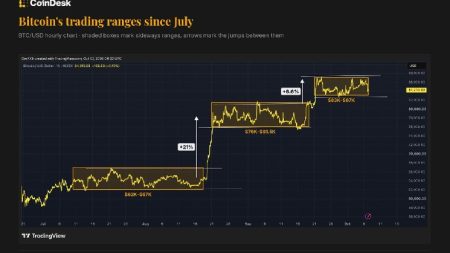
The global cryptocurrency market finds itself suspended in a state of watchful anticipation as Bitcoin, the pioneering digital asset, continues to trade within a tightly bound consolidation range between $64,000 and $65,000. For casual observers, this sideways price action might appear to be a period of stagnation, but for seasoned financial analysts, it represents a high-stakes waiting game that could define the next multi-year macro cycle. Prominent cryptocurrency analyst Benjamin Cowen recently released a comprehensive market evaluation, drawing striking parallels between current market structures and historical cycles to suggest that this prolonged period of equilibrium is actually a precursor to a major structural shift. Instead of viewing the current lack of upward momentum as a sign of weakness, Cowen posits that Bitcoin is traversing a well-trodden historical path where price consolidation acts as a pressure cooker, quietly building the energy necessary for its next major directional expansion. This phase of the market cycle is notoriously difficult for retail participants to navigate, as the absence of clean, impulsive trends often leads to overtrading and capital erosion, even as institutional players quietly position themselves for the next phase of global liquidity expansion. By evaluating these subtle shifts in volume, order book depth, and historical precedent, we can begin to see that the current range is not merely a random pause, but a highly orchestrated transition zone where the transfer of ownership from impatient speculative traders to long-term high-conviction holders takes place.
The Great Sentiment Decay: Inside the Decline of Crypto Social Interest
Social Risk Indicator Trend (Historical Comparison)
1.0 |————————————————– (2020 Peak)
0.8 |
0.6 |
0.4 |
0.2 | * (Current Level)
0.0 |__
Perhaps the most telling metric of the current market environment is the profound evaporation of public enthusiasm, a phenomenon that Cowen highlights through the lens of proprietary social risk indicators. This metric, which aggregates search engine trends, social media engagement, and overall retail query volume, has plummeted to an astonishingly low level of 0.2—a stark contrast to the euphoric heights witnessed during the bull market of four years ago when retail speculation reached a fever pitch. This drastic reduction in social engagement indicates that the casual retail investor, once fueled by the fear of missing out (FOMO), has largely abandoned the space, leaving behind a market dominated by algorithmic trading desks, institutional allocators, and battle-tested market veterans. Cowen notes that this distinct lack of volatility, coupled with a prevailing sense of deep-seated skepticism and apathy among remaining market participants, strongly mirrors the grim sentiment landscapes observed during the final stages of the historic bear markets in both 2018 and 2022. This structural apathy is a classic psychological marker of a late-stage market reset; when the continuous news cycle stops generating speculative excitement and instead breeds a quiet, pervasive distrust, the market is effectively purging the speculative excesses of the previous cycle. This silent phase of sentiment decay is actually a healthy and necessary clearing mechanism, as it allows the asset class to establish a secure foundation, entirely free from the destabilizing leverage and hype that typically precede catastrophic market flushes.
Historical Echoes: Why Summer Stagnation Often Precedes the Q4 Surge
Typical Bitcoin Seasonality Cycle
[ Q1: Rebound ] ──> [ Q2: Local Highs ] ──> [ Q3: Summer Lull/Bottom ] ──> [ Q4: Macro Breakout ]
To fully comprehend the timeline of this current consolidation, one must look to the highly cyclical and seasonal nature of the digital asset markets, which historically exhibit a strong tendency to seek local bottoms during the quiet summer months. Cowen’s meticulous historical cycle mapping reveals that the third quarter of the year is traditionally characterized by thin trading liquidity, diminished institutional participation, and frustrating, choppy price action that tests the patience of even the most disciplined investors. During these summer lulls, the lack of fresh capital inflows prevents the market from establishing sustainable upward trends, frequently resulting in slow, grinding sell-offs that lead many to believe the asset class has entered a permanent decline. However, history demonstrates that this painful period of sideways drift is merely a prelude to the high-volatility expansions that typically materialize in the fourth quarter of the year, particularly as global financial institutions adjust their capital allocations and macroeconomic liquidity cycles begin to loosen. By examining previous market cycles, we can observe that the most explosive, trend-defining moves often originate from these periods of deep summer exhaustion, meaning that the current lack of market movement should be interpreted as an accumulation window rather than a structural failure. As we transition away from the seasonal headwinds of the summer and approach the historically bullish months of the fourth quarter, the probability of a decisive, trend-defining breakout begins to rise exponentially, making the current period of stagnation a crucial phase of preparation for the market macro shift.
Decoding the MVRV Z-Score: The Search for a Definitive Market Bottom
MVRV Z-Score Cycle Positioning
▲ High (Overvalued / Cycle Top)
│
├─► [Current Level: Moderately Valued (Above Zero)]
│
■ Zero Line (Historical Capitulation / Absolute Bottom)
▼ Low (Undervalued)
While historical patterns and sentiment indicators provide valuable qualitative context, quantitative analysts like Cowen rely heavily on robust on-chain metrics to determine whether the market has reached a true structural floor, with the MVRV Z-Score serving as one of the most reliable barometers for macro valuation. The MVRV Z-Score—which measures the ratio of Bitcoin’s market capitalization to its realized capitalization to assess when the asset is significantly overvalued or undervalued relative to its “fair value”—historically needs to dip below the critical zero threshold to signal a generational buying opportunity. Cowen points out that despite the prolonged price correction and the widespread feeling of exhaustion across the industry, this vital on-chain indicator has not yet crossed below the zero line during the current cycle, suggesting that the absolute bottom of this corrective phase may not yet be established. The fact that the MVRV Z-Score remains in positive territory implies that while a significant portion of speculative froth has been excised, there remains a baseline level of unrealized profit within the system that could still be subject to a final wave of market distribution. Consequently, drawing the conclusion that the worst of the market downtrend is entirely behind us may be premature; until this key metric undergoes a thorough retest of its historical accumulation boundaries, conservative market participants must remain open to the possibility of a deeper, valuation-resetting correction that establishes a clean slate for the next macro cycle.
The October Catalyst: Preparing for a Final Volatility Shakeout
Estimated Capitulation & Recovery Timeline (2024)
[ September: Choppy Range ] ──► [ October: Potential Liquidity Flush / Macro Bottom ] ──► [ Nov-Dec: Q4 Bull Cycle Ignition ]
As the market approaches this critical structural juncture, Cowen posits that a significant, high-volatility event may unfold in the coming weeks, serving as the final catalyst to shake out remaining speculative leverage and establish an absolute market bottom. This projected shakeout, which the analyst identifies as most likely to occur in the October timeframe—though September and November remain highly viable tactical windows—would serve the crucial purpose of forcing hesitant spot holders to capitulate and clearing the derivatives market of excess leverage. Historically, these final, aggressive downswings are triggered by unexpected macroeconomic developments, regulatory updates, or systemic liquidity pinches that catch over-leveraged market participants off guard, sparking a rapid cascade of liquidations that drives prices down to extreme value zones. Although such an event is highly painful in the short term, it serves as an essential macroeconomic cleansing process, transfering ownership of the asset from speculative, short-term “weak hands” to institutional, long-term “strong hands” who are eager to absorb supply at a discount. Once this final liquidation event is complete and the market is thoroughly emptied of speculative sellers, the path of least resistance rapidly shifts upward, paving the way for a highly anticipated, sustainable bull cycle that can carry the asset class into new valuation frontiers throughout the remainder of the decade.
Navigating the Threshold: Strategic Imperatives for the Next Bull Cycle
In light of these complex, overlapping technical and psychological dynamics, the current period demands a high level of strategic patience, disciplined risk management, and a focus on long-term structural trends over short-term price noise. As Benjamin Cowen’s analysis elegantly demonstrates, the convergence of declining social engagement, historical seasonal patterns, and pending on-chain valuation resets suggests that we are standing on the precipice of a highly critical market transition. Rather than reacting impulsively to daily price fluctuations within the $64,000 to $65,000 range, market participants would be well-served to view this phase as an invaluable window for strategic planning and capital preservation, ensuring they possess the liquidity and emotional fortitude to navigate a potential autumn shakeout. By understanding that these periods of intense frustration and market apathy are the very crucibles from which the most powerful bull markets are forged, investors can transform their perspective from one of anxiety to one of quiet preparation. As the global macroeconomic landscape continues to shift and the digital asset market prepares to write its next major chapter, those who maintain a disciplined, data-driven approach will be uniquely positioned to capitalize on the generational opportunities that lie just beyond the final horizon of this market cycle.
*Disclaimer: This article is for informational and educational purposes only and does not constitute financial, investment, or legal advice.