





A Tournament Under Siege: Gianni Infantino’s Defying Stance on the Eve of a Historic FIFA World Cup
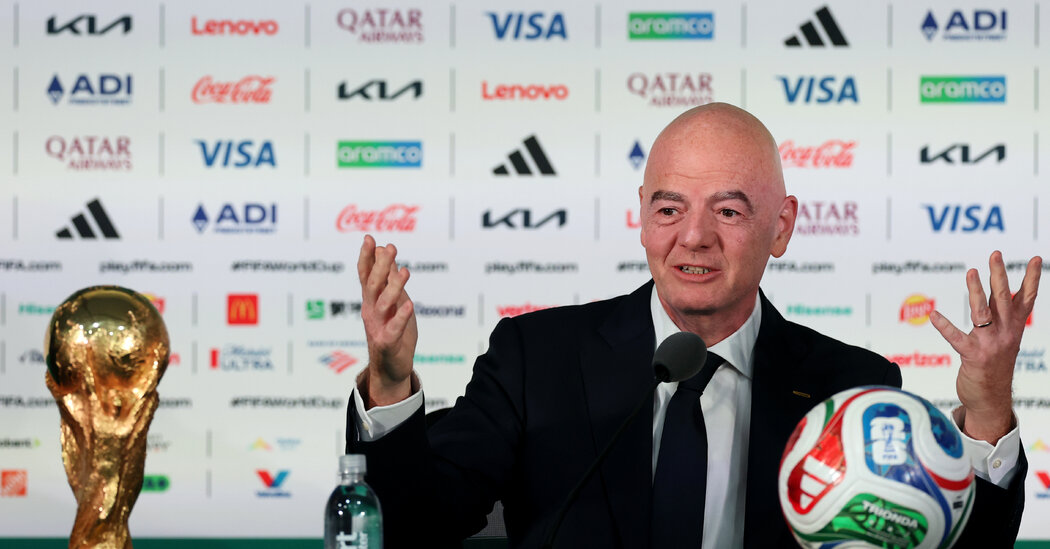
On the eve of a soccer World Cup already heavily weighed down by a turbulent cycle of structural controversies, mounting diplomatic friction, and consumer outrage, FIFA President Gianni Infantino stood before the global press in Mexico City and offered a masterclass in defiance. Standing on the precipice of the largest, most commercially ambitious tournament in the event’s nearly century-long history, the head of world soccer’s governing body made it clear that he harbors no regrets, choosing instead to push back against a wave of public and legal scrutiny. Rather than adopting a conciliatory tone to ease the anxieties of fans, players, and international observers, Infantino confronted critics directly, defending his organization’s handling of unprecedented ticket price hikes, highly restrictive immigration policies, and the complex geopolitical storm surrounding the participation of the Iranian national team. His remarks highlight a growing disconnect between FIFA’s grand, borderless vision of soccer diplomacy and the stark, nationalistic boundaries of the real world. By framing systemic issues as mere growing pains or external factors beyond Zurich’s control, Infantino attempted to project absolute control over an event that is rapidly becoming as much a geopolitical battleground as a sporting spectacle.
The Ticket Price Investigation: Legal Scrutiny and the Deflection of Corporate Greed
Key SEO Terms: Gianni Infantino ticket pricing, FIFA World Cup ticket investigation, NY NJ Attorneys General soccer, sports consumer protection, international sports ticket inflation
At the heart of the consumer backlash against the upcoming soccer tournament is an aggressive ticketing strategy that has caught the attention of law enforcement in the United States. The attorneys general of both New York and New Jersey have launched formal investigations into FIFA’s ticket distribution policies, specifically examining whether fans were subjected to deceptive marketing practices and predatory pricing structures. With some ticket tiers priced at nearly ten times the cost of those at the previous World Cup, middle-class fans find themselves priced out of an event historically celebrated as the “people’s game.” Facing these serious allegations of economic exploitation, Infantino appeared unbothered, stating at a press conference that he remained completely “relaxed” because FIFA’s legal teams and financial experts had vetted the pricing models. In a move that blended corporate deflection with a critique of American capitalism, the FIFA president suggested that if his organization was guilty of overcharging, then virtually every major sports franchise and entertainment broker in North America was equally suspect. This comparison, while containing a grain of truth regarding the inflated state of modern live entertainment, did little to satisfy consumer advocacy groups. Meanwhile, Infantino’s defense of these sky-high revenues—pointing out his own $6 million salary is dwarfed by the massive funds FIFA reinvests into grassroots soccer development worldwide—fails to account for the growing financial barrier keeping ordinary families from attending games in their own neighborhoods.
Ticket Price Inflation: World Cup Comparison1,000% | [Tournament X]
| (Up to 10x)
|
500% |
|
| [Previous World Cups]
0% |__(Baseline)___
Friction at the Border: The Symbolic Exclusion of Omar Artan
Key SEO Terms: Omar Artan Somali referee, US visa restrictions international athletes, FIFA immigration issues, World Cup referee immigration denied, border control international sports events
The tension between FIFA’s borderless, globalist ideals and the rigid machinery of national security was laid bare in the treatment of Somali referee Omar Artan, who was selected to officiate at the tournament. Despite holding official credentials from soccer’s highest governing body, Artan was denied entry upon arriving in the United States, held by immigration authorities for several hours, and ultimately sent back to Turkey—the transit hub from which he had departed. The incident triggered an immediate public relations problem for Infantino, who had spent the preceding months reassuring the international community that entry into the host nations would not be a barrier for players, officials, or fans. When pressed on Artan’s deportment, Infantino tried to minimize the diplomatic incident, offering sympathy to the referee—who returned to a hero’s welcome in Somalia—while telling critics and the media to “chill, relax.” His remark that FIFA does not “control everything” underscores a key vulnerability in the multi-nation tournament hosting model: once a tournament is awarded, organizing committees remain entirely subject to the domestic policies and immigration whims of host governments. This leaves international athletes, officials, and support staff vulnerable to sudden geopolitical shifts and administrative roadblocks.
Geopolitics and the Shadow of Conflict: The US-Iran Strained Relations
Key SEO Terms: US Iran sports diplomacy, geopolitical conflict FIFA World Cup, international team visa denial, team relocation Tijuana, world affairs and international soccer matches
For the first time in the long history of the sport, a World Cup host nation is in an active, state-level conflict with one of the participating teams, creating an unprecedented administrative and security headache. The ongoing tensions between the United States and Iran have cast a shadow over the tournament’s preparation, resulting in months of visa delays and logistical challenges for the Iranian squad. The team’s visas were only approved within the last ten days before kick-off, leaving them with little time to prepare. Furthermore, more than a dozen key coaching staff, technical analysts, and administrative officials were outright denied entry by American immigration authorities. This forced the Iranian federation to abandon its planned training camp in Tucson, Arizona, and relocate across the border to Tijuana, Mexico. This relocation highlights the logistical challenges faced by teams from politically sensitive regions under the current hosting structure. It also underscores how geopolitical rivalries can compromise the competitive integrity of global sport, as one team must prepare in exile while others enjoy state-of-the-art facilities in the host nation.
Iranian National Team: Forced Relocation Map[ United States ]
+———————————————————–+
| Tucson, Arizona |
| (Original training site – canceled due to visa denials) |
+———————————————————–+
|
| Forced Relocation
v
[ Mexico ]
+———————————————————–+
| Tijuana |
| (Emergency headquarters on the California border) |
+———————————————————–+
The Savior Narrative: Infantino’s Bus Promise and the Politics of Soccer Diplomacy
Key SEO Terms: sports negotiation strategy, FIFA executive administration, football diplomacy conflict resolution, sports unity political messaging, global sports governance leadership
In the face of these deep geopolitical hurdles, Infantino has looked to position himself and FIFA as unique global peacekeepers, capable of bridging divides that traditional diplomacy cannot. He walked a fine line between boasting and crisis management, suggesting that no other international organization—including the United Nations—could have successfully negotiated Iran’s participation under such harsh political conditions. To emphasize his commitment to the Iranian players, Infantino shared an anecdote from the negotiations, claiming he had promised the team that he would personally drive them in a bus from Tehran to the United States if that was what it took to get them to the tournament. While this statement makes for a dramatic headline, critics view it as an example of the grandstanding that often defines modern soccer leadership. By framing the survival of the match as a personal victory achieved through sheer force of will, infantino distracts from the systemic failures that allowed these visa issues to occur in the first place. This savior complex has become a central part of FIFA’s public relations strategy, using the universal appeal of the sport to gloss over the hard commercial and political realities of its administration.
Navigating a Fractured World: The Hyper-Commercial Future of Mega-Events
Key SEO Terms: future of international sports mega events, host nation immigration policies, tournament commercialization ethics, globalization and sports diplomacy, global football finance reform
As the tournament begins, the compounding controversies surrounding ticket prices, blocked referees, and geopolitical disputes reveal a deeper challenge facing the future of international sport. The era of the truly borderless mega-event is colliding with an increasingly fractured world of economic disparity, nationalist politics, and strict border controls. FIFA’s drive for record-breaking revenues has pushed ticket prices beyond the reach of everyday fans, turning what was once a global celebration into an exclusive corporate experience. At the same time, the organization’s reliance on host nations with strict immigration laws has exposed the limits of its power, as national security policies override sporting credentials. As future tournaments expand to cross more borders and involve more countries, the friction points witnessed in Mexico City are likely to become more common. Whether FIFA can adapt to this fragmented landscape without losing its core identity remains an open question. For now, Gianni Infantino’s defiant stance serves as a reminder that in the high-stakes world of global soccer, the spectacle on the pitch is often just a distraction from the broader political and economic battles taking place behind closed doors.