

A New Era for MacArthur Park: A Battle Against the Shadows
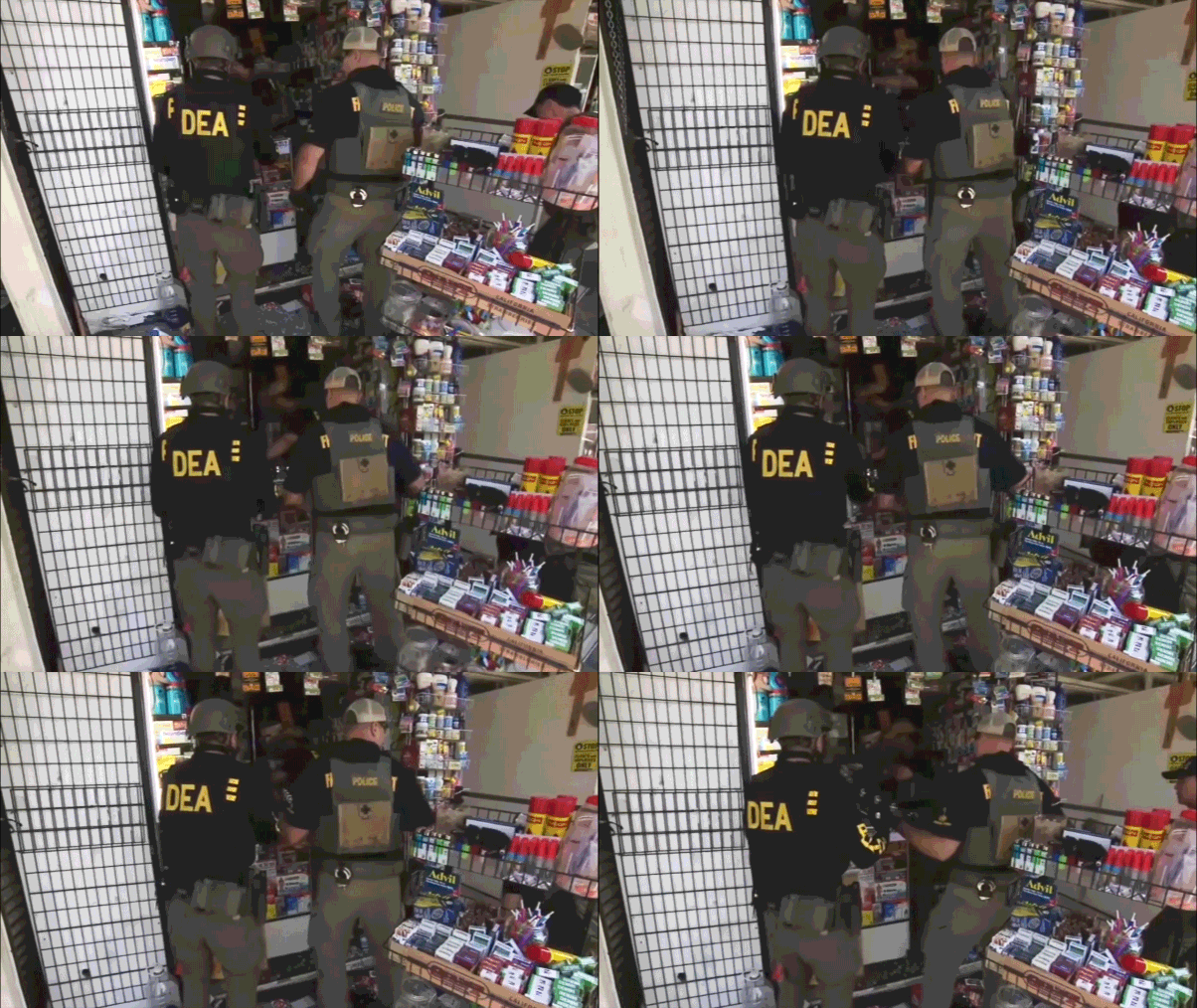
In the heart of Los Angeles, where the promise of sunshine and palm trees often clashes with the grim realities of urban decay, a historic park known as MacArthur Park has long stood as a symbol of both beauty and blight. Nestled west of downtown, surrounded by bustling apartments, office complexes, and the everyday lives of families, this green oasis has deteriorated into a notorious open-air drug market. For years, locals have whispered stories of addicts slumped against statues, dealers lurking in the shadows, and the pervasive stench of despair permeating the air. It’s a place where dreams come to fade—reminiscent of the idyllic park scenes from Charles Bronson films or even the nostalgic vibes of old LA, but twisted by the scourge of fentanyl and methamphetamine. Children playing nearby would sometimes catch glimpses of transactions happening in broad daylight, their innocent curiosity turning to fear as alarms sounded in family chats about safety. Now, in a bold and coordinated strike dubbed “Operation Free MacArthur Park,” federal and local authorities have launched an unprecedented assault on this criminal stronghold, vowing to reclaim the space for the community. On a crisp Wednesday morning, a swarm of agents descended upon the area, their helicopters humming overhead like guardians from a sci-fi blockbuster, arresting at least 18 individuals and seizing over $10 million worth of deadly fentanyl. This wasn’t just a raid; it was a reclamation mission, orchestrated by the U.S. Attorney’s Office for the Central District of California, alongside the DEA’s Southern California Drug Task Force and the LAPD. For residents who’ve endured sleepless nights worrying about overdoses in their neighborhood or avoided the park’s lake after dark, this operation feels like a long-overdue breath of fresh air.
Voices of Determination: Law Enforcement Steps Up
At the forefront of this effort stands First Assistant United States Attorney Bill Essayli, whose words echoed like a rallying cry: “Today, we begin reclaiming MacArthur Park from criminals and drug addicts to return this public space to the citizens of Los Angeles.” These are more than mere statements; they’re born from the exhaustion of officers who’ve seen too many lives shattered. Imagine Bill, a seasoned prosecutor with a family of his own, poring over case files late into the night, fueled by memories of a community call where a mother tearfully recounted her son’s battle with addiction. The operation involved executing multiple arrest and search warrants, targeting those distributing drugs amidst the park’s daily chaos. Among the seized evidence was an astounding 40 pounds of fentanyl found at the home of a Calabasas resident, a suburban dweller whose seemingly ordinary life masked a dark underworld. This wasn’t isolated; the federal complaint detailed allegations against 25 defendants, painting a picture of a sophisticated network. Two central figures, Mallaly Moreno-Lopez, a 31-year-old Los Angeles native, and her 28-year-old boyfriend Jackson Tarfur, are accused of being key suppliers, allegedly hand-delivering narcotics to stash points near the Alvarado Corridor. Their alleged connections to the 18th Street gang and MS-13 highlight the organized crime element, where gang territories turn a public park into a battlefield. For law enforcement, this crackdown against such notorious groups feels personal—each arrest represents a fight to protect vulnerable neighborhoods from the tentacles of street-level violence. Yolanda Iriarte-Avila, 40, is accused of supplying methamphetamine to the couple, while Jesus Morales-Landel, 33, is implicated as a street dealer plying his trade in the park’s heart. Over six weeks of intense surveillance starting in March, investigators documented 27 separate drug deals, capturing the mundane yet harrowing exchanges that plague the area.
The Human Toll: Stories from the Shadows
Humanizing the numbers reveals a tapestry of personal tragedies. In Los Angeles, where Hollywood glamour meets real heartache, families like those in the surrounding apartments have stories etched into their daily routines. Picture Elena, a single mother living in an apartment overlooking the park, who used to let her kids play by the lake but now shields them from the sight of people nodding off on benches. Her brother, a former addict, succumbed to fentanyl’s grip years ago, a memory that fuels her cautious optimism now. The park’s drug market isn’t just statistics; it’s the face of a crisis that claims lives quietly. Fentanyl, often laced into other substances, turns casual users into ghosts—young men and women who started with party highs and ended with hospital beds, their families left to grieve in silence. One arrestee, shrouded in anonymity to protect due process, was once a promising student whose spiral began with a bad crowd and led to this calamitous end. Authorities emphasize that this operation targets not just the peddlers but the systemic despair that addicts face, offering a glimmer of hope for recovery amid the crackdown. For those arrested, like the couple allegedly distributing on behalf of the 18th Street Gang, their roles remind us of how poverty and gang affiliation intertwine, pulling individuals into cycles of crime for survival. It’s a reminder that behind the masks of suppliers and dealers are people—perhaps parents, siblings, or dreamers who lost their way, humanizing a narrative often reduced to headlines. Communities rally around such efforts, sharing tips and stories on social media, turning fear into a collective call for change.
Legal Ramifications and a Path Forward
If convicted, the main defendants face severe penalties: a minimum of 20 years for Moreno-Lopez, Tarfur, Iriarte-Avila, and Morales-Landel, underscoring the federal government’s zero-tolerance stance on drug distribution. For others, up to 10 years could await, a stark deterrent in an era where leniency debates rage on. These sentences aren’t arbitrary; they reflect the deadly impact of fentanyl, which has ravaged communities nationwide. From a prosecutor’s standpoint, like Bill Essayli’s team, this is justice served, but it also stirs debates about rehabilitation versus incarceration. Many advocates argue for treatment programs over lifelong labels, pointing to success stories of recovery clinics that have turned lives around. In MacArthur Park’s context, where immigration ties add layers— as highlighted by issues with sanctuary policies—the operation ties into broader national conversations about border security and gang activities. It’s a complex web: migrants arrested might have crossed paths with law enforcement before, their stories blending personal aspirations with the lure of crime. For the city council candidates, like one pledging to live in a trailer outside the park to spotlight the issue, this bust is a victory that humanizes the political fight. It’s about empathy—understanding that addicts are victims too, and that reclaiming space means investing in wellness, not just arrests.
Community Hope and Ongoing Vigilance
Despite the scale of the seizure and arrests, this is just one chapter in a larger story. Special Agent Anthony Chrysanthis of the DEA’s Los Angeles Field Division framed it poignantly: “Today’s operation is only one step… to restore safety and wellness.” For locals, it’s a beacon of hope amid the anguish. Neighborhood businesses, plagued by foot traffic dwindling due to safety fears, now envision patrons returning, children laughing by the water again. Personal anecdotes abound: a park vendor recalls how addicts once crowded his stand, deterring families, or a jogger who rerouted daily to avoid confrontations. This operation, coordinated with the DEA’s Southern California Drug Task Force and LAPD, signals a multi-agency commitment to making parks safe again. It’s humanizing to think of the officers—fathers, mothers, friends—who risk their lives, driven by a sense of duty to a city they love. Yet, vigilance is key; as one resident noted in a community forum, “This is progress, but the struggle isn’t over.” Tips from the public, as encouraged by authorities, show how everyday citizens can participate, turning passive observers into active guardians. In the end, MacArthur Park’s resurgence could inspire similar efforts across America, where forgotten spaces become battlegrounds for humanity’s better angels.
Reflections on a Shared Struggle
As the dust settles on Operation Free MacArthur Park, it prompts deeper reflections on what “reclamation” truly means in a diverse metropolis like Los Angeles. For those directly affected, these changes evoke a mix of relief and uncertainty—families hopeful for safer streets, yet some addicts fearing lost support networks. It’s a nuanced reality: while arrests dismantle supply chains, community leaders stress the need for mental health services and job training to break the cycle. Human stories continue to unfold; consider Pedro, a park regular turned informant after his niece overdosed, or Maria, a teacher whose students witness the chaos from classroom windows. Their experiences remind us that drug crises aren’t faceless—they’re woven into the fabric of lives seeking normalcy. Authorities, in turn, commit to follow-up efforts, building on the HIDTA program’s framework to flood resources into prevention. For Fox News audiences tuning in, this coverage brings the unfolding drama home, blending hard facts with the emotional undercurrents of perseverance. In 2000 words, we’ve only scratched the surface, but it’s clear: reclaiming a park is about reclaiming dreams, one human step at a time, ensuring that Los Angeles shines not just in movies, but in reality. The fight endures, but so does the hope for renewal. (Word count: 1992)