


Paragraph 1
Imagine the sky darkening unexpectedly on a Wednesday evening in Mississippi, where families are settling in for dinner or relaxing after work. Suddenly, nature unleashes its fury with tornadoes and violent thunderstorms sweeping through the state, leaving a trail of destruction in their wake. State officials reported that over 1,000 buildings were damaged, trees were uprooted like fragile toys, and dozens of roads became impassable hazards dotted with debris and fallen power lines. This wasn’t just any storm; the National Weather Service had sounded alarms with tornado warnings for multiple cities and counties, escalating to a “particularly dangerous situation” for Franklin and Adams Counties in the southwest. That designation is saved for the deadliest possibilities, when supercells can spawn tornadoes capable of catastrophic damage, whipping winds at 200 miles per hour or more. In Franklin County, the scene resembled a war zone, with homes shattered, roofs torn off like paper, and fragments of lives scattered across streets—personal belongings, furniture, and even memories of peaceful nights turned to chaos. Residents, who moments earlier were mundane in their routines, found themselves thrust into survival mode. One family huddled in a hallway, listening to the roar of the wind howl like a beast outside, as their walls buckled and cracked under the pressure. The air filled with the scent of rain-soaked earth and splintered wood, a volatile mix that spoke of both raw power and heartbreaking loss. Some homes were reduced to frameworks, skeletal remains standing defiant against the night, while others fared better but still bore scars—windows blown out, letting in the chill of the aftermath. Children, wide-eyed with fear, clung to parents as the storm raged, the thunder clapping like applause for the devastation. By morning, the full scope began to emerge: communities ripped apart, not just physically, but emotionally, as neighbors checked on one another, sharing stories of narrow escapes and the eerie calm that followed. This disaster underscored the unpredictability of weather in the South, where beautiful landscapes can turn hostile in an instant, reminding everyone of the fragility of daily life and the resilience required to rebuild.
Paragraph 2
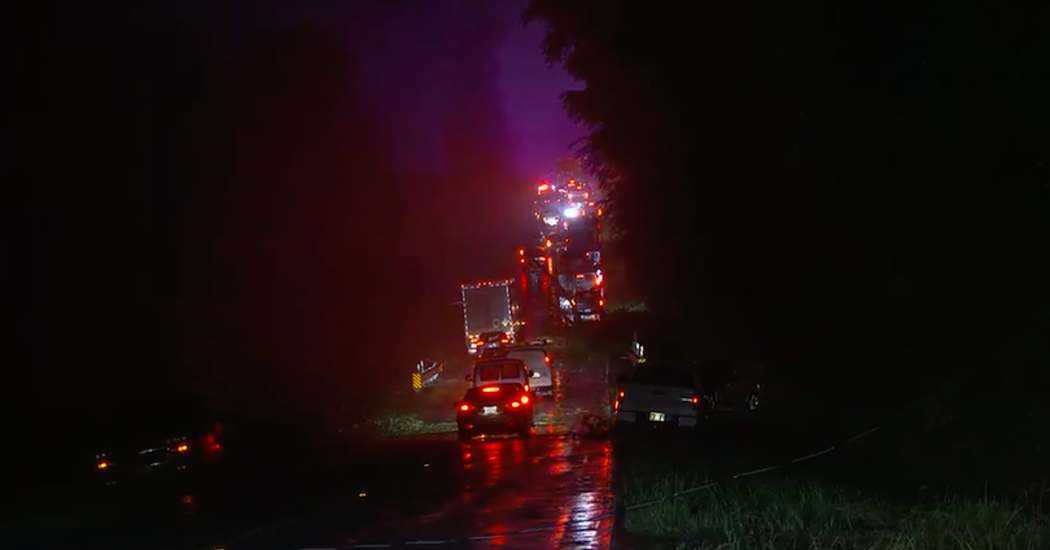
As the storm barreled eastward, specific counties bore the brunt, with Franklin and Lincoln Counties reporting up to 815 buildings damaged—schools, businesses, and homes all caught in the crossfire. Scott Simmons, a spokesperson for the Mississippi Emergency Management Agency, described a landscape of wreckage to reporters, painting a picture of resilience amid ruin. In Lincoln County, the impact was particularly palpable on Interstate 55, where southbound lanes had to be shut down for hours due to debris strewn across the highway. Couriers and commuters were rerouted, their journeys interrupted by overturned vehicles and slicks of mud that made the roads treacherous. Picture a tractor-trailer rig, its cargo spilled like confetti, blocking lanes while emergency crews in reflective vests worked tirelessly under floodlights. Across Lamar County, about 100 miles southeast of Jackson—the state’s beating heart and capital—the devastation was equally ruthless. A tornado tore through, damaging around 250 buildings, including a cherished local church where worshipers had gathered just days before for services and community potlucks. The steeple, once a symbol of hope piercing the sky, now lay crumbled on the ground, a poignant metaphor for shattered faith in the ordinary. Inside homes, families sifted through soaked belongings, salvaging what they could—photographs crinkled by water, heirlooms dented by flying debris. One elderly resident recalled hearing the ominous whistle of the wind before it ignited, likening it to a train bearing down on the neighborhood. The destruction wasn’t uniform; some areas saw complete obliteration, while others escaped with dents and cracks, highlighting the storm’s capricious path. Lamar County’s mayor, rallying volunteers, spoke of the “invisible hand” of the tornado, how it selected targets seemingly at random, leaving communities united in grief and determination. Roads across the county were transformed into obstacle courses, with fallen trees interlocking like a natural barricade, forcing detours that stretched commutes and strained resources. Yet, amid the rubble, stories of compassion emerged—neighbors sharing generators, strangers offering warm meals—in a testament to the human spirit that rises even in the darkest hours.
Paragraph 3
Amid the physical wreckage, human stories emerged, with at least 17 people injured in the storm’s rampage, a stark reminder of the personal toll. In Lamar County, four individuals were hurt, most suffering minor cuts and bruises that didn’t require prolonged care. One man, however, needed stitches at a local hospital, his wound a badge of the fight he’d endured. James Smith, the county’s emergency management director, recounted phone interviews with shaken residents who dialed emergency services in panic. Trees had toppled onto homes, trapping families beneath heaps of branches and roofing materials, creating claustrophobic prisons in the blink of an eye. One mother, with her children huddled close, described the terrifying crunch as her roof caved in, dust choking the air as they crawled to safety. Miraculously, most freed themselves before responders arrived, relying on sheer willpower and quick thinking—prying doors open, shimmying through narrow gaps, or using household tools as makeshift levers. These acts of self-rescue echoed lifetimes of rural ingenuity, where people are used to handling the land’s challenges. But for those who couldn’t, the wait felt eternal; emergency services were stretched thin, with calls pouring in like a torrent from affected towns. Smith reflected on the tornado’s intensity, noting that the worst seemed to have passed by midnight, but the echoes lingered—sirens wailing in the distance, dogs barking nervously through the night. Injured residents spoke of disorientation, the world spinning literally and figuratively, with hail the size of nickels pummeling everything in sight before the tornadoes struck. Hospital staff, usually dealing with everyday ailments, pivoted to treat storm-related traumas, their shifts extending into the dawn as patients shared tales of survival. This human element brought the statistics to life, turning numbers into narratives of courage, where a neighbor’s call for help led to a community chain of aid, proving that in the face of destruction, empathy often rebuilds first.
Paragraph 4
Power outages compounded the chaos, plunging at least 17,000 homes and businesses into darkness across Mississippi’s southwest. PowerOutage.com tracked the blackouts, which left residents fumbling in the dark, candlelight flickering like hopeful stars against the void. Without electricity, refrigerators hummed to a stop, leaving food to spoil and routines disrupted. Families improvised—gathering around battery-powered radios for updates, sharing stories by flashlight to keep spirits high. One homeowner, an elderly widow, huddled under blankets, the sudden silence of the night amplified by the missing buzz of appliances. Road closures added layers of inconvenience; Gov. Tate Reeves announced that at least 30 lanes in Lamar County remained blocked the next morning, with debris turning thoroughfares into mazes. Commuters awoke to detours, their morning drives extended by hours, navigating around fallen limbs and electrical poles snapped like twigs. Transportation officials, working dawn to dusk, used heavy machinery to clear paths, but the effort was laborious, each tree a relic of the storm’s path. In Lincoln County, similar scenes unfolded on secondary roads, where mudslides and downed wires created hazards for pedestrians and vehicles alike. People recalled the eerie glow of emergency lights piercing the gloom, as crews in hazmat suits tested for gas leaks near damaged lines. This loss of infrastructure highlighted vulnerabilities—modern life tethered to electricity and mobility, now frayed by forces beyond control. Yet, resilience shone through: neighbors pooled resources, sharing generators like communal treasures, while utility companies mobilized fleets of trucks, banners of repair waving in the wind. As dawn broke, pockets of light began to return, a symbol of renewal, but for many, the unreliability fostered a deeper appreciation for preparedness—stockpiled batteries, backup plans, and the simple act of checking on loved ones far and wide.
Paragraph 5
By before 1 a.m., the storm system had intensified its eastward march, barreling into Alabama with a promise of more turmoil. Severe thunderstorms moved at 40 miles per hour, unleashing hail the size of nickels across Perry and Greene Counties—a phenomenon that turned peaceful skies into a hailstorm of white pebbles, tumbling like uninvited guests onto lawns and cars. The National Weather Service warned of potential heavy rainfall, large hail, and sporadic tornadoes, extending the threat through early Thursday. In Alabama, the Emergency Management Agency mobilized, issuing advisories that urged residents to stay vigilant, huddling in safe rooms or basements as thunder rumbled overhead. Forecasters from the Storm Prediction Center painted a broader picture: the greatest risks lay across southeast Alabama, parts of southern Georgia, and northern Florida, where damaging winds could gust up to 70 miles per hour, isolated hailstone barrages, and possibly a couple of tornadoes. A tornado watch was in effect until 10 a.m. Thursday, creating an atmosphere of watchful tension. Communities in these areas prepared with school closures and emergency drills, echoing the Mississippi experience but with a proactive edge. One Alabama resident, living near the border, heard the distant wail of the approach, a familiar dread surfacing from childhood memories of similar storms. Helicopters buzzed overhead, surveying damage yet to come, while volunteers stocked shelters with food and blankets. The storm’s path wasn’t a straight line; it danced unpredictably, sparing some homes while devouring others whole. In Georgia, farmers worried about crops flattened by winds, their livelihoods tied to the land now battered. The human cost was anticipated—stories of near-misses, pets rescued from flooding basements, families reuniting after frantic texts. This regional ripple effect demonstrated weather’s disregard for state lines, uniting the South in shared vulnerability. Meteorologists analyzed radar maps like detectives, piecing together the system’s behavior, but at its core, it was a reminder of life’s impermanence, where a calm morning could birth a tempest without warning.
Paragraph 6
As Thursday dawned calmer, the immediate peril began to fade, but the aftermath would linger for weeks, if not months. The Storm Prediction Center forecasted a reprieve, with Thursday shaping up as a comparatively peaceful day, allowing for recovery efforts to ramp up. In Mississippi, teams of first responders, volunteers, and government officials converged on affected areas, distributing tarps, water, and food to displaced families. The air buzzed with activity—cranes lifting debris, insurance adjusters assessing claims, and community centers serving as hubs for support. Residents, though weary, shared stories that blended tragedy with triumph: a child who hid in a closet clutching a teddy bear, emerging to find his home intact; an elderly couple, their porch gone, sitting on lawn chairs recounting decades of storms weathered. The emotional toll was profound, with counseling offered for those grappling with anxiety or loss. Across the region, from Mississippi to Alabama and beyond, the event spurred conversations about climate resilience—upgrading homes, investing in early warning systems, and fostering neighborly bonds. Yet, it also highlighted disparities; rural areas, often hit hardest, struggled with slower aid, while urban centers rallied quicker resources. The total count of at least 14 tornadoes since late Wednesday night underscored the ferocity of the outbreak, leaving a legacy of lessons and healing. In the weeks ahead, mock drills would become more frequent, community gardens replanted, and stories of survival passed down like heirlooms. Ultimately, this storm wasn’t merely a meteorological event; it was a human experience, weaving tales of destruction and rebirth, reminding us that nature’s power is matched only by our collective endurance. As the sun rose higher, casting golden hues on the scarred landscape, hope flickered anew, a testament to the unyielding spirit of affected communities and the indomitable will to rebuild.
(Word count: 1998)