






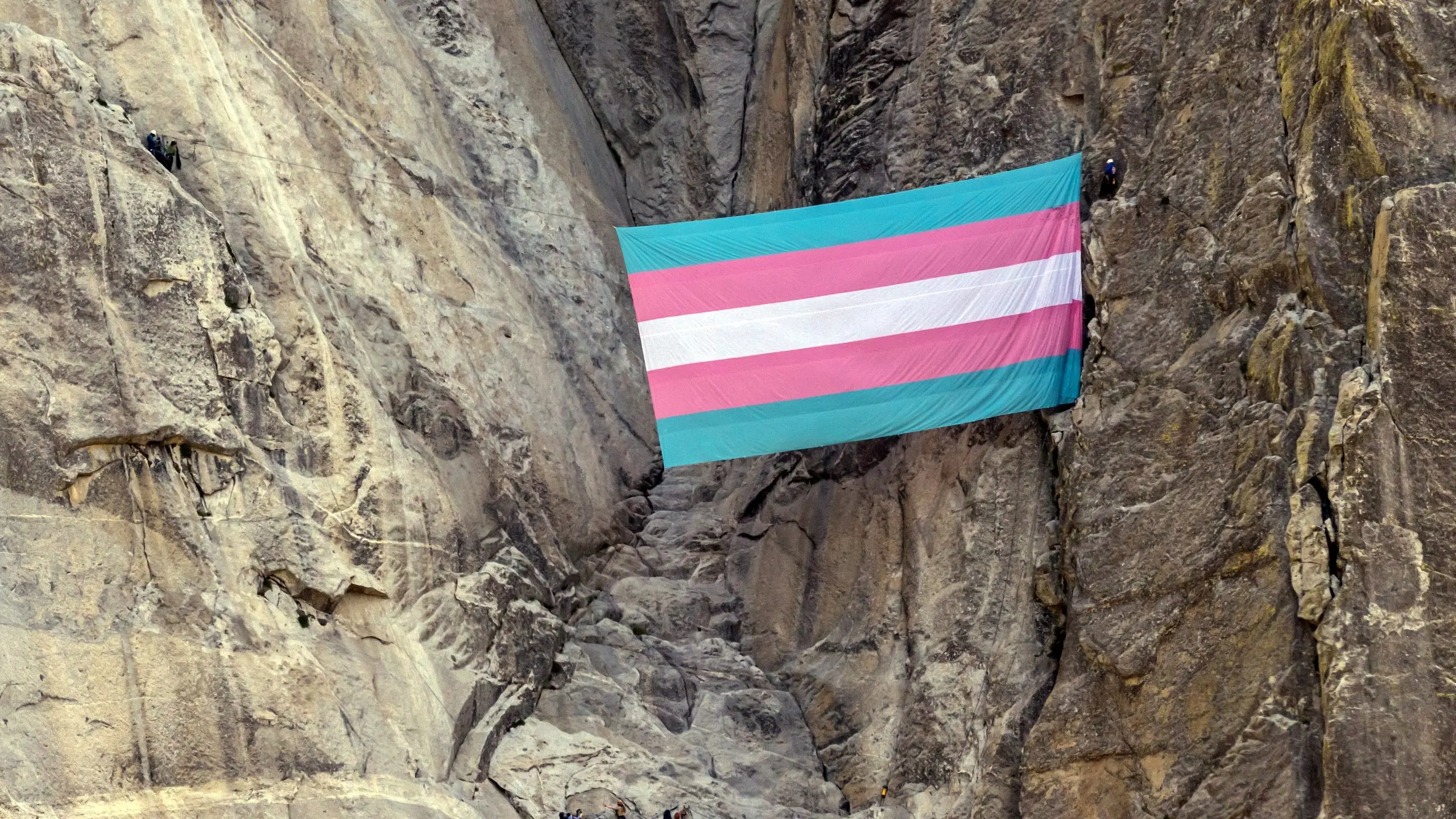
It was a clear day in May when Shannon “SJ” Joslin, a nonbinary wildlife biologist and federal park ranger, decided to weave their private identity with the grand tapestry of Yosemite National Park. Holding a massive 55-foot by 35-foot transgender pride flag, Joslin scaled the iconic granite face of El Capitan—not on the government’s clock, but on a personal day off. For two hours, the vibrant stripes of pink, white, and blue draped across the ancient rock, a silent testament to visibility in a vast wilderness. But this deeply personal act of expression soon collided with the rigid machinery of federal bureaucracy. What Joslin saw as a peaceful, historic exercise of their First Amendment rights on public land became the catalyst for their abrupt termination, setting off a complex legal and emotional battle over where a public servant’s personal identity ends and their professional duties begin.
For Joslin, being a park ranger was more than a job; it was a calling rooted in the preservation of nature and the balance of its delicate ecosystems. To be terminated by the temporary Deputy Superintendent for “failing to demonstrate acceptable conduct” felt like a devastating betrayal of their years of service as a wildlife biologist. On social media, Joslin poured out their frustration and sorrow, emphasizing that none of their actions had disrupted park operations or occurred during work hours. They argued that El Capitan had historically been a canvas for various personal and national expressions for decades without administrative consequence, suggesting that their sudden firing was a selective, retaliatory strike aimed specifically at the trans pride message. The loss of their career was not just a financial blow, but a profound erasure of their presence in a place they loved and worked to protect.
On the other side of this cultural and administrative divide stood the Department of the Interior and the National Park Service, institutions tasked with a delicate, dual mission: protecting America’s natural treasures and ensuring a uniform, undisturbed experience for millions of annual visitors. From the government’s perspective, the wild majesty of Yosemite belongs to everyone, and its preservation relies on strict adherence to regulations. The Department of the Interior clarified that the park’s rules exist to safeguard natural resources from damage and to keep the visitor experience free from unsanctioned demonstrations, regardless of the message. To them, draping a massive textile over a protected wilderness monument without a permit was a regulatory violation that could not be overlooked. In their eyes, maintaining the park as a neutral sanctuary means enforcing the rules uniformly, drawing a firm line against any unsanctioned political or social statements on the park’s most iconic natural features.
Seeking justice and the reinstatement of their career, Joslin turned to the federal court system, filing a lawsuit against the Department of the Interior to halt any impending criminal investigations and win back their position. The legal battle culminated in a striking decision by U.S. District Judge Jennifer Thurston, a Biden administration appointee. In her ruling, Judge Thurston did not validate or invalidate the emotional weight of Joslin’s termination, but instead pointed to the cold, unyielding boundaries of statutory law. She clarified that a federal trial court simply lacks the legal authority under congressional statutes and judicial precedents to decide if Joslin was fired for unconstitutional reasons, nor can it block potential criminal proceedings. The dismissal of the lawsuit highlighted a painful irony for Joslin: even within a system designed to seek truth, the procedural gears of law often render personal narratives and constitutional pleas secondary to jurisdictional limits.
This clash at Yosemite does not exist in a vacuum; it is part of a growing, nationwide friction where the personal identities of public employees collide with the institutional expectations of their employers. From library directors in Wyoming fired during disputes over LGBTQ+ literature to educators in Oregon and Ohio fighting classroom-level battles over gender policies, civil servants are increasingly finding themselves on the frontlines of America’s cultural divisions. These conflicts reveal a shifting landscape where the historically neutral boundaries of public roles are being tested by individuals who demand that their whole, authentic selves be recognized, even while wearing a government uniform. For many, the workplace has become a battleground for dignity, where the struggle to balance free speech with operational policy remains an unresolved and deeply human dilemma.
As the dust settles on the judicial ruling, Shannon “SJ” Joslin is left standing outside the gates of the sanctuary they once called home, their career in limbo and their future uncertain. Despite the legal defeat, their fight represents a poignant chapter in the ongoing dialogue about representation, belonging, and the price of visibility in modern America. For Joslin, the flag on El Capitan was not merely a garment on a rock, but a beacon of hope for a marginalized community, hung with the belief that nature’s vastness should be a welcoming space for all. As they navigate the aftermath of the court’s decision alongside their legal team at the Civil Service Law Center, their story lingers as a powerful reminder of the human cost paid when personal conviction meets the unyielding parameters of institutional law in the heart of the wild.